By Erika Segerson-Mueller, DNR Invasive Plant Program Specialist, Oshkosh;
Erika.SegersonMueller@wisconsin.gov or 715-492-0391
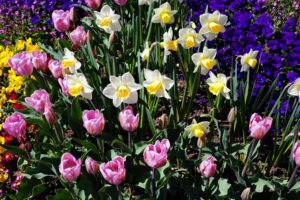
While not native to the Midwest, popular garden plants such as tulips and daffodils do not spread outside of gardens or cause harm, therefore they are not invasive. / Photo Credit: Lesley Ingram, Bugwood.org
As the conversation around invasive plants grows, it’s easy to get “stuck in the weeds” when it comes to invasive terminology.
A simple Google search of “invasive plant” will produce a variety of definitions, bringing in technicalities or muddying your understanding with each new idea of what invasive means. Continue reading “‘In The Weeds’ With Invasives Tech”
 One of the most significant advantages of the MFL Certified Group is its accessibility to forest certification for participating “Group Members.” Many of the certification requirements are covered through how the MFL program is implemented and administered. For example, the two most common paths for landowners to enter the MFL Certified Group are the MFL application and the MFL transfer form. Both paths require prospective Group Members to acknowledge and accept the American Tree Farm System® and Forest Stewardship Council® standards and the MFL Certified Group rules.