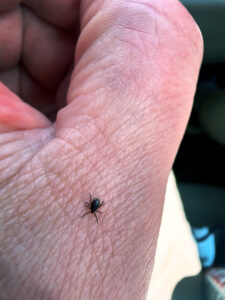
An adult deer tick looks for a spot to attach. / Photo Credit: Wisconsin DNR
By Michael Hillstrom, DNR Forest Health Specialist, Fitchburg
Michael.Hillstrom@wisconsin.gov
Adult blacklegged (deer) ticks are already active this year, as of March 2026. The adults start looking for a host as soon as it warms up to around 40 degrees Fahrenheit.
In Wisconsin, between 20-60 percent of adult ticks are infected with the bacteria that causes Lyme disease. However, the risk of getting Lyme disease is higher with bites from nymphal ticks, which are most abundant in June and July, because they are so tiny and difficult to find. While only 10-28 percent of nymphs are infected with the Lyme disease bacteria in Wisconsin, rapid removal of a tick can reduce the risk of infection because it takes at least 24 hours for the Lyme bacteria to spread.