
By Michael Hillstrom, DNR Forest Health Specialist
Michael.Hillstrom@wisconsin.gov
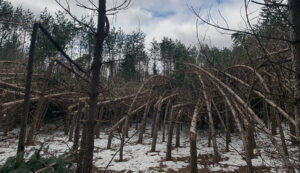
A stand of pines shows heavy damage from an ice storm in April 2025. / Photo Credit: Wisconsin DNR
Winter damage can significantly impact the health of trees. Keeping trees healthy through the fall is important for reducing winter stress. Provide water as needed to trees until the leaves start falling (for deciduous trees) or until the ground starts freezing (for conifers).
Winter stressors include:
- Ice or wet, heavy snow breaking branches or bending young trees
- Cold damage: Roots are particularly susceptible to damage when temperatures are below zero degrees Fahrenheit and there is no snow to insulate the soil
- Sunscald and frost cracks
- Salt damage
- Winter desiccation
- Chewing damage from rodents, rabbits, porcupines and deer
Trees typically recover from the above issues, but repeated or severe events may kill trees or stress them enough that insects and fungi invade the following summer and cause mortality. Remove severely impacted trees to prevent the buildup of insects and diseases. Corrective pruning of damaged trees should be completed when trees are dormant, typically from November to March in Wisconsin.
The DNR’s Environmental Causes of Tree Damage fact sheet and Minnesota Extension’s protecting trees during winter webpage discuss the above winter health issues and additional environmental stressors.