
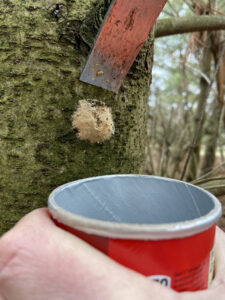
A putty knife, plastic knife or similar object can be used to gently scrape spongy moth egg masses into a cup of soapy water. The water can be discarded after two days. / Photo Credit: Wisconsin DNR
By Bill McNee, DNR Forest Health Specialist, Oshkosh
Bill.McNee@wisconsin.gov
The Wisconsin Department of Natural Resources (DNR) encourages property owners to examine their trees for spongy moth egg masses and determine whether control measures are needed this spring.
Property owners who have oak, birch, crabapple, aspen, willow and linden (basswood) trees should be particularly watchful because the caterpillars of this invasive insect prefer these species. However, they will feed on many other kinds of trees and shrubs.
The pest is generally established across the eastern two-thirds of Wisconsin within the quarantined area. Egg masses and other life stages may occasionally be present in the non-quarantined counties in western Wisconsin.
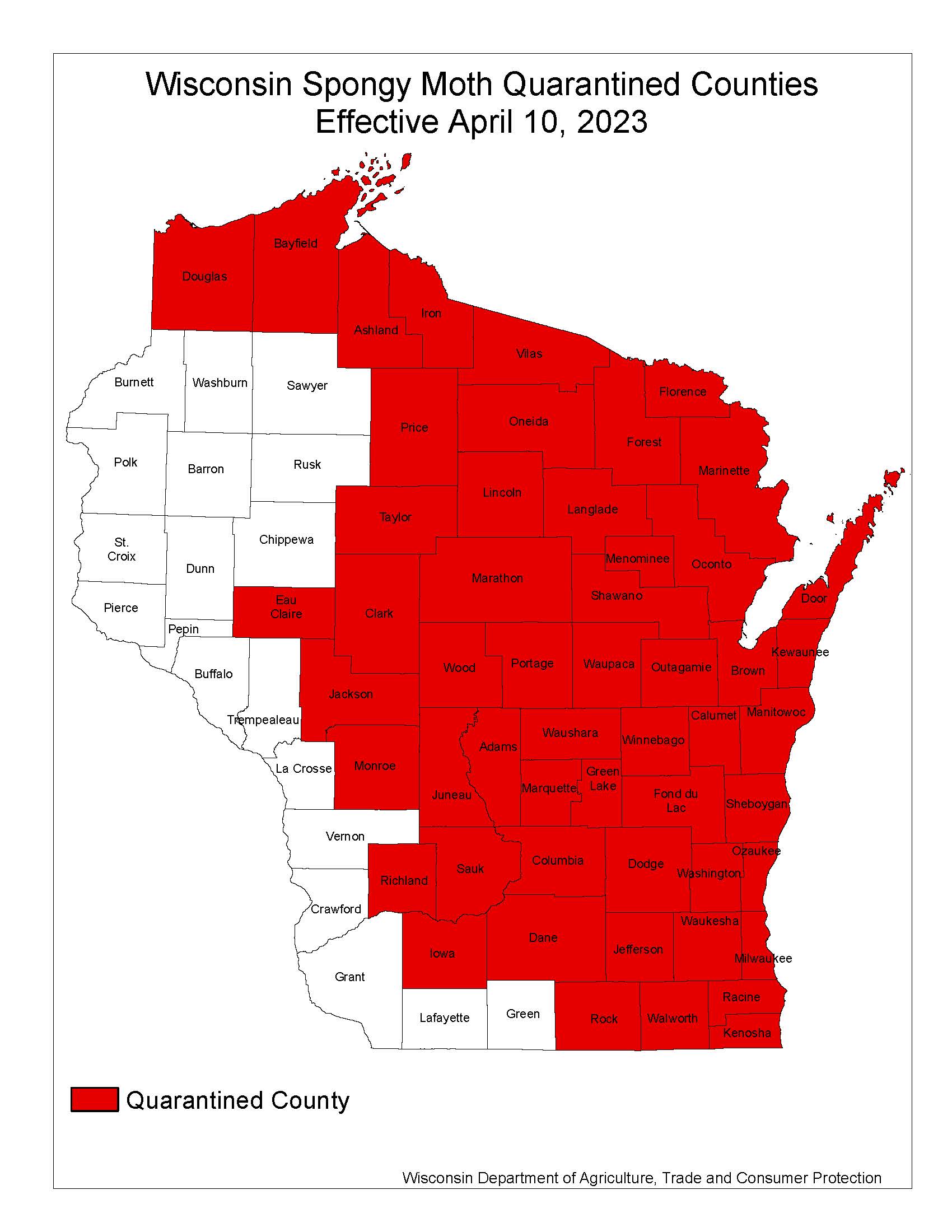
Although the spongy moth outbreak of the last few years has collapsed, there may still be individual trees or small pockets with high populations and predicted tree defoliation this coming summer.
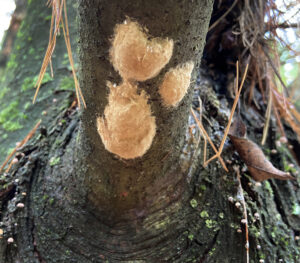
Three egg masses are found on a tree in the Kettle Moraine State Forest – Southern Unit in October 2021. Each egg mass can contain 300 or more eggs that will hatch in early spring. / Photo Credit: Wisconsin DNR
Looking at egg mass numbers on a specific property is the best way to determine if there might be a potential problem this summer. These masses are tan-colored lumps about the size of a nickel or quarter. Egg masses are found on trees, buildings and other outdoor objects and may also be found inside protected places such as firewood piles and birdhouses. Egg masses produced in 2025 will feel firm and appear darker in color than older egg masses, which appear faded, feel spongy and do not contain viable eggs.
Hatching of egg masses usually begins in mid-to-late April in southern Wisconsin. Before hatch begins, horticultural oil (available from many retailers and garden centers) can be applied when temperatures are above freezing to prevent the masses from hatching. You can also use a knife, chisel or similar tool to scrape unhatched egg masses into a can of soapy water; leave the egg masses in the water for a couple of days before disposing of them in the trash.
When low or moderate numbers of egg masses are present, physical controls can often be used to reduce pest impacts and make insecticide unnecessary.
Insecticide treatments, including foliage sprays and soil and trunk injections, may be a suitable control option for trees with high populations. A professional treatment is likely needed when there are high numbers of egg masses on large trees. Insecticide treatments are most effective when the caterpillars are small (mid-to-late May in southern counties and late May-early June in northern counties).
Planning insecticide treatments early ensures trees receive treatment before a last-minute rush, when pesticide application businesses may already be very busy. Resources for finding a qualified pesticide applicator include the Wisconsin Arborist Association, the International Society of Arboriculture and a local phone book or online directory.
Property owners are encouraged to monitor their trees, particularly oaks, during the summer. Host trees that were heavily defoliated or drought-stressed over the past few years are at higher risk of dying, especially if they experienced both stresses. Low-vigor oak trees are commonly attacked by Armillaria root disease fungi and the native beetle, twolined chestnut borer, contributing to tree decline and death. Consult an arborist or forester for additional management recommendations.
Additional Recommendations
Property owners are encouraged to examine their trees and take action. Specifically:
- Visit the Spongy Moth Resource Center for management information. Options include egg mass oiling and removal, physical controls and insecticide application.
- Forest management may need to be postponed in some stands that were defoliated over the past few years. Trees may still be stressed from previous defoliation and unable to handle the additional stress from forest thinning. Consult a forester.
- Monitor for crown dieback and twolined chestnut borer infestation in trees that were stressed by drought and defoliation over the past few years.
- Consult an arborist or forester for additional management recommendations. When seeking an arborist, check both of these directories: Wisconsin Arborist Association and International Society of Arboriculture. A forester directory is also available on the DNR website.