
By Olivia Witthun, DNR Urban Forestry Coordinator, Olivia.Witthun@wisconsin.gov or 414-750-8744 and Elton Rogers, DNR Urban Forestry Coordinator, Elton.Rogers@wisconsin.gov or 414-294-8675
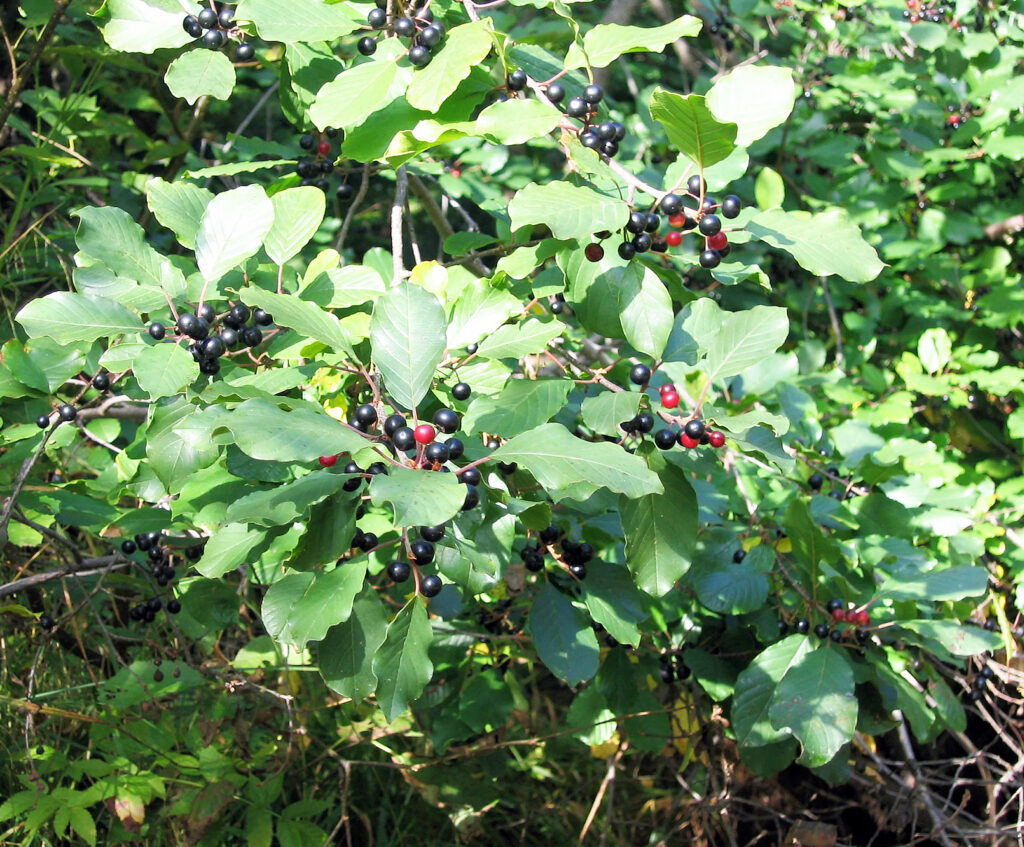 The Cover It Up project is a suite of related research projects conducted by multiple partners in Minnesota that are evaluating the ecology and management of buckthorn and other invasive plant species. Buckthorn is an invasive understory plant that was introduced to Wisconsin well over 100 years ago. It was used primarily in hedgerows, prized for its lack of pest issues and the fact it greens up early and holds its leaves well into the fall. These once desirable characteristics are also what turned this non-native into one of our state’s worst invasive species, easily outcompeting our natives, taking over Wisconsin’s forests, riparian woods, savannas, prairies, old fields, roadsides and vacant lots.
Controlling buckthorn can be an exhaustive and resource-heavy endeavor. There are many effective approaches for removal but keeping it from regrowing is difficult. You are in for a multi-year battle as seed germination, remaining stems and adjacent buckthorn easily take over the recently cleared area.
The Cover It Up project includes a series of experiments designed to evaluate new ways of preventing buckthorn from returning in the years following its initial removal. We all know establishing a dense cover of native plants can fill the void left by buckthorn removal and stifles regrowth of buckthorn (and other invasives). These experiments go a step further with recommendations of which species to plant, how to plant them, which conditions favor their success and how these methods can be used in conjunction with other management strategies. Cover It Up shares this research and related resources. For example, over the course of five years, they found 97% of new buckthorn sprouted within that first year.
Furthermore, those buckthorn seeds are typically only viable for a year or two, not six. They’ve also found revegetating with grasses and wildflowers is often more effective than simply using trees and shrubs (which can be more challenging to restore at high densities). Check out the Cover It Up website for more findings, resources and even seed mix suggestions for revegetating those areas.