Archives

Funding Opportunities

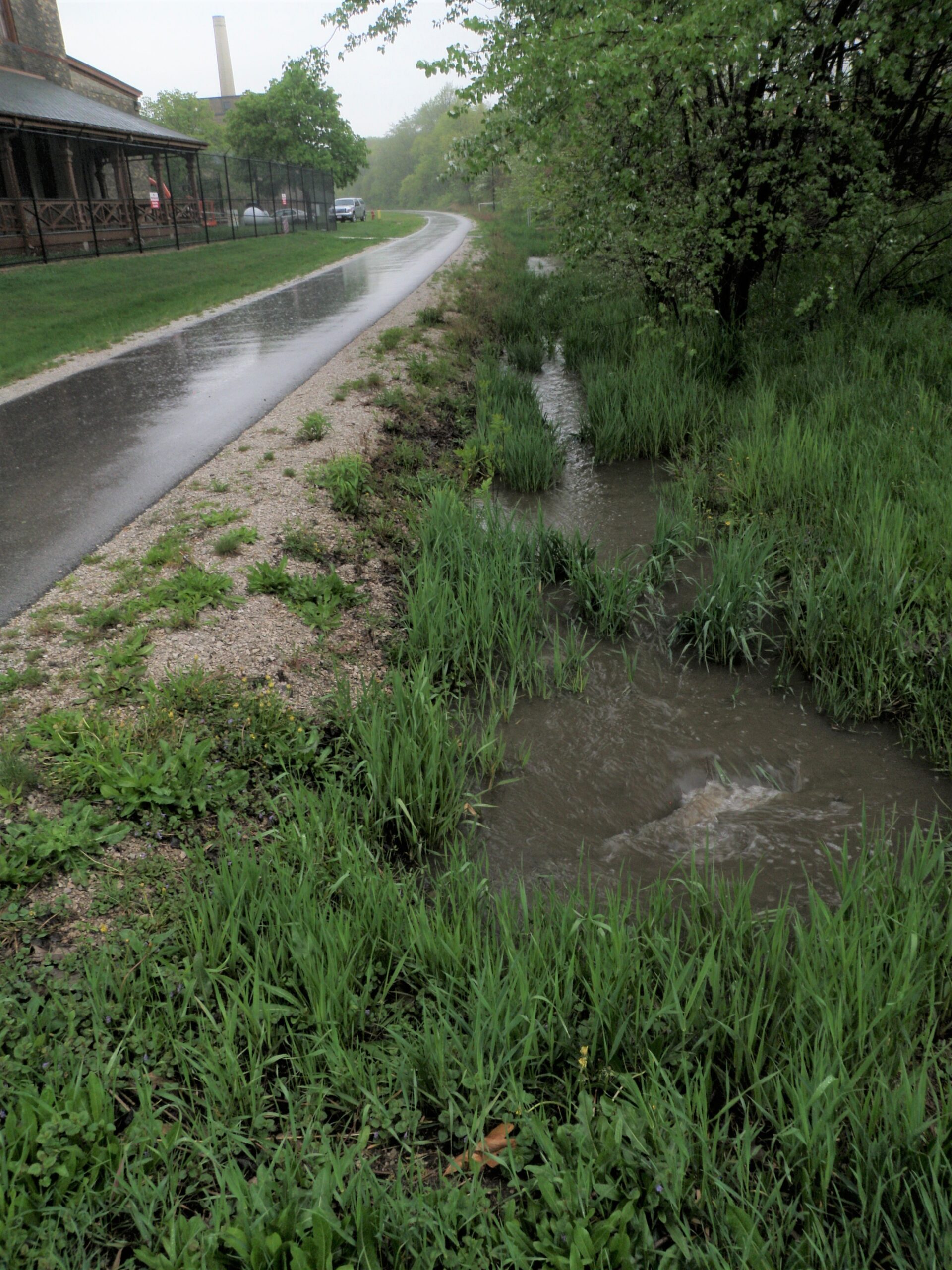
rain coming down on path lined with trees

Photo Credit: Wisconsin DNR

DNR 2027 Surface Water Grant Preapplications Due Sept. 15, 2026

The DNR Surface Water Grant Program funds rivers, lakes and Aquatic Invasive Species subgrants for planning and management. The surface water grant program provides cost-sharing grants for surface water protection and restoration. Funding is available for education, ecological assessments, planning, implementation and aquatic invasive species prevention and control. With many different projects eligible for grant funding, you can support surface water management at any stage: from organization capacity development to project implementation. Funding may be used for vegetation management as it relates to improving the health of our waters. Pre-applications are due by 11:59 p.m. on Sept. 15, 2026. Final applications are due by 11:59 p.m. on Monday, Nov. 16, 2026.

Visit the DNR’s Surface Water Grant webpage for more information.

National Urban And Community Forestry Challenge Cost Share Grants Due Oct. 12, 2026

The intent of the National Urban and Community Forestry Challenge Cost Share grant program is to advance solutions to the economic, health and environmental challenges faced by communities. This year’s program focuses on advancing community tree resource utilization, which can reduce waste and create value by turning wood generated from pruning, removals, storm events and pest or disease outbreaks into useful products. These products may include lumber, slabs, furniture, flooring, biochar or other materials that strengthen local economies, reduce disposal costs and improve community resilience.

The program seeks practical, creative and replicable projects that help communities establish or expand wood‑utilization efforts. Competitive proposals will demonstrate how the project supports existing community forestry plans, applies industry‑recognized safety and tree‑care standards and delivers clear economic, environmental or workforce benefits. Projects should outline anticipated wood products, partnerships with professional or industry organizations and opportunities for job creation, training, or certification.

This program is intended for communities and their partners seeking to improve the management and use of their urban and community forests. Eligible applicants include state, local and tribal governments, nonprofit organizations, educational institutions and other community‑based partners. Additional information and requirements may be found by searching funding opportunity number USDA-FS-UCF-01-2026 on Grants.gov.

Community Forest and Open Space Due Oct. 13, 2026

The U.S. Department of Agriculture (USDA), Forest Service, State, Private & Tribal Forestry, is requesting applications for the Community Forest and Open Space Conservation Program (Community Forest Program or CFP). CFP is a competitive grant program that provides financial assistance to Indian Tribes, local governments and qualified conservation non-profit organizations to establish community forests through the fee simple acquisition of private forest land. The purpose of the program is to establish community forests by protecting forestland from conversion to non-forest uses and provide community benefits including public recreation, environmental and economic benefits and forest-based educational programs. Public access is required for all projects.

Applications are not submitted electronically via Grants.gov. The full Notice of Funding Opportunity and supporting documents (including scoring guidance and FAQs) are available under the ‘Related Documents’ tab of the listing and can be downloaded.

See the US Forest Service Community Forest website for more information about the program.

Additional information and requirements may be found by searching funding opportunity number USDA-FS-2026-CFP on Grants.gov.

Lake Superior Basin Community Forest Grants Due Dec. 8, 2026

The U.S. Forest Service is offering Great Lakes Restoration Initiative grants through the Community Forest and Open Space Conservation Program. Working with the U.S. Environmental Protection Agency, we expect to make about $3.5 million available to help communities purchase private forestland and establish community forests. Funding is open to projects in Michigan and Wisconsin within the Lake Superior basin in areas identified as a priority conservation area for the connectivity of wildlife habitat.

The Great Lakes form the world’s largest surface freshwater system and are the source of drinking water for more than 30 million people. Launched in 2010, the Great Lakes Restoration Initiative strategically targets the biggest threats to the Great Lakes ecosystem and accelerates progress toward long-term restoration goals.

Eligible applicants include federally recognized Tribes, local government entities and nonprofit organization that are qualified to acquire and manage land. Applicants may request up to $1 million through this opportunity, which must be matched by non-federal funds at a 1:1 rate. Additional information and requirements may be found by searching funding opportunity number USDA-FS-2026-GLRI-CFP on Grants.gov.
Upcoming Training & Events

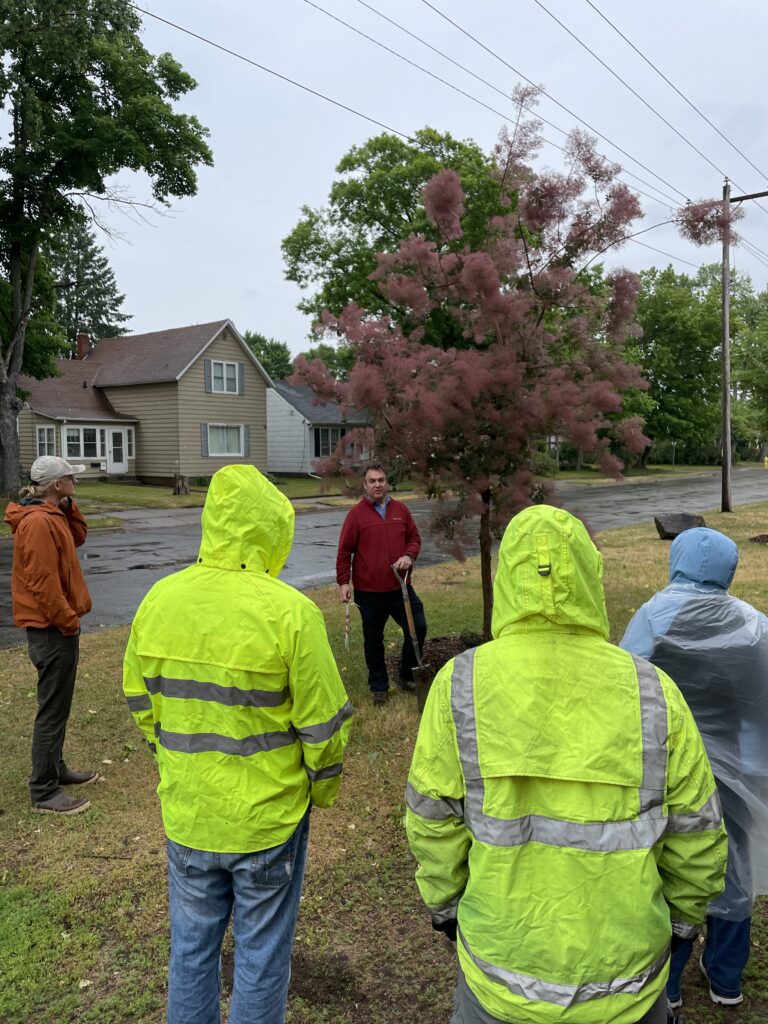
group learning about trees outside

Photo Credit: Wisconsin DNR

* These training opportunities are provided as an information service only and do not constitute endorsement by the Wisconsin Department of Natural Resources (DNR).

See below for information on training topics and events, including planting, urban forestry risks, invasive species, tree selection, emergency response, tree biology, climbing and several upcoming conferences. Continue reading “Upcoming Training & Events”

2027 Urban Forestry Grants Now Open

By Nicolle Spafford, DNR Urban Forestry Grant Manager
Nicolle.Spafford@wisconsin.gov or 715-896-7099

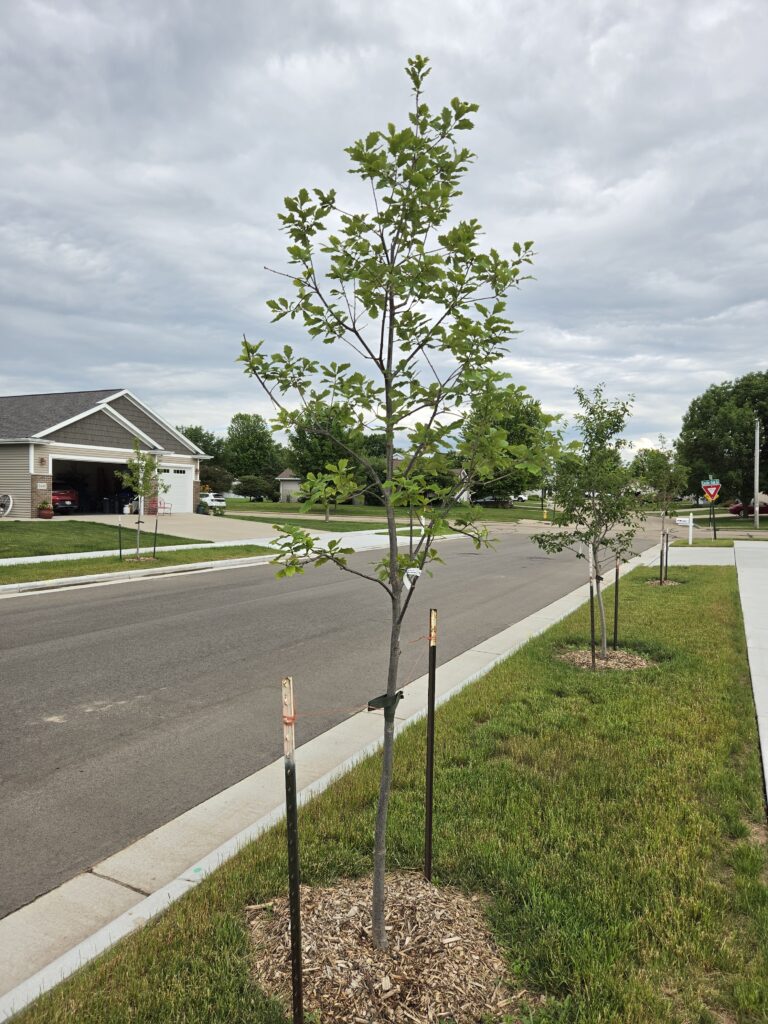
newly planted trees

Photo Credit: Wisconsin DNR

As of July 1, 2026, cities, villages, towns, counties, tribes and 501(c)(3) nonprofit organizations in – or conducting their projects in – Wisconsin can apply for a regular or startup 2027 Wisconsin Department of Natural Resources (DNR) Urban Forestry grant.

Regular Urban Forestry grants range from $1,000 to $25,000 and grant recipients must match each grant dollar for dollar. These grants fund projects that improve a community’s capacity to manage its trees (e.g., management plans, ordinances, staff training, tree board development, inventories and public education) and projects that help conserve, protect, expand or improve the urban forest resource (e.g., planting, hazard tree removal, pest control). Continue reading “2027 Urban Forestry Grants Now Open”

Community Spotlight: Manitowoc’s Multifaceted Replanting Strategy

By Patricia Lindquist, DNR Urban Forestry Coordinator
Patricia.Lindquist@wisconsin.gov or 715-574-1314

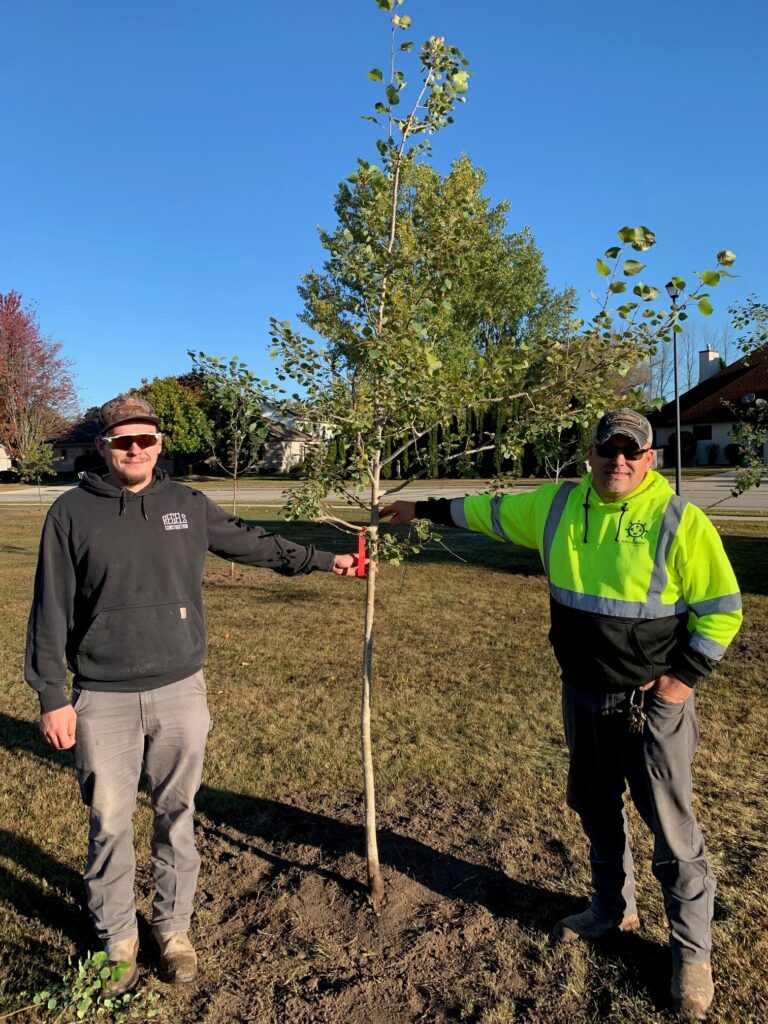
Parks staff Dave Blohowiak and Dawson Boettcher plant a quaking aspen at Fleetwood Park. / Photo Credit: Wisconsin DNR

As a long-time Tree City USA (43 years) and frequent Growth Award recipient (14 years in a row!), Manitowoc has a deep-rooted tradition of supporting urban forestry. After the emerald ash borer was detected in Manitowoc County in 2016, the city redoubled its efforts. Hundreds of dead and declining ash trees have been removed, and thousands of diverse, pest- and disease-resistant trees have been planted to replace the lost canopy.

Manitowoc utilizes a variety of programs, methods and funding sources to plant trees. Read on to learn more about their creative, multifaceted replanting strategy. Continue reading “Community Spotlight: Manitowoc’s Multifaceted Replanting Strategy”

Students Graduate From The Community Tree Management Institute

By Olivia Witthun, DNR Urban Forestry Coordinator
Olivia.Witthun@wisconsin.gov or 414-750-8744

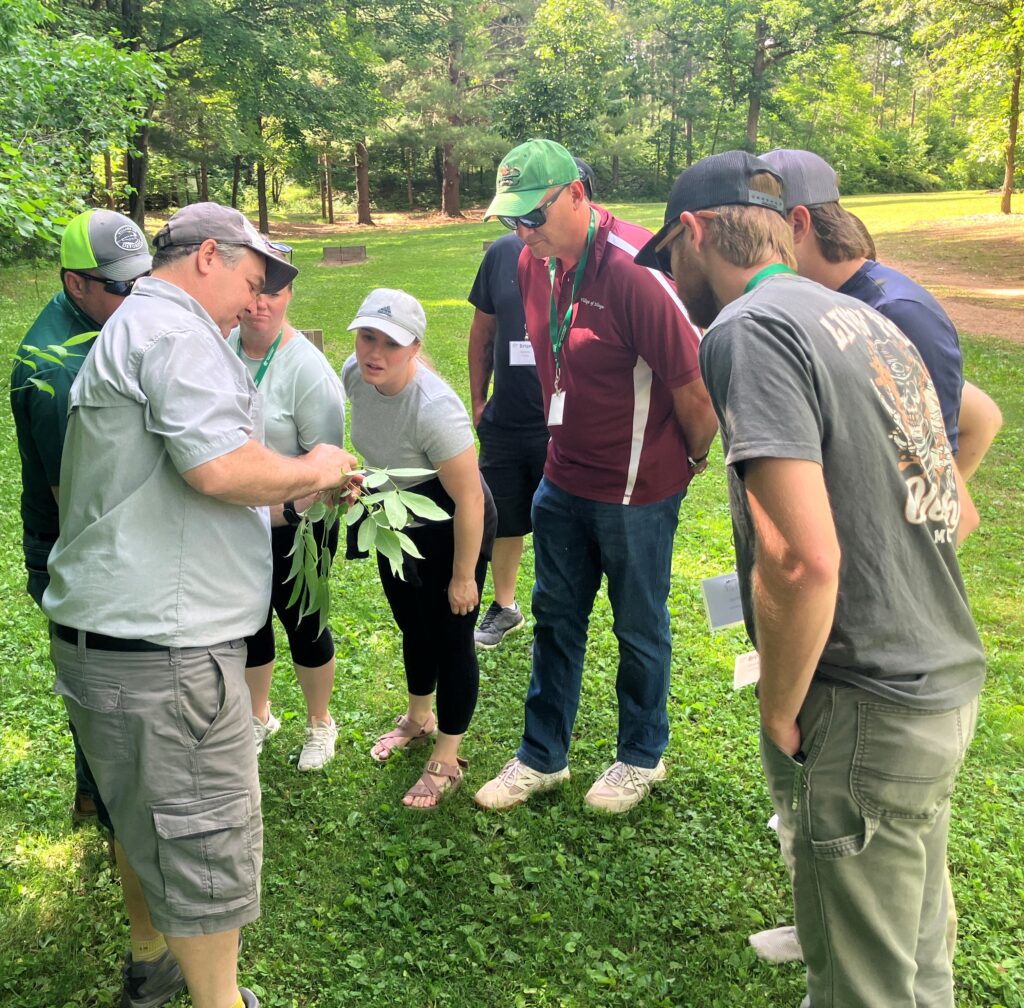
a group of people examining tree leavesCongratulations to the latest class of Wisconsin Community Tree Management Institute (CTMI) graduates! The CTMI wrapped up its sixth cohort mid-June.
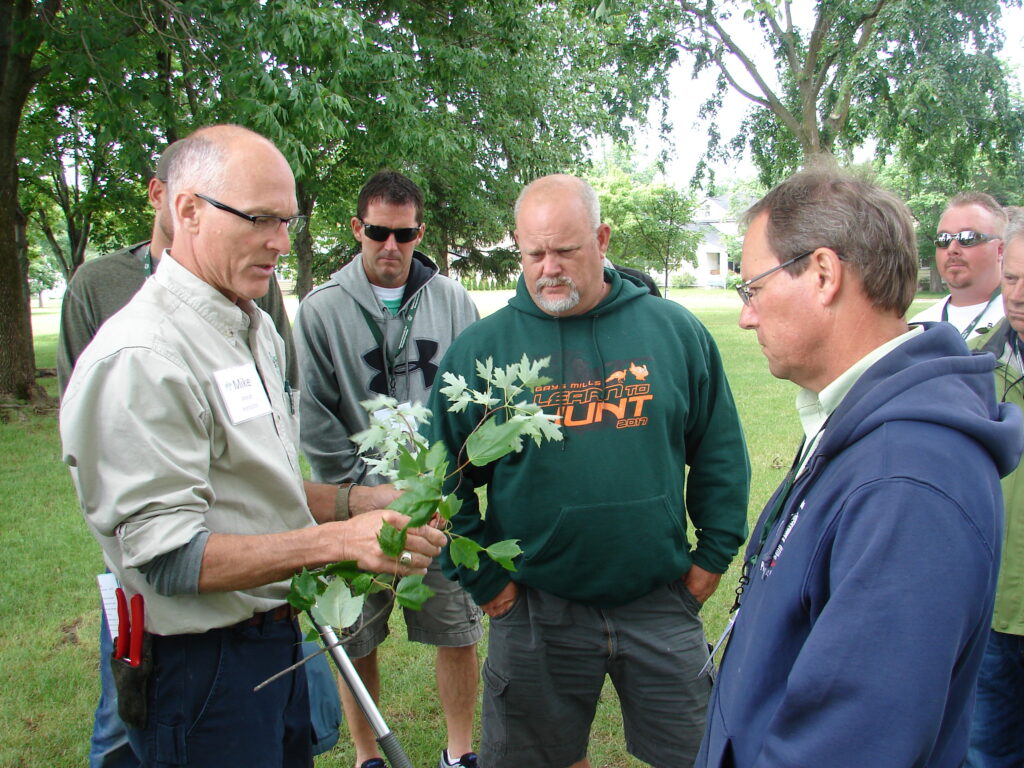
CTMI is an advanced training course designed specifically for people responsible for urban forest management who do not have a degree and/or experience in urban forestry. Conversely, they may have technical skills but lack leadership and management experience.

Over six days of intensive training, students acquired the knowledge and skills needed to manage municipal trees and green space. Their exposure to various teaching perspectives gave them a well-rounded 38-hour training experience. The retreat-like setting created by the small class size and interactive learning curriculum reinforced the focus on support-network development with other students, staff and instructors. The capstone of the institute required each student to complete an applied project that benefited their community by utilizing their new skills and knowledge. Continue reading “Students Graduate From The Community Tree Management Institute”

How Big Will My Tree Get?

By Elton Rogers, DNR Urban Forestry Coordinator
Elton.Rogers@wisconsin.gov or 414-294-8675

This is one of my least favorite questions to get as an urban forester/arborist; it’s right up there with “how old is my tree?” The reason I despise this question is not because it is a bad question, but rather it is a complex one. A question that often requires much more discussion than the person who asked it is looking for… Continue reading “How Big Will My Tree Get?”

Tree Species In An Uncertain Future Climate

By Dan Buckler, DNR Urban Forest Assessment Specialist
Daniel.Buckler@wisconsin.gov or 608-445-4578

One of the many challenges for urban foresters in navigating climate change is the fact that while temperatures are elevated across every season, it can still get pretty cold in Wisconsin, even along Lake Michigan. Nonetheless, hardiness zones are shifting, and there is plentiful experimentation underway by Wisconsinites to identify which tree species are appropriate for their location throughout the 21st century.

The Northern Institute of Applied Climate Science produced species vulnerability lists for six locations in Wisconsin, projecting what species are likely at increased risk (i.e. more vulnerable) under different climate change scenarios. Those are great resources that use the same background methodology as a species vulnerability analysis done for the Milwaukee metropolitan area. Continue reading “Tree Species In An Uncertain Future Climate”

Go Outside Funds Available

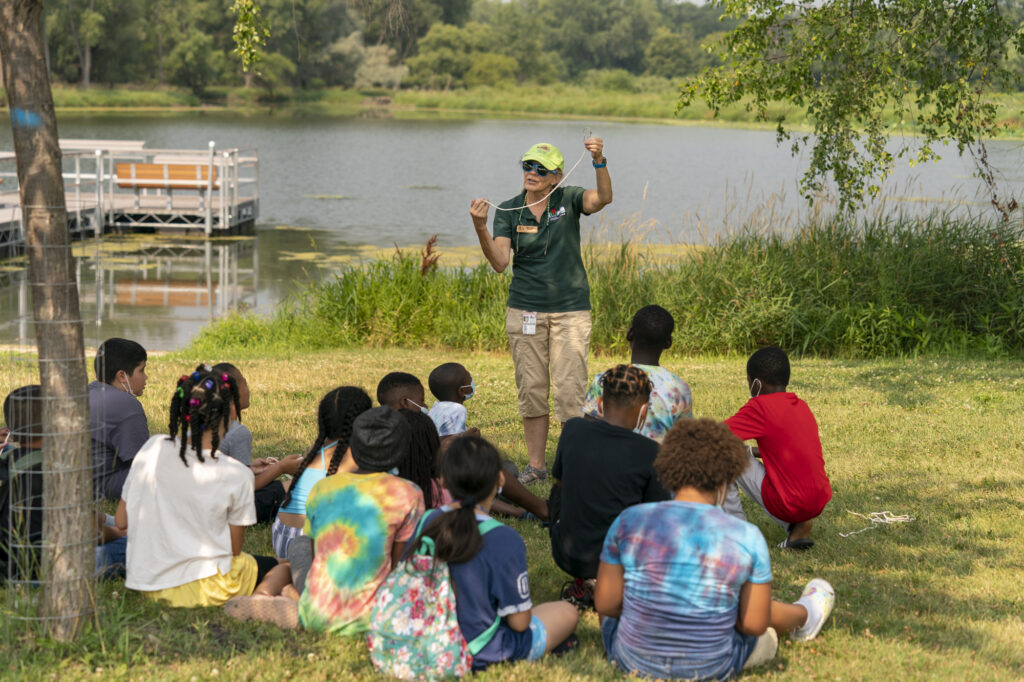
children learning outdoors

Photo Credit: Wisconsin DNR

The Go Outside Fund provides funding that helps connect youth to outdoor, nature-based learning experiences. Teachers or partner organizations may apply for funding to cover costs that facilitate getting kids outside and hands-on with nature, such as purchasing field supplies or paying for transportation and educator costs. Grants between $100 and $1,500 are available. Educators, as well as eligible organizations, are welcome to apply, with the next deadlines for applications being Sept. 1 and March 1, 2026. Continue reading “Go Outside Funds Available”

When Can I Prune That Elm Tree?

By Elton Rogers, DNR Urban Forestry Coordinator
Elton.Rogers@wisconsin.gov or 414-294-8675

Most urban foresters and arborists are aware of the historical significance of Dutch elm disease (DED). Introduced to the United States in the 1930s, this deadly fungus wreaked havoc on urban and rural forests throughout the United States. In many ways, DED was the impetus for many of the best practices of urban forestry we see today, such as species diversification and modern plant health care practices.

Likewise, most urban forest practitioners understand DED is still very much prevalent today, and if they are managing any lingering American elms, they know they can help decrease their susceptibility to the disease by not actively pruning or wounding them during the growing season. Pruning these elms during the growing season attracts bark beetles, which can carry thousands of DED fungal spores on their bodies. But elm is a complex genus; there are over 30 different species of elm and hundreds (if not thousands) of hybrids and cultivars in the landscape. So, which of these species and cultivars can you prune during the growing season, and which shall you not? Continue reading “When Can I Prune That Elm Tree?”

Upcoming Training & Events

group of adult learning to identify trees

Photo Credit: Wisconsin DNR

* These training opportunities are provided as an information service only and do not constitute endorsement by the Wisconsin Department of Natural Resources (DNR).

See below for information on training topics and events, including biopesticides, invasives, urban trees and fire, tree diseases, ecological restoration, safety and woodland trees and management. Continue reading “Upcoming Training & Events”