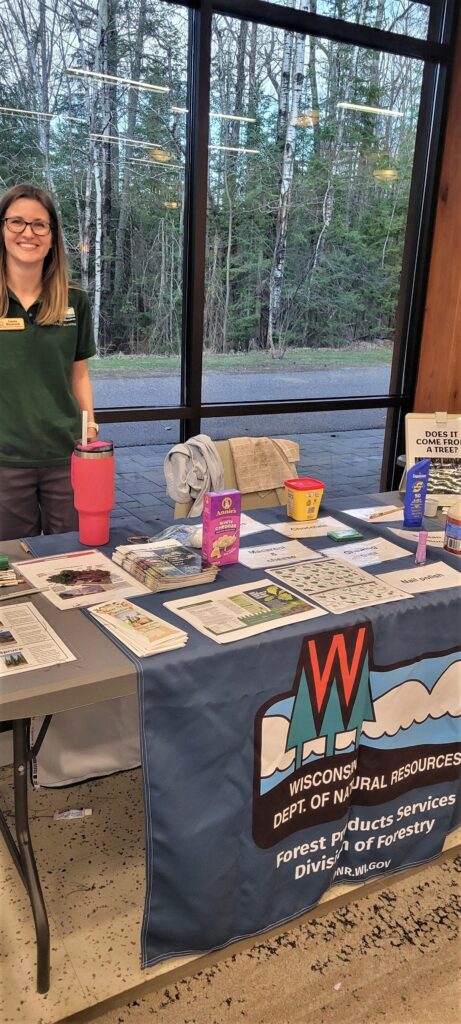
Laura Buntrock hosted an urban forestry booth at Rhinelander’s Earth Day Sustainability Fair, where she educated the public on the benefits of urban trees, provided resources and answered questions.
April and May might just be the busiest months of the year for the Urban Forestry staff. This small but mighty team participates in as many Arbor Day, Earth Day and Forest Appreciation Week events as they can fit into their schedules. Municipalities, schools and nonprofits tend to spread out their events over a couple months rather than scheduling them all on Arbor Day, which allows the staff to get to more events.
The Urban Forestry team’s involvement in these events varies and can include tree planting, seedling distribution, education and tree-related activities, such as competing for the loudest Arbor Day cheer. If you have an event you would like an Urban Forestry staff member to attend at any time of the year, get your request in early!
Here are just a few of the events that Urban Forestry staff attended. Continue reading “The Urban Forestry Staff Springs Into Action For Arbor Day” →

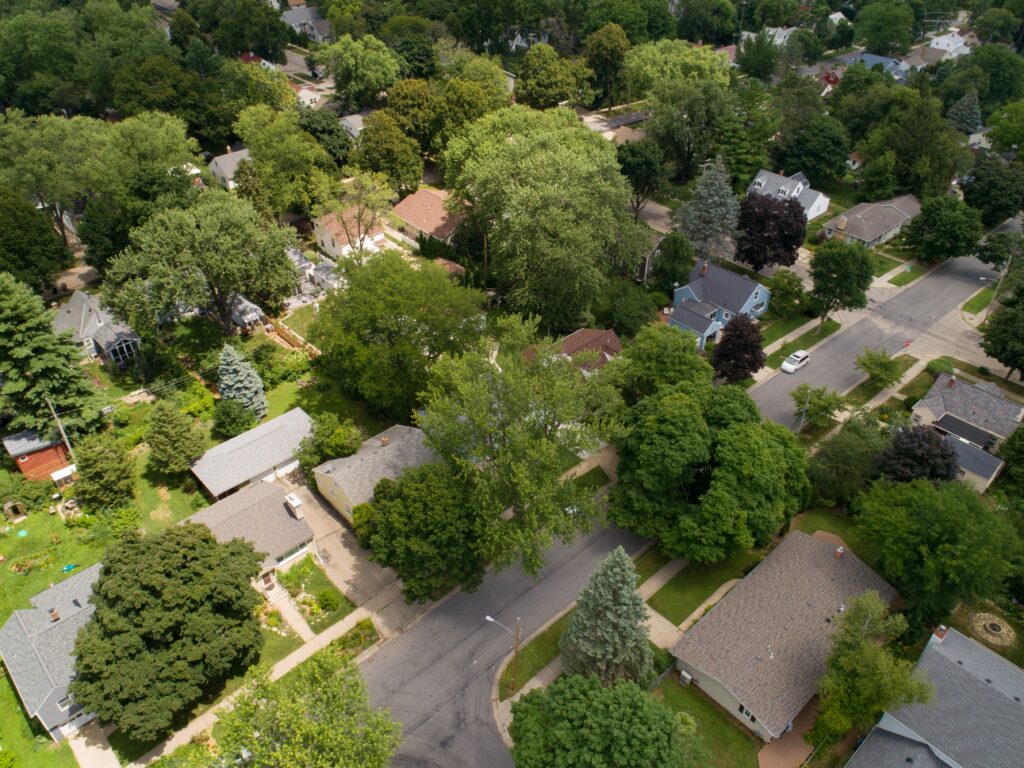 Beginning July 1, 2026, cities, villages, towns, counties, tribes and 501(c)(3) nonprofit organizations conducting projects in Wisconsin can apply for a regular or startup 2027 Wisconsin Department of Natural Resources (DNR) Urban Forestry grant. Continue reading “2027 Urban Forestry Grants Announced”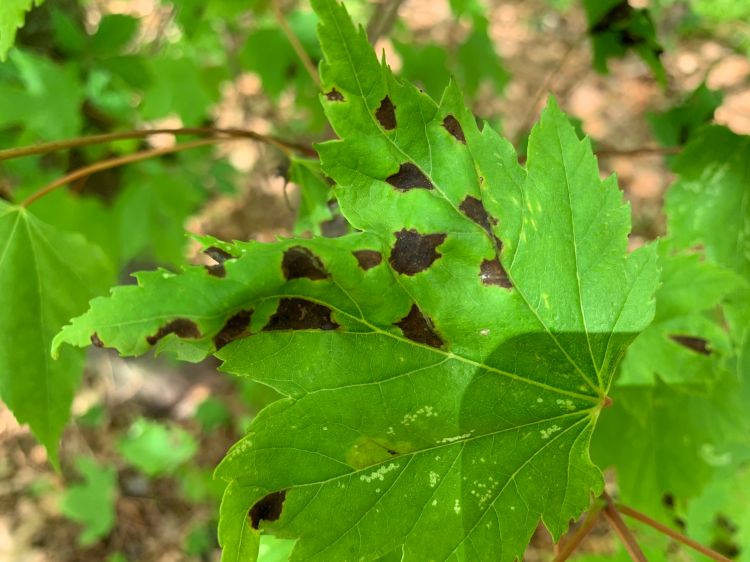
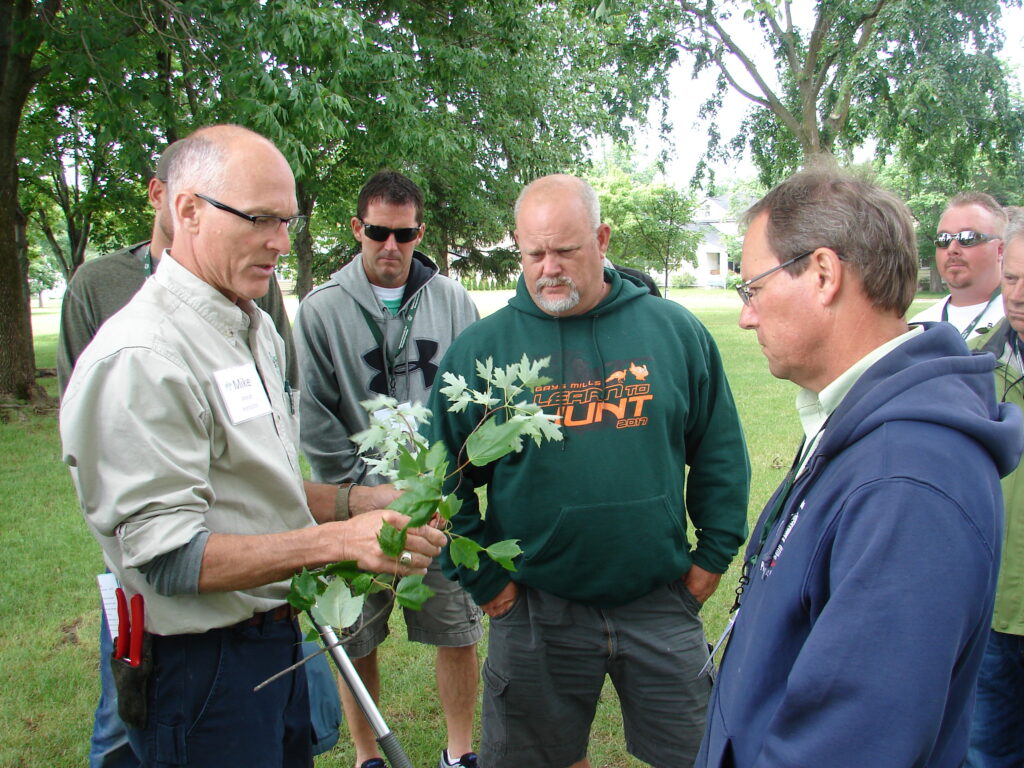 See below for information on training topics and events, including the WAA Summer Conference, leadership, pollinator habitats, safety, tree ID and the ISA Annual Conference.
  Over the years, a growing body of research has proven that regular access to trees makes us happier and healthier. They restore our sense of calm from head to toe — improving memory and attention span, enhancing cognitive functioning, lowering blood pressure and reducing cortisol levels.
 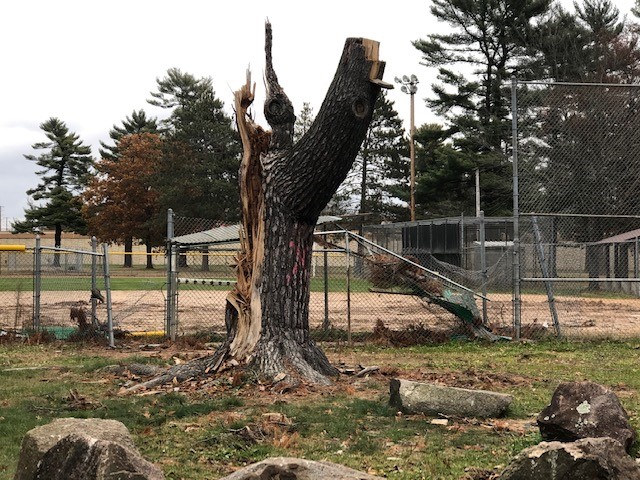 With recent storms passing through Wisconsin, communities may still be working on clean-up. Depending on the intensity of the storms and the condition of the trees, damage from high winds, heavy rainfall, hail and lightning can be quite severe. Cracked or broken branches, trunk damage and root failure are some of the main concerns, but also the risk and liability of damage to people and property.
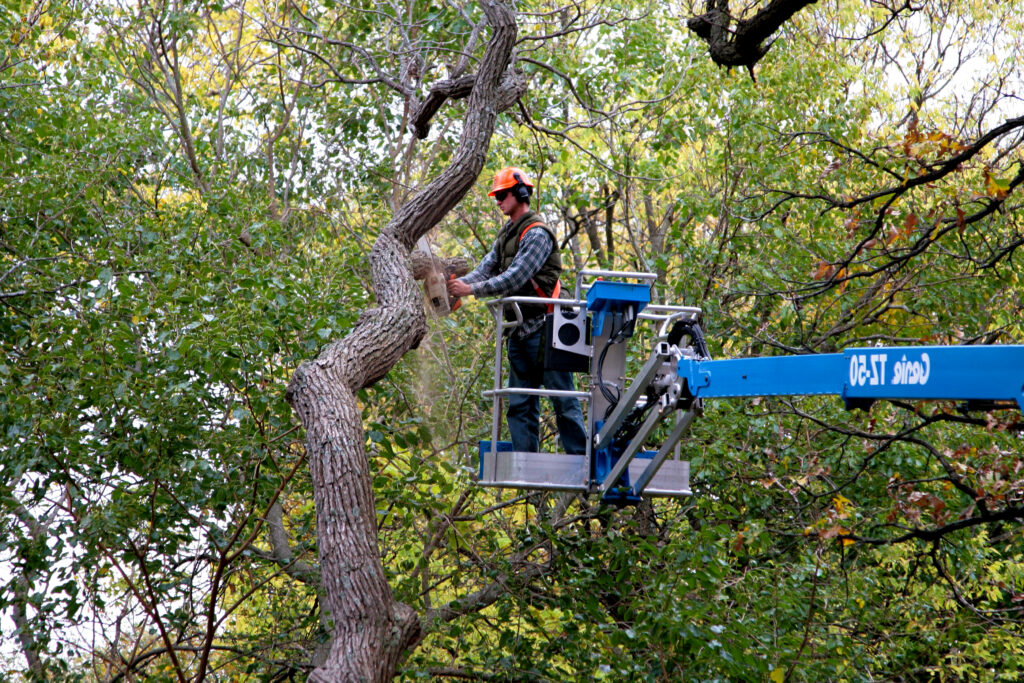 The American National Standards Institute (ANSI) Z133, more affectionately known at “The Z”, is the standard that contains arboriculture safety requirements for pruning, repairing, maintaining and removing trees, cutting brush and using equipment in such operations. If you’re reading this newsletter, you, your staff or your contactors likely participate in work that falls under the purview of this standard.