Month: July 2026

Forest Health Team Debuts Two New Fact Sheets

An image of the front page of a DNR fact sheet.

The front page of the Wisconsin DNR’s new Forest Health Fact Sheet on oak decline. / Graphic Credit: Wisconsin DNR

By Art Kabelowsky, DNR Outreach and Communications, Fitchburg
Arthur.Kabelowsky@wisconsin.gov or 608-335-0167

The Wisconsin Department of Natural Resources Forest Health team has published two new fact sheets, bringing the total count of its fact sheet offerings to 26.

The new fact sheets:

  • Fall Webworm: DNR Publication FR-622u discusses basic information on the biology of the insect (Hyphantria cunea), its life cycle, potential lookalike caterpillars and management options.
  • Oak Decline: DNR Publication FR-622v covers the tricky topic of oak decline, which is not caused by one distinct forest pest or problem but instead is the result of multiple factors — some predisposing, some inciting and some contributing — that work in combination to cause decline.

The fact sheets are designed in full color, with photos, and are meant to be printed out for reference or to carry into the field. They can also be viewed online. They can be printed on standard letter-sized paper. Most fact sheets are two pages, meant for two-sided printing; a few are four-page documents.

A complete directory of links to all DNR Forest Health fact sheets is available online.

Forest Health Staffers Plan Appearances

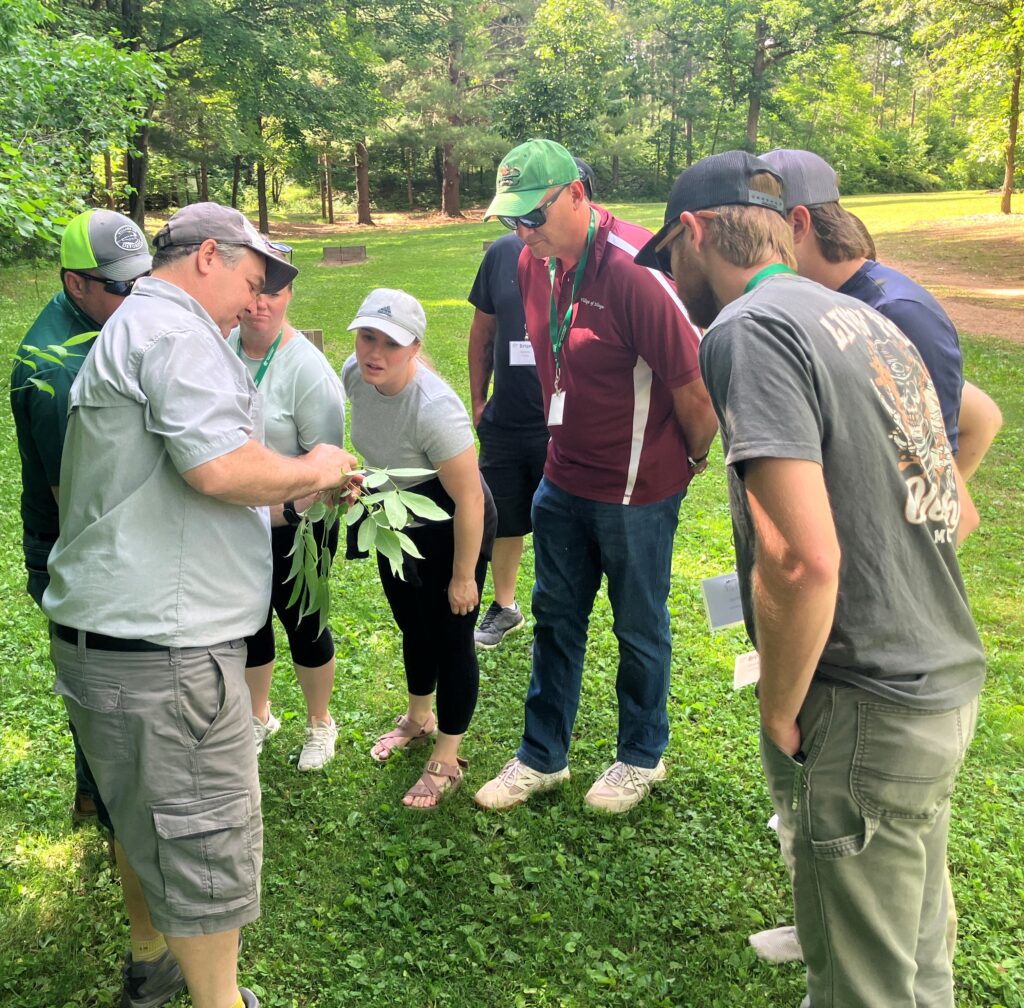
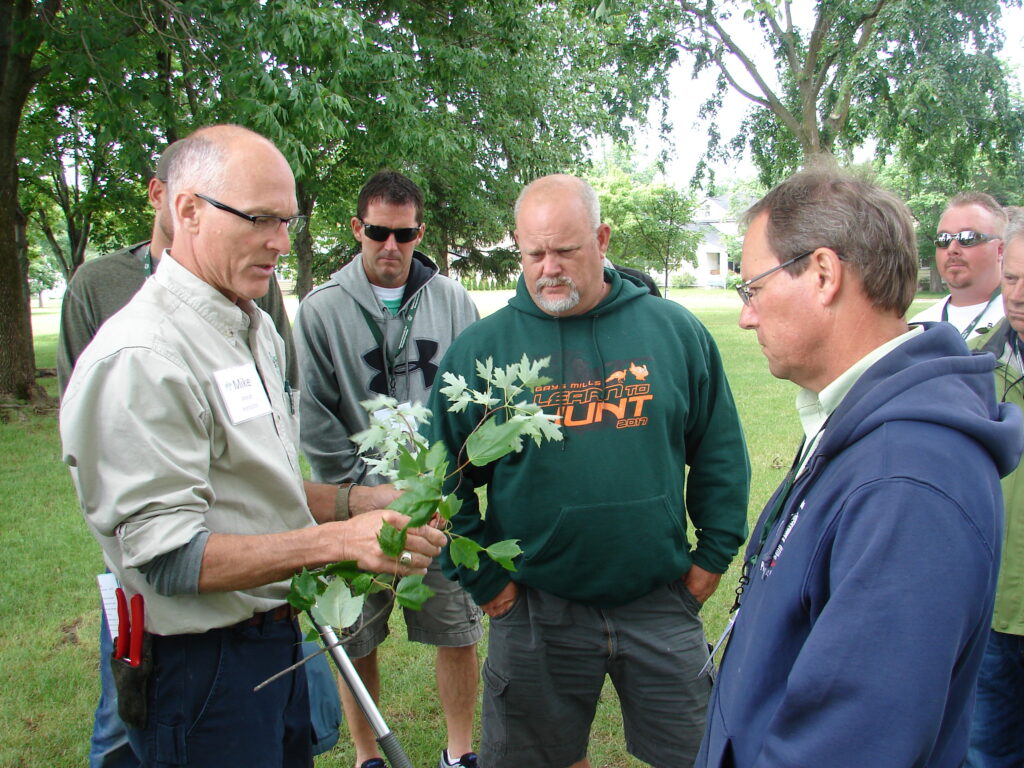
Two workers inspecting a tree's leaves.

Mike Hillstrom and Linda Williams of the Wisconsin Department of Natural Resources Forest Health team look over a tree during a walking tour put on by the Cambridge Tree Project on July 10, 2025. / Photo Credit: Wisconsin DNR

By Art Kabelowsky, DNR Outreach and Communications, Fitchburg
Arthur.Kabelowsky@wisconsin.gov or 608-335-0167

Mike Hillstrom, Invasive Forest Pest Coordinator for the Wisconsin DNR Forest Health Team, will make a presentation on forest health to the Heartland National Christmas Tree Organizations Convention, scheduled for Friday, Aug. 7, at Hann’s Christmas Farm, 848 Tipperary Road, Oregon, WI 53575.

Continue reading “Forest Health Staffers Plan Appearances”

Oak Decline May Continue In 2026

A wide view of declining oak trees following spongy moth defoliation and drought.

Oak trees with thin canopies experiencing decline following spongy moth defoliation and drought in the prior few years. / Photo Credit: Wisconsin DNR

By River Mathieu, DNR Forest Health Specialist, Fitchburg
River.Mathieu@wisconsin.gov

Oak decline is a complicated forest health issue impacting oak forests in Wisconsin.

In the past few years, oak decline has been recorded in several regions of Wisconsin, primarily linked to spongy moth defoliation and drought conditions that occurred from 2022-2024.

As the summer months of 2026 continue to unfold, oak decline may continue in areas previously impacted by spongy moth and drought.

Continue reading “Oak Decline May Continue In 2026”

Species Spotlight: Red Hailstone

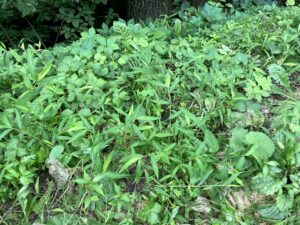
A large creeping vine blankets neighboring trees and plants.

A red hailstone infestation in Dane County blankets surrounding vegetation and can be seen climbing into trees. / Photo Credit: Wisconsin DNR

By Carter Hellenbrand, DNR Invasive Plant Field Specialist, Fitchburg
Carter.Hellenbrand@wisconsin.gov

Note: This is the third installment in the Forest Health News “Invasives Spotlight” series, a series of articles released monthly during the growing season.

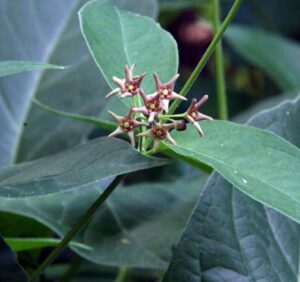
What is heart-shaped and hairy all over? Red hailstone!

Two hands holding tubers of the red hailstone plant.

Underground tubers of red hailstone. The tubers easily break off to create new plants. / Photo Credit: Wisconsin DNR

Also known as golden creeper or Manchu tubergourd (Thladiantha dubia), this invasive perennial vine can grow 18 feet in a single growing season and spreads through underground potato-like tubers that break off from the root system to create new populations.


Continue reading “Species Spotlight: Red Hailstone”

Watch for Asian Longhorned Beetle

Closeup of an insect crawling on a person's hand.

An adult Asian longhorned beetle. / Photo Credit: Wisconsin DNR

By Michael Hillstrom, DNR Invasive Forest Pest Coordinator, Fitchburg
Michael.Hillstrom@wisconsin.gov or 608-513-7690

Asian longhorned beetle (ALB) has not been found in Wisconsin, but early detection is critical to eliminating it from infested areas. Forest Health workers from Wisconsin, Michigan, Minnesota and Manitoba, Canada, recently had the opportunity to visit an active ALB infestation in South Carolina to learn how to identify infested trees. This experience will greatly enhance staff’s ability to detect ALB and respond rapidly.

Continue reading “Watch for Asian Longhorned Beetle”

Cooperative Enlists Public To Make Tree Health A Snap

A worker speaks with colleagues in a forested area.

Dr. Scott O’Donnell, center, a forest geneticist with the Wisconsin Department of Natural Resources Forest Economics and Ecology section, updates members of the DNR Forest Health team on upcoming genetic projects at an orchard near Lake Tomahawk in Hazelhurst during the Forest Health team’s summer meeting on May 25, 2024. / Photo Credit: Wisconsin DNR

By Art Kabelowsky, DNR Outreach and Communications, Fitchburg
Arthur.Kabelowsky@wisconsin.gov or 608-335-0167

It takes more than a village to foster healthy forests. More than a township, a city and a county, too. Sometimes, even more than a state.

That’s why the Great Lakes Basin Forest Health Cooperative (GLB FHC) was formed five years ago by Holden Arboretum in Ohio and the U.S. Department of Agriculture Forest Service.

Geographically, the group’s region encompasses an area from New Jersey to Wisconsin. The Wisconsin Department of Natural Resources (DNR) is an active member.

Continue reading “Cooperative Enlists Public To Make Tree Health A Snap”