Month: May 2026

Green, Sawyer Counties Added To Spongy Moth Quarantine

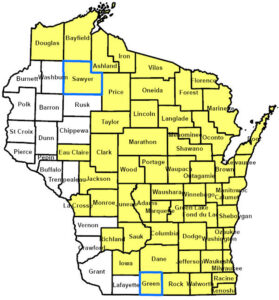
Map of Wisconsin showing counties in yellow quarantine for spongy moth.

The updated map of spongy moth quarantined counties in Wisconsin, showing the April 15 addition of Green and Sawyer counties to the quarantined list. / Map Credit: Wisconsin DNR

By Wisconsin DNR

Green and Sawyer counties have become the latest additions to Wisconsin’s spongy moth quarantine, joining most eastern and central Wisconsin counties already considered to be infested by the invasive insect.

The announcement was made April 15 by the Wisconsin Department of Agriculture, Trade and Consumer Protection (DATCP), based on trapping data collected last year.

Continue reading “Green, Sawyer Counties Added To Spongy Moth Quarantine”

Fungicide For HRD Stump Treatment Available In Smaller Size

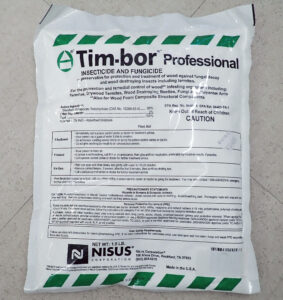
A bag of Tim-bor Professional, a borate-based chemical that fights Heterobasidion root disease. / Photo Credit: Wisconsin DNR

By Kyoko Scanlon, Forest Pathologist, Fitchburg
Kyoko.Scanlon@wisconsin.gov

People who have been dealing with Heterobasidion Root Disease (HRD) may be familiar with the product name “Cellu-Treat®.” It has been used to treat fresh cut stumps to prevent HRD.

But Cellu-Treat® is not the only chemical available for HRD. Another borate-based chemical, Tim-bor® Professional, can also be used legally for the same purpose in Wisconsin. Both products are manufactured by Nisus Corporation, and their labels are almost identical (Cellu-Treat label, Tim-bor label).

Continue reading “Fungicide For HRD Stump Treatment Available In Smaller Size”

Cooperative Hemlock Woolly Adelgid Trapping Effort Begins

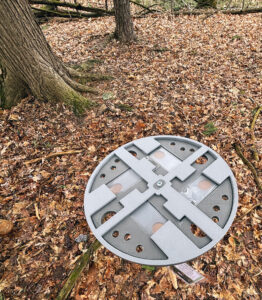
A 3-D printed trap used to collect hemlock woolly adelgid DNA. / Photo Credit: Wisconsin DNR

By Michael Hillstrom, DNR Invasive Forest Pest Coordinator, Fitchburg
Michael.Hillstrom@wisconsin.gov or 608-513-7690

This spring, the Wisconsin Department of Natural Resources (DNR) is collaborating with the Wisconsin Department of Agriculture, Trade and Consumer Protection (DATCP) to set traps to detect the invasive insect hemlock woolly adelgid (Adelges tsugae; HWA).

The project, funded by the Wisconsin Specialty Crop Block Grant Program, calls for traps to be set to detect the invasive insect. No detection of HWA has been made to date in Wisconsin forests. Continue reading “Cooperative Hemlock Woolly Adelgid Trapping Effort Begins”

Species Spotlight: Japanese Honeysuckle

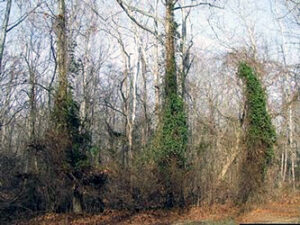
Japanese honeysuckle climbing up nearby trees. / Photo Credit: Leslie J. Mehrhoff, University of Connecticut, Bugwood.org

By Carter Hellenbrand, DNR Invasive Plant Field Specialist, Fitchburg
Carter.Hellenbrand@Wisconsin.gov  

Note: This is the first installment in the Forest Health News “Invasives Spotlight” series, a monthly series of Forest Health News articles.

Many people recognize honeysuckle as a fast-spreading invasive shrub that can quickly displace native vegetation. But did you know that some honeysuckles exist as a vine?

Japanese honeysuckle (Lonicera japonica) is an invasive perennial vine that can grow to a length of 80 feet or longer. Birds will often eat and disperse the berries the vine produces, allowing for the creation of new populations.

Continue reading “Species Spotlight: Japanese Honeysuckle”

Take Precautions to Prevent Tick Bites

An adult deer tick looks for a spot to attach. / Photo Credit: Wisconsin DNR

By Michael Hillstrom, DNR Forest Health Specialist, Fitchburg
Michael.Hillstrom@wisconsin.gov

Adult blacklegged (deer) ticks are already active this year, as of March 2026. The adults start looking for a host as soon as it warms up to around 40 degrees Fahrenheit.

In Wisconsin, between 20-60 percent of adult ticks are infected with the bacteria that causes Lyme disease. However, the risk of getting Lyme disease is higher with bites from nymphal ticks, which are most abundant in June and July, because they are so tiny and difficult to find. While only 10-28 percent of nymphs are infected with the Lyme disease bacteria in Wisconsin, rapid removal of a tick can reduce the risk of infection because it takes at least 24 hours for the Lyme bacteria to spread.

Continue reading “Take Precautions to Prevent Tick Bites”

Campers Reminded: Don’t Move Firewood

A self-service firewood point of sale at Mirror Lake State Park in Sauk County. / Photo Credit: Wisconsin DNR

By Art Kabelowsky, DNR Outreach and Communications,  Fitchburg
Arthur.Kabelowsky@wisconsin.gov or 608-335-0167

With camping season about to enter full swing, the Wisconsin Department of Natural Resources (DNR) urges campers to think twice before giving invasive species or harmful hitchhikers a ride in their firewood.

Memorial Day marks the unofficial start of summer, and campfires are a Wisconsin summer staple. And campers should know it’s a big help to the state’s trees when they help to prevent the spread of invasive pests by making smart firewood choices.

Continue reading “Campers Reminded: Don’t Move Firewood”

Governor Plants Seeds Of Celebration For Wisconsin’s Forests

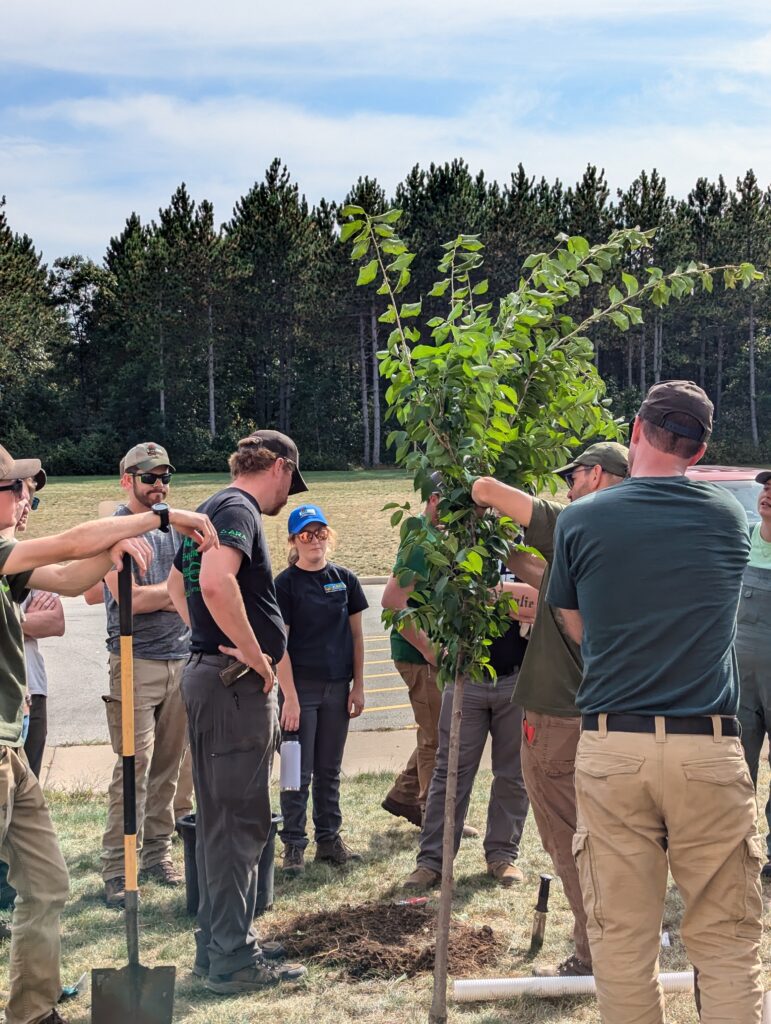
Wisconsin Gov. Tony Evers (second from right) joins educators working with the Lodi School Forest during a tree planting event on Arbor Day 2026.

By Art Kabelowsky, DNR Forest Health Outreach and Communications
Arthur.Kabelowsky@wisconsin.gov; 608-335-0167

Wisconsin Governor Tony Evers didn’t have to go out on a limb to make this announcement.

By issuing a Governor’s Proclamation last month, Gov. Evers has shined a spotlight on Wisconsin’s 17 million acres of forestland. His announcement officially recognized Wisconsin’s participation in Forest Appreciation Week and Arbor Day.

Continue reading “Governor Plants Seeds Of Celebration For Wisconsin’s Forests”

Forest Health Specialist Paul Cigan Spreads The News

Paul Cigan (in black hat) discusses the health of a tree with fellow Wisconsin Department of Natural Resources Forest Health specialists Bill McNee and Linda Williams in Cambridge. / Photo Credit: Wisconsin DNR

By Art Kabelowsky, DNR Outreach and Communications, Fitchburg
Arthur.Kabelowsky@wisconsin.gov or 608-335-0167

Paul Cigan, the Wisconsin Department of Natural Resources Forest Health specialist for Northwest Wisconsin, has planned a public discussion for Tuesday, June 30, in Ashland.

Cigan will give a presentation on “Invasive Insects and Diseases” and take questions from those in attendance at the event, set for 6 p.m. June 30 at the Northern Great Lakes Visitors Center, 29270 County Hwy. G, Ashland.

Continue reading “Forest Health Specialist Paul Cigan Spreads The News”