Care for your woods

Maple Leaf Blister And Anthracnose: Two Diseases Of Maple Leaves

By Nathaniel WaltonMichigan State University Extension

Updated from an original article written by Diane Brown and Lori Imboden

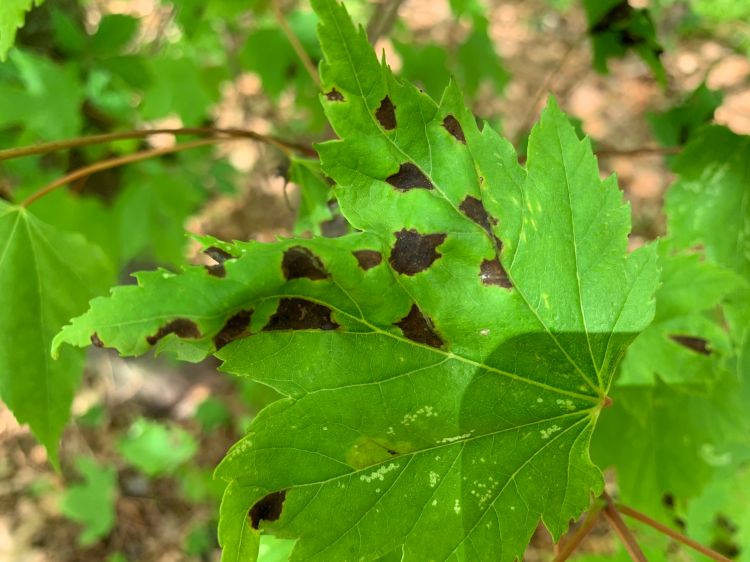
Irregularly shaped anthracnose lesions on a red maple (Acer rubrum) leaf. Photo by Rebecca Finneran, MSU Extension.

Each year, Michigan State University Extension receives questions from the public regarding spots on the leaves of their favorite maple trees. Both anthracnose and maple leaf blister can be the cause of late spring and early summer damage to leaves of these popular landscape trees. Continue reading “Maple Leaf Blister And Anthracnose: Two Diseases Of Maple Leaves”

Upcoming Training & Events

* These training opportunities are provided as an information service only and do not constitute endorsement by the Wisconsin Department of Natural Resources (DNR).

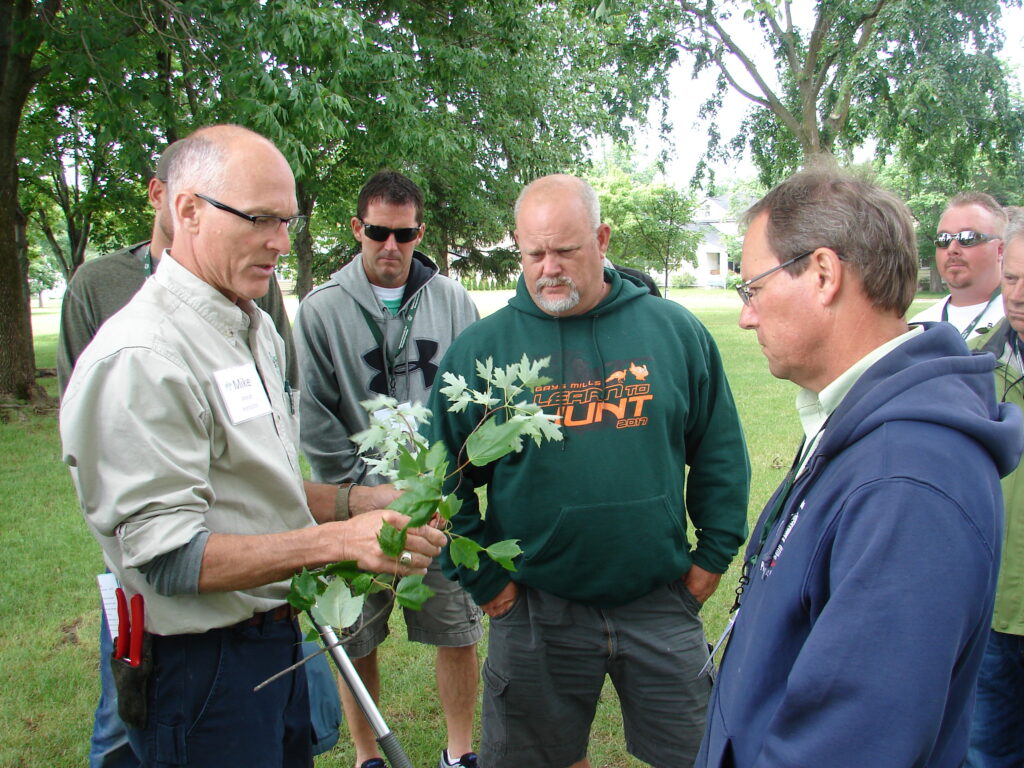
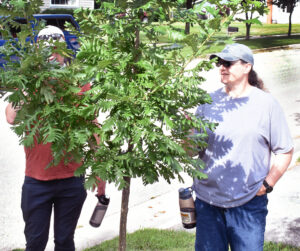
group of adult learning to identify treesSee below for information on training topics and events, including the WAA Summer Conference, leadership, pollinator habitats, safety, tree ID and the ISA Annual Conference. Continue reading “Upcoming Training & Events”

Watch For Spongy Moth Caterpillars And Tree Damage This Summer

By Bill McNee, Forest Health Specialist, Oshkosh
Bill.McNee@wisconsin.gov

Close-up of caterpillar feeding on a leaf.

A spongy moth caterpillar feeds on a leaf. / Photo Credit: Wisconsin DNR

Property owners are encouraged to monitor their trees for spongy moth larvae and damage this summer to determine whether control measures are needed.

Property owners who have oak, birch, crabapple, aspen, willow and linden (basswood) trees should be particularly watchful because the caterpillars of this invasive insect prefer these species.

However, they will feed on many other kinds of trees and shrubs.

Continue reading “Watch For Spongy Moth Caterpillars And Tree Damage This Summer”

Spruce Budworm Outbreak Continues In 2026

Young spruce budworm larvae begin feeding as buds break, causing the new growth to crook where feeding damage occurs. Webbing shown in the photo is also common. / Photo Credit: Wisconsin DNR

By Linda Williams, Forest Health Specialist, Woodruff
Linda.Williams@wisconsin.gov or 920-360-0665 

The spruce budworm outbreak is continuing for yet another year in some areas of northern Wisconsin.

Continue reading “Spruce Budworm Outbreak Continues In 2026”

Invasive Species Action Month: Action Awards, Awareness Weekend

The 2025 winners of the Invasive Species Action Awards. / Photo Credit: Wisconsin DNR

By Mackenzie Manicki, DNR Invasive Plant Specialist, Madison

In Wisconsin, June is Invasive Species Action Month (ISAM), and plenty of activities are planned to educate and motivate residents and visitors into action.

Invasive species are defined as nonnative organisms whose introduction can cause harm to the environment, the economy, or pose threats to human health.

Continue reading “Invasive Species Action Month: Action Awards, Awareness Weekend”

Invasives Spotlight: Black and Pale Swallow-wort

By Carter Hellenbrand, DNR Invasive Plant Field Specialist, Fitchburg
Carter.Hellenbrand@Wisconsin.gov

Note: This is the second installment in the Forest Health News “Invasives Spotlight” series, a monthly series of Forest Health News articles.

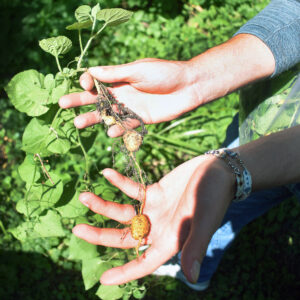
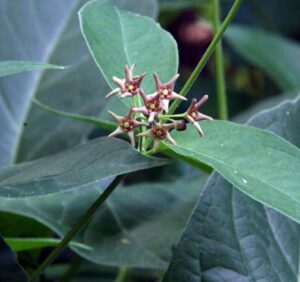
Monarch butterflies are dependent on native milkweed for survival. But did you know there are invasive plants within the milkweed family that negatively impact this relationship?

Continue reading “Invasives Spotlight: Black and Pale Swallow-wort”

Invasives And Imposters: Native Look-Alikes To Know

By Wisconsin DNR

With 145 invasive plants regulated under Wisconsin’s Invasive Species Rule NR40, it can be challenging to identify some of these plants while out in the woods.

The task can be further complicated by the presence of native lookalikes — plants that have a similar appearance to harmful invasive species, but are native plants that benefit wildlife, pollinators and ecosystems in Wisconsin.

Continue reading “Invasives And Imposters: Native Look-Alikes To Know”

University of Minnesota Seeks Reports On Dying Black Locust Stands

Wide view of struggling black locust trees.

A stand of dead or dying black locust trees. / Photo Credit: Norbert Frank, Bugwood.org

By Ryan Franke, University of Minnesota

The Blanchette Forest Pathology Lab at the University of Minnesota is leading a project to study black locust in Minnesota and Wisconsin and requests the help of foresters and the public in locating stands of dying black locust (Robinio pseudoacacia) this summer.

The university plans to collect native pathogenic fungi from stands of dying black locust and testing them for their suitability to biologically control black locust clones.

Continue reading “University of Minnesota Seeks Reports On Dying Black Locust Stands”

Upcoming Training & Events

group of people learning to plant a tree* These training opportunities are provided as an information service only and do not constitute endorsement by the Wisconsin Department of Natural Resources (DNR).

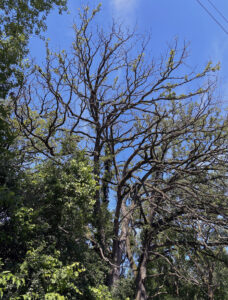
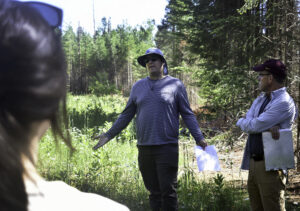
See below for information on training topics and events including i-Tree, American elm research, oak health issues, invasives and private equity. Continue reading “Upcoming Training & Events”

Fungicide For HRD Stump Treatment Available In Smaller Size

A bag of Tim-bor Professional, a borate-based chemical that fights Heterobasidion root disease. / Photo Credit: Wisconsin DNR

By Kyoko Scanlon, Forest Pathologist, Fitchburg
Kyoko.Scanlon@wisconsin.gov

People who have been dealing with Heterobasidion Root Disease (HRD) may be familiar with the product name “Cellu-Treat®.” It has been used to treat fresh cut stumps to prevent HRD.

But Cellu-Treat® is not the only chemical available for HRD. Another borate-based chemical, Tim-bor® Professional, can also be used legally for the same purpose in Wisconsin. Both products are manufactured by Nisus Corporation, and their labels are almost identical (Cellu-Treat label, Tim-bor label).

Continue reading “Fungicide For HRD Stump Treatment Available In Smaller Size”