Partners

Forest Health Staffers Plan Public Appearances

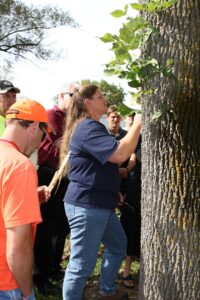
Workers inspect a tree's health.

Linda Williams, DNR Forest Health specialist for Northeast Wisconsin, inspects a tree during a training session. / Photo Credit: Wisconsin DNR

By Art Kabelowsky, DNR Forest Health Communications, Fitchburg;
Arthur.Kabelowsky@wisconsin.gov or 608-335-0167

Linda Williams, Wisconsin Department of Natural Resources Forest Health specialist for Northeast Wisconsin, will speak at multiple “Learn About Your Land” teaching events scheduled in September.

Continue reading “Forest Health Staffers Plan Public Appearances”

Growing A Climate‑Ready, Wildlife‑Friendly Urban Forest In Eau Claire: CTMI Project

By Jane Mohler

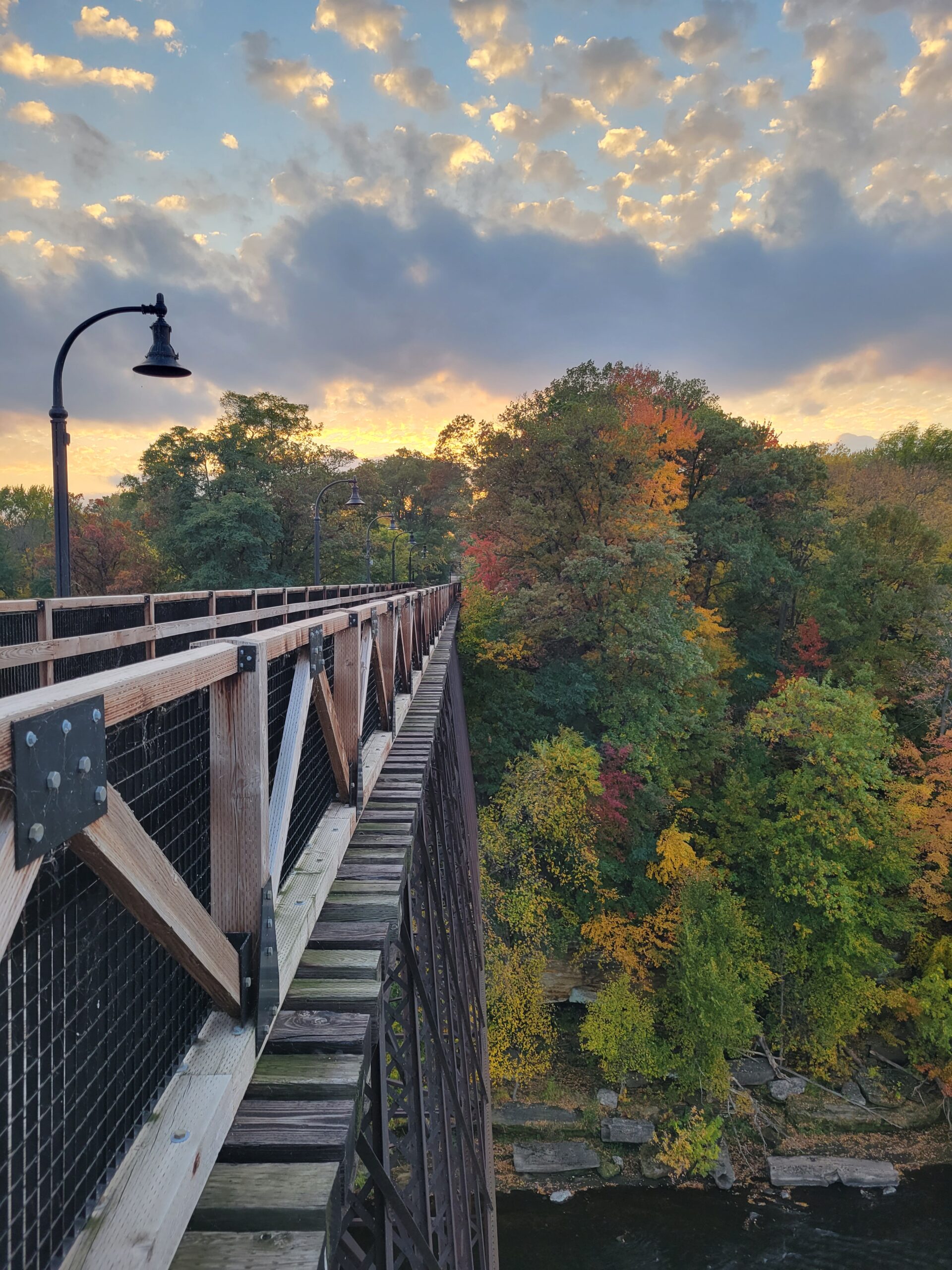
Trees in Eau Claire

Trees flank the pedestrian High Bridge Trail in Eau Claire. / Photo Credit: Wisconsin DNR

As co‑chair of the Chippewa Valley Biodiversity Partnership and a member of the Eau Claire Urban Forest Board, I joined the 2025-26 Wisconsin DNR Community Tree Management Institute (CTMI) to expand my skillset and take advantage of networking opportunities. CTMI is an advanced training course designed specifically for people responsible for urban forest management who do not have a degree/formal training in urban forestry and/or would like to hone their leadership and management skills. This program culminates in a final project utilizing the skills and knowledge gained throughout the 38 hours of instruction.

The shared goal was simple and urgent: help Eau Claire grow an urban forest that can handle a changing climate while supporting birds, pollinators and people for decades to come. We saw a quiet but powerful opportunity in the city’s Recommended Tree List. This “go‑to” list guides what gets planted along streets, in new subdivisions, around schools and in parks—and therefore, what our canopy will look like 30–50 years from now. Updating this list with climate and biodiversity in mind became the focus of my CTMI project. Continue reading “Growing A Climate‑Ready, Wildlife‑Friendly Urban Forest In Eau Claire: CTMI Project”

Upcoming Training & Events

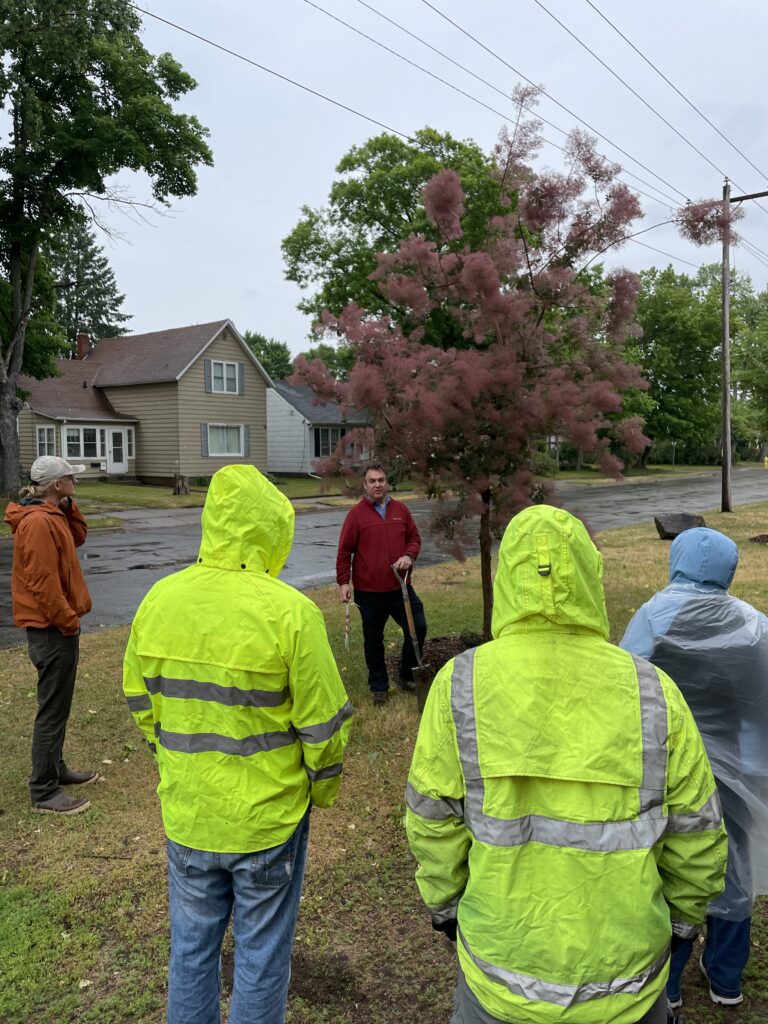
group learning about trees outside

Photo Credit: Wisconsin DNR

* These training opportunities are provided as an information service only and do not constitute endorsement by the Wisconsin Department of Natural Resources (DNR).

See below for information on training topics and events, including planting, urban forestry risks, invasive species, tree selection, emergency response, tree biology, climbing and several upcoming conferences. Continue reading “Upcoming Training & Events”

Students Graduate From The Community Tree Management Institute

By Olivia Witthun, DNR Urban Forestry Coordinator
Olivia.Witthun@wisconsin.gov or 414-750-8744

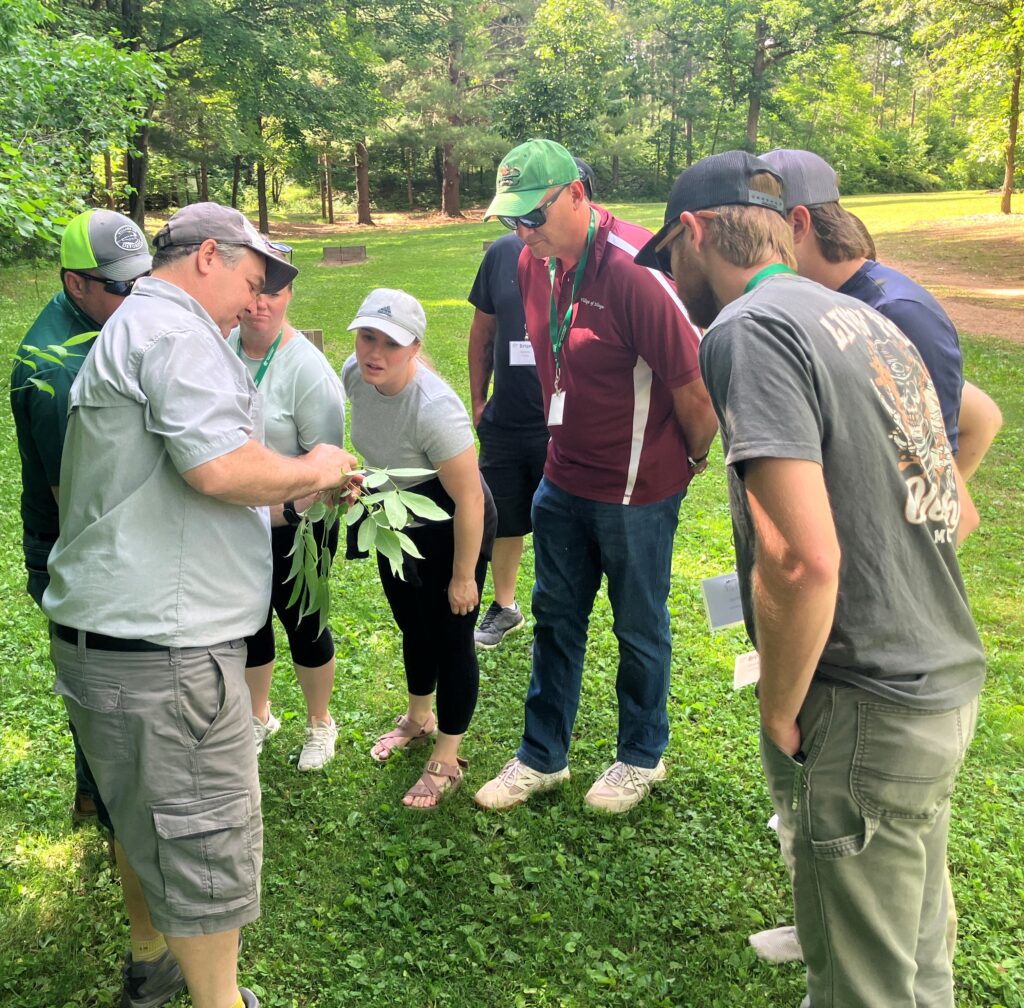
a group of people examining tree leavesCongratulations to the latest class of Wisconsin Community Tree Management Institute (CTMI) graduates! The CTMI wrapped up its sixth cohort mid-June.
CTMI is an advanced training course designed specifically for people responsible for urban forest management who do not have a degree and/or experience in urban forestry. Conversely, they may have technical skills but lack leadership and management experience.

Over six days of intensive training, students acquired the knowledge and skills needed to manage municipal trees and green space. Their exposure to various teaching perspectives gave them a well-rounded 38-hour training experience. The retreat-like setting created by the small class size and interactive learning curriculum reinforced the focus on support-network development with other students, staff and instructors. The capstone of the institute required each student to complete an applied project that benefited their community by utilizing their new skills and knowledge. Continue reading “Students Graduate From The Community Tree Management Institute”

Go Outside Funds Available

children learning outdoors

Photo Credit: Wisconsin DNR

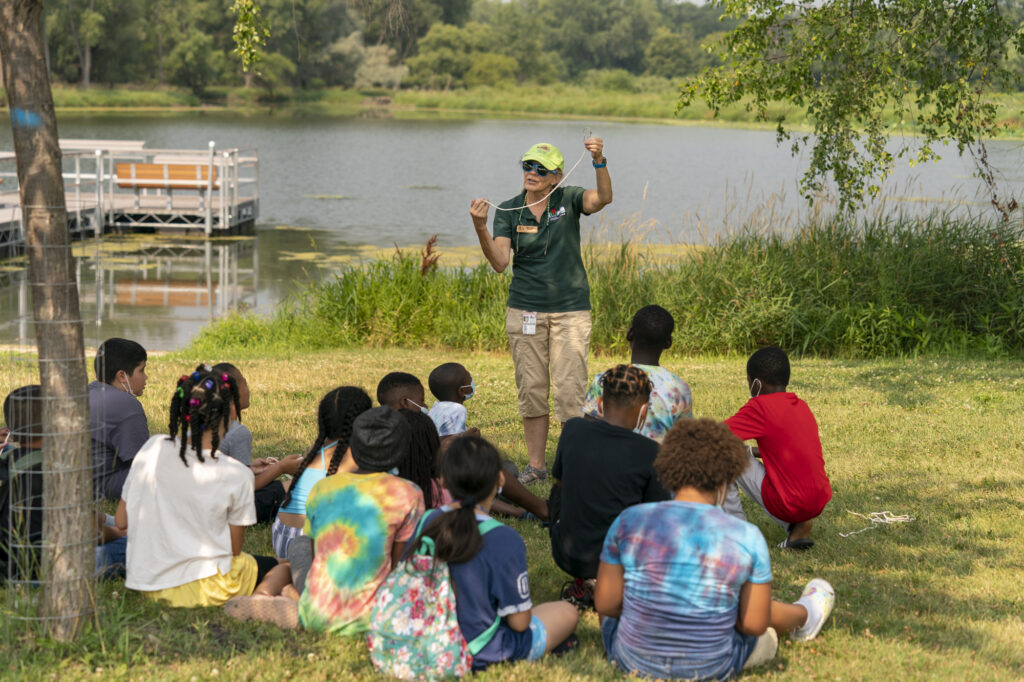
The Go Outside Fund provides funding that helps connect youth to outdoor, nature-based learning experiences. Teachers or partner organizations may apply for funding to cover costs that facilitate getting kids outside and hands-on with nature, such as purchasing field supplies or paying for transportation and educator costs. Grants between $100 and $1,500 are available. Educators, as well as eligible organizations, are welcome to apply, with the next deadlines for applications being Sept. 1 and March 1, 2026. Continue reading “Go Outside Funds Available”

The Urban Forestry Staff Springs Into Action For Arbor Day

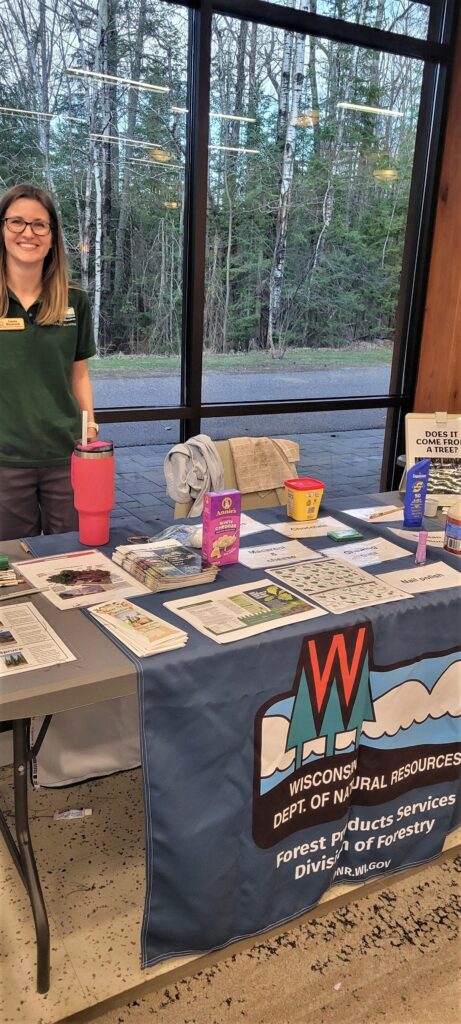
Laura Buntrock hosted an urban forestry booth at Rhinelander’s Earth Day Sustainability Fair, where she educated the public on the benefits of urban trees, provided resources and answered questions.

April and May might just be the busiest months of the year for the Urban Forestry staff. This small but mighty team participates in as many Arbor Day, Earth Day and Forest Appreciation Week events as they can fit into their schedules. Municipalities, schools and nonprofits tend to spread out their events over a couple months rather than scheduling them all on Arbor Day, which allows the staff to get to more events.

The Urban Forestry team’s involvement in these events varies and can include tree planting, seedling distribution, education and tree-related activities, such as competing for the loudest Arbor Day cheer. If you have an event you would like an Urban Forestry staff member to attend at any time of the year, get your request in early!

Here are just a few of the events that Urban Forestry staff attended. Continue reading “The Urban Forestry Staff Springs Into Action For Arbor Day”

Upcoming Training & Events

* These training opportunities are provided as an information service only and do not constitute endorsement by the Wisconsin Department of Natural Resources (DNR).

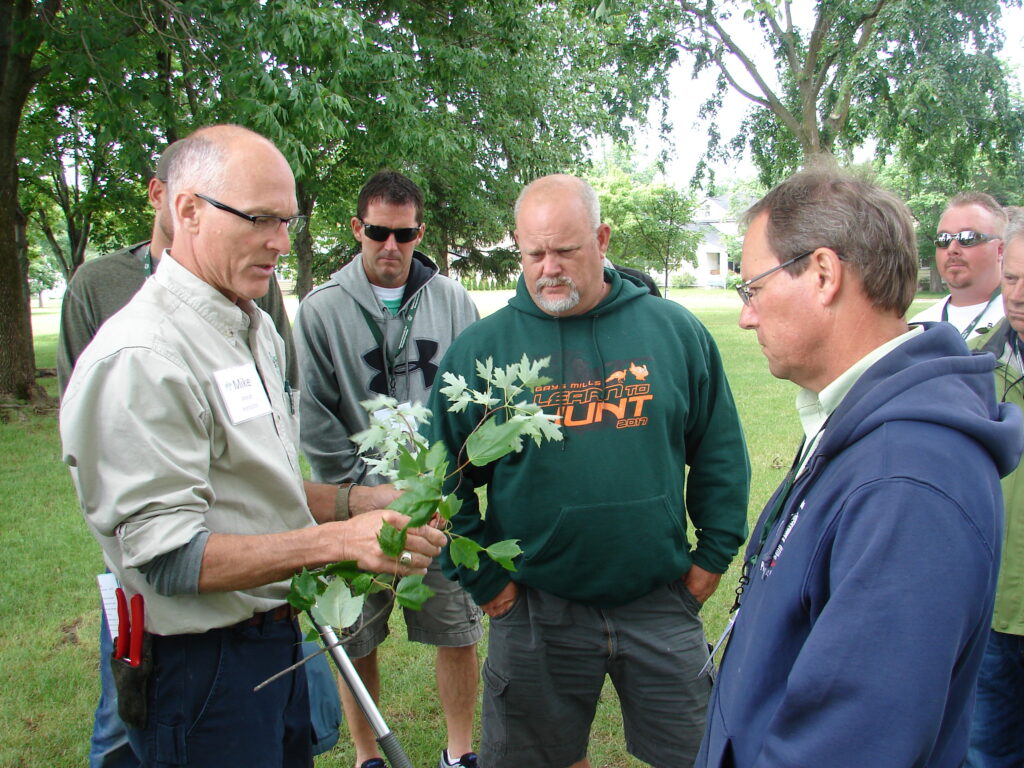
group of adult learning to identify treesSee below for information on training topics and events, including the WAA Summer Conference, leadership, pollinator habitats, safety, tree ID and the ISA Annual Conference. Continue reading “Upcoming Training & Events”

USDA Announces Availability Of New Log Truck Route Planner Tool

logoThe U.S. Department of Agriculture’s Agricultural Marketing Service (AMS) announced the launch of an innovative new tool, the Log Truck Route Planner, to help forest owners, mill operators and log truckers in the Pacific Northwest allocate timber and schedule log trucks. The system can assist users in coordinating routing between logging sites and sawmills, which can significantly increase the returns to log truck owners/operators, create efficiencies in the operation of sawmills and ultimately increase the market for U.S. timber products.

Continue reading “USDA Announces Availability Of New Log Truck Route Planner Tool”

New Program Connects Hunting Heritage With Landowner Forest Management

Photo of a young deer wanders through a woodlot with invasive plants.

A young deer wanders through a woodlot with invasive plants. / Photo Credit: Central Pennsylvania Forestry blog

By Bob Nack, DNR R3 Supervisor, Madison;
Robert.Nack@wisconsin.gov or 608-617-3492

A joint state-landowner program proven successful in Wisconsin areas is under consideration for expansion into more counties to combat the slow, but steady decline in active deer hunters, prompting concerns in both environmental and economic realms.

The program, also tested successfully in other states, requires participants to complete hunter education safety and online deer hunting 101 courses. Participants also are required to practice at the shooting range and join in live virtual meetings. Experienced mentors are ready to provide guidance and support to participants.

Adams County landowner Matt Dettlaff endorsed the program. “Our landowner cooperative recognized this program as another valuable new tool in our herd management toolbox,” he said.

Forest landowners, including Dettlaff, see the browsing impact high deer densities can have on tree regeneration and wildlife-habitat quality. One strategy of this program is to tap new adult hunters to harvest antlerless deer for specific property goals. Landowner participants would determine the antlerless harvest goals and control the hunting plans for their properties.

“We typically cannot harvest enough antlerless deer ourselves to meet our goals to keep the herd in balance with quality habitat,” Dettlaff said. “Helping introduce new folks to the deer hunting tradition we are passionate about is just an added feel-good bonus.” Check out this video from the 2025 late-season firearm hunt in Adams County.

Landowners passionate about forest management and the future of deer hunting are encouraged to participate in any of these ways:

Organized late-season firearm hunt for antlerless only: An organized firearm antlerless deer hunt in early December. Program includes an evening social and a deer-processing demonstration. Ideally, a landowner or group of area landowners provide hunting opportunities for at least 10 adult hunters. Landowners identify antlerless deer harvest goals for their property.
Archery hunting: The DNR contracts with Raised at Full Draw (RAFD) to provide archery educational programs. RAFD is piloting a Field to Fork bow hunting program for adults. Participants commit to attend weekly archery practices from June through August. Participants  are also expected to complete weekly homework online to review at in-person meetings. Before hunting, an archery shooting proficiency test will be administered by instructors to ensure participants have mastered their equipment to hunt ethically. RAFD is looking for landowners with property within an hour of Madison.

Interested? Contact Bob Nack, DNR R3 Supervisor, at Robert.Nack@wisconsin.gov or 608-617-3492.

Invasive Species Action Month: Action Awards, Awareness Weekend

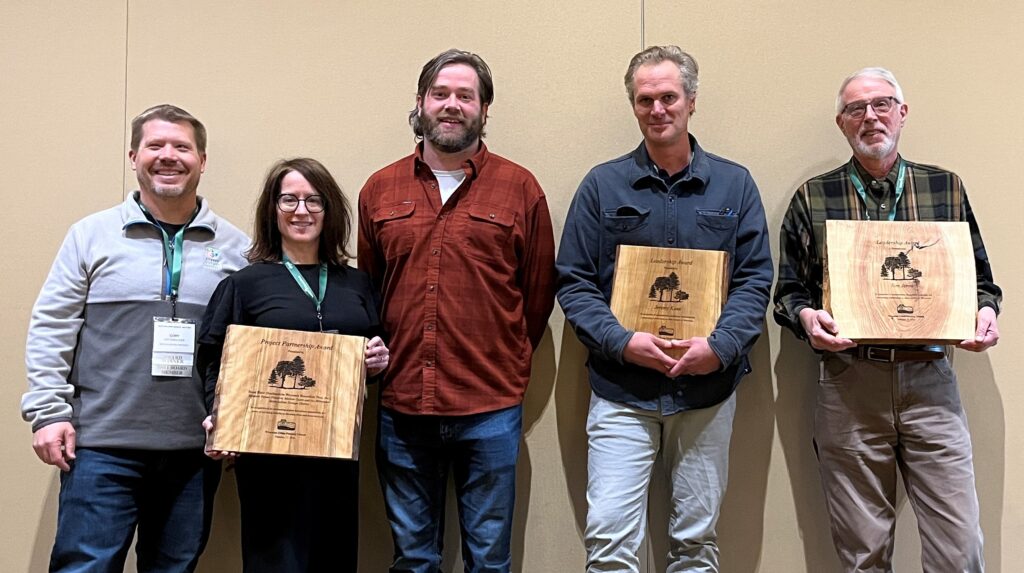
The 2025 winners of the Invasive Species Action Awards. / Photo Credit: Wisconsin DNR

By Mackenzie Manicki, DNR Invasive Plant Specialist, Madison

In Wisconsin, June is Invasive Species Action Month (ISAM), and plenty of activities are planned to educate and motivate residents and visitors into action.

Invasive species are defined as nonnative organisms whose introduction can cause harm to the environment, the economy, or pose threats to human health.

Continue reading “Invasive Species Action Month: Action Awards, Awareness Weekend”