
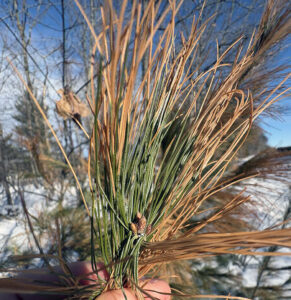
White pine with browning needles and needle tips from roadside salt spray damage. The uninjured overwintering buds at the base of the shoot will produce a new flush of growth in the spring, thereby reducing the visual appearance and health impact of the damage. / Photo Credit: Wisconsin DNR
By Paul Cigan, DNR Forest Health Specialist, Hayward
Paul.Cigan@wisconsin.gov or 715-416-4920
An active winter weather season for snow, freezing rain and fluctuating freeze/thaw temperatures has exposed white pine along roadways to salt spray damage.
Vaporized salt spray droplets from vehicle traffic can drift into the air and settle onto vegetation, with the heaviest deposits occurring within 150 feet of a roadway.
Salt droplets that are deposited onto needles draw water out of plant tissues, leading to partial to complete foliar browning, often starting at needle tips and progressing to the needle base. Browning is most heavily concentrated on branches facing the roadside and is less severe on those facing the opposite side.
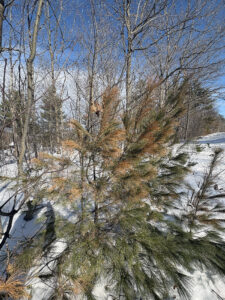
Salt spray damage on a white pine sapling along the edge of a roadway. Browing is usually more visible on the foliage facing the roadway where the spray drift originates. / Photo Credit: Wisconsin DNR
Foliar browning and subsequent needle loss can reduce growth rates and cause plant stress. These effects are often more harmful to seedlings and saplings compared to large trees, because a greater percentage of their total foliage is typically damaged and lost. Successive years of damage can leave branches sparse of foliage and can cause branch mortality over time.
While minor to moderate salt damage will not have a long-term effect on tree health and will have less visual impact as brown needles fall and new branch foliage grows, preventative measures can help reduce harmful levels of damage.
Placing physical barriers such as snow fencing, plastic or burlap around conifers in the fall can shield them from salt spray deposition. Salt residues can also be rinsed off with water during periods of warm weather prior to bud break to reduce damage.
Ensuring affected pine have an adequate supply of natural or supplemental water during spring shoot emergence promotes healthy shoot development that will ease the long-term impact of salt spray damage.