 The Partners in Community Forestry Conference is currently seeking speaking proposals for the upcoming conference Nov. 18-19 in St. Louis. Any passionate speakers, community leaders and learners are encouraged to send a proposal submission. These speeches are an opportunity to share your expertise and passion about community forestry with others. The topics for this year’s speaker proposals include: Continue reading “Submit Proposals For Partners In Community Forestry Conference”
Archives
Upcoming Training
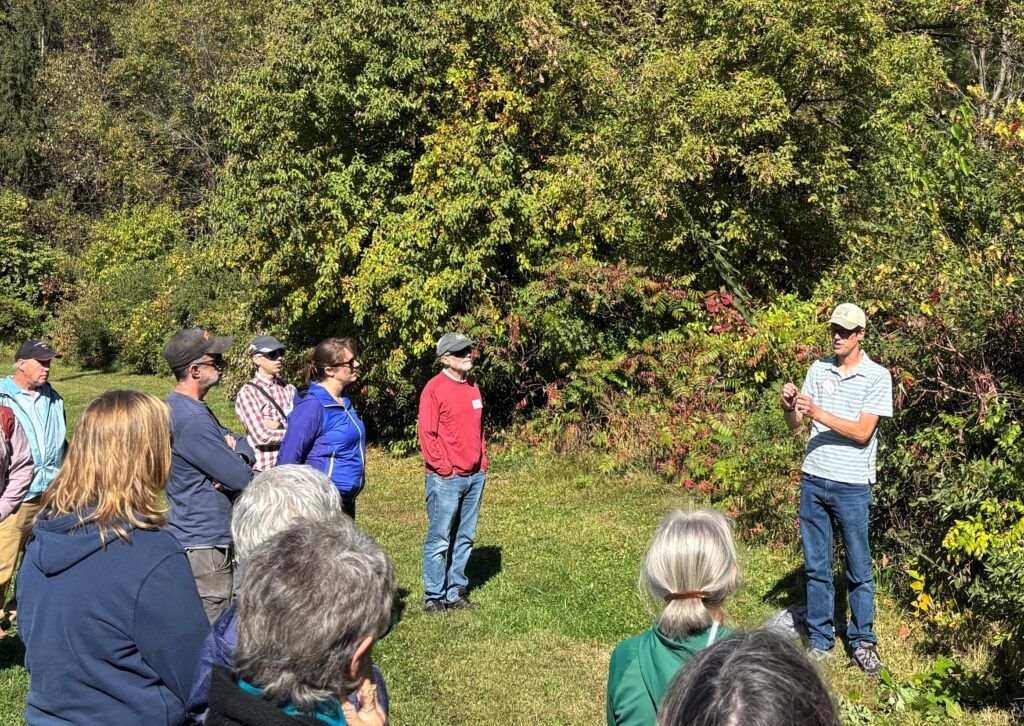
Photo Credit: Wisconsin DNR
* These training opportunities are provided as an information service only and do not constitute an endorsement from the Wisconsin Department of Natural Resources (DNR).
See below for training on urban forestry basics, tree risk fundamentals in Spanish, plant diseases and pests, invasive species, student apprenticeships, nut trees and other urban forestry resources. Continue reading “Upcoming Training”
Wisconsin’s Urban Forestry Council 2025 Biennial Report Published
By Jenn Janness, Urban Forestry Council Liaison
Jennipher.Janness@wisconsin.gov or 920-809-9330
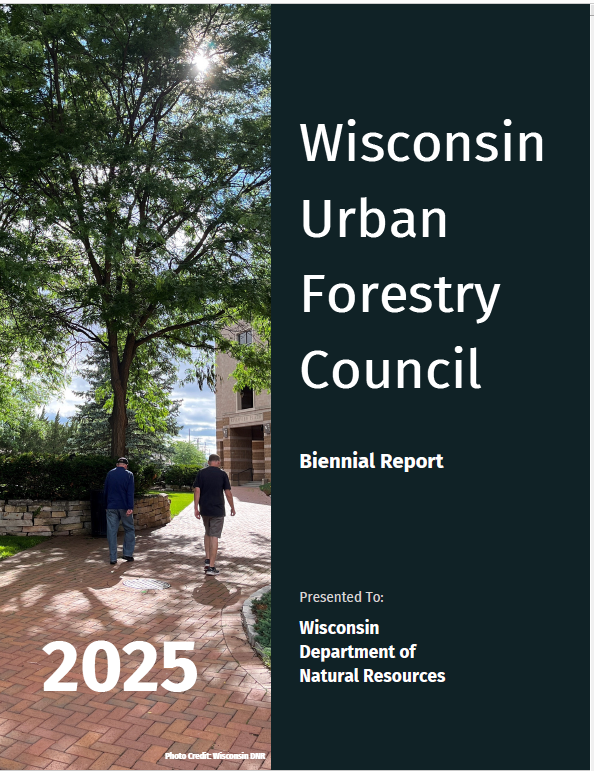 The purpose of the Wisconsin Urban Forestry Council is to advise the state forester and the Wisconsin DNR on the best ways to preserve, protect, expand and improve Wisconsin’s urban and community forest resources. Members are appointed by the DNR Secretary and represent a wide array of stakeholders, including municipal and utility foresters, medical and higher education professionals, nursery and green industry staff, environmental groups, public works and parks staff, organizations such as the Wisconsin Arborist Association (WAA), the Urban Wood Network Wisconsin, the League of Wisconsin Municipalities and government agencies such as WisDOT and DATCP. Continue reading “Wisconsin’s Urban Forestry Council 2025 Biennial Report Published”
LEAF Lessons
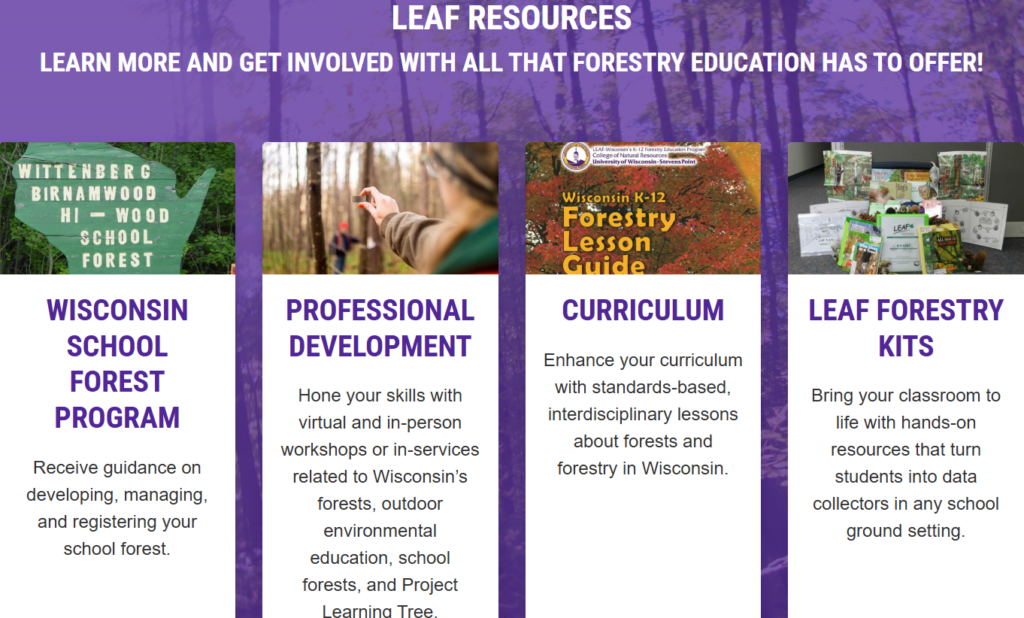 Arbor Day is right around the corner, but why wait to start celebrating and learning about trees? The LEAF K-12 Forestry Education Program provides resources to incorporate into the classroom for Arbor Day or any day! The downloadable Urban Forest Lesson Guide provides a pathway for teachers to engage students and teach them about the trees in their neighborhood. Forestry Education Kits on a variety of different themes are also available for checkout for both formal and non-formal educators. Check out the LEAF website and consider utilizing the resources they have to offer this spring. Continue reading “LEAF Lessons”
Tree Fund Scholarships And Grant Deadline March 15, 2025
 TREE Fund offers scholarships for undergraduate students who aspire to careers in arboriculture, urban forestry and related fields. Before applying for any scholarship, carefully read the guidelines for each scholarship provided on the website. Contact a staff member at TREE Fund directly should you have questions or require additional information about these programs.
Apply online by March 15, 2026. Continue reading “Tree Fund Scholarships And Grant Deadline March 15, 2025”
Run For The Trees
 Now is the time to sign up to Run for the Trees! Racers can complete their Happy Little (Virtual) 5K anywhere outdoors between April 18-26, 2026. The nine-day window includes Earth Day (April 22) and Arbor Day (April 24). Continue reading “Run For The Trees”
Upcoming Training
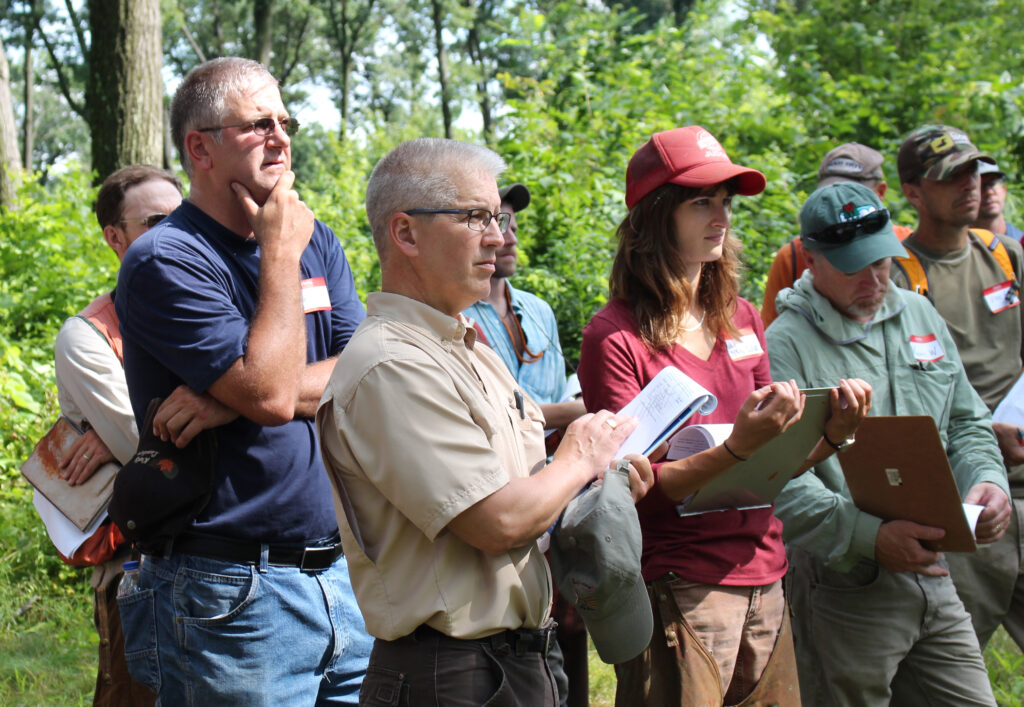 * These training opportunities are provided as an information service only and do not constitute an endorsement from the Wisconsin Department of Natural Resources (DNR).
See below for information on training topics and events, including shade trees, fruit trees, chainsaw certification, tree diseases and pests, pruning and public perspectives on trees. Continue reading “Upcoming Training”
Community Spotlight: Introducing The New City Forester For City Of Milwaukee
By Elton Rogers, DNR Urban Forestry Coordinator
Elton.Rogers@wisconsin.gov or 414-294-8675
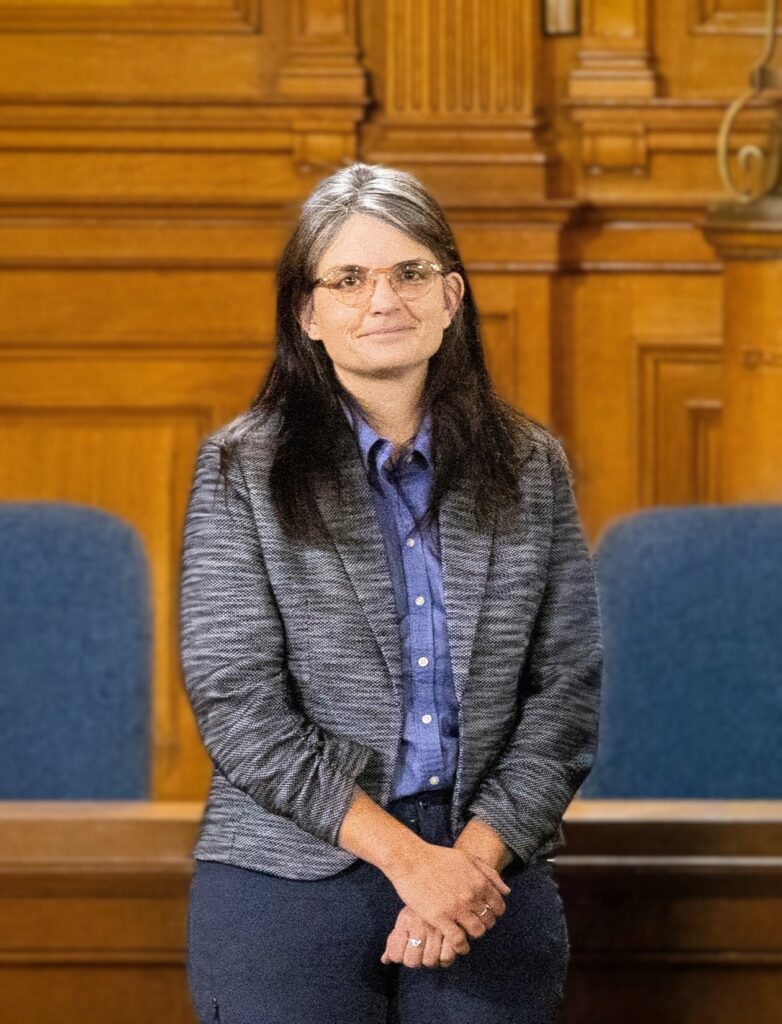 Erin Stoekl was selected in late October to lead the Forestry Services Section for the City of Milwaukee. Erin has worked for City of Milwaukee forestry for 11 years and has been in the industry for 16 years. Over the past three years, she has served as one of three District Managers, overseeing forestry operations for the southern portion of the city. Prior to this position, Erin served for seven years as the Property Maintenance and Compliance Manager.
She holds a Bachelor of Arts from Alverno College and an Associate of Applied Science degree from Milwaukee Area Technical College in Landscape Horticulture. Continue reading “Community Spotlight: Introducing The New City Forester For City Of Milwaukee”
Funding Lapse Poses Threat To i-Tree
 The cooperative agreement between the USDA Forest Service and the Davey Tree Expert Company, which typically funds the delivery of i-Tree, has been indefinitely halted. Without this funding, maintenance for i-Tree will be impacted and the tools could eventually cease to function.
When Is The Best Time To Prune Trees?
By Elton Rogers, DNR Urban Forestry Coordinator
Elton.Rogers@wisconsin.gov or 414-294-8675
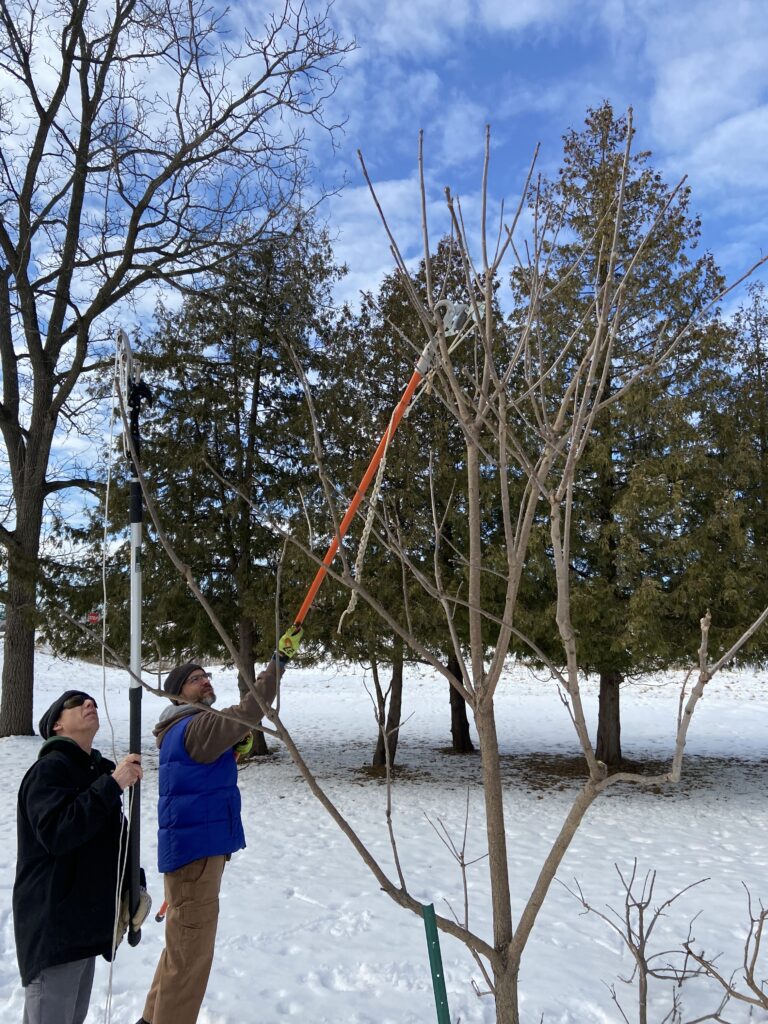 To best answer the titular question, I like to start by flipping the question on its head: When is the worst time to prune trees?
To answer this reworded question, we first need to acknowledge that “pruning is wounding.” Anytime you cut off a living portion of a tree, you are doing two main things:
- Removing photosynthetic material.
- Creating a potential entry point for decay.