Forest Health News

Unwanted in Wisconsin: hemlock woolly adelgid

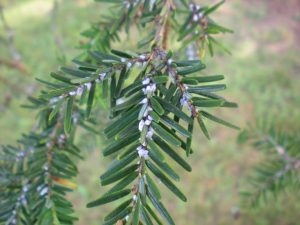
Hemlock woolly adelgid is an exotic aphid-like insect that produces distinctive small balls of white wool at the base of hemlock needles.

White balls of hemlock woolly adelgid ‘wool’ on a hemlock twig in Maryland.

If you work around hemlock trees, keep an eye out for signs of hemlock woolly adelgid (HWA), an aphid-like insect that was introduced to eastern North America and is fatal to most hemlock trees.

HWA produces distinctive, small balls of white wool at the base of hemlock needles. Recently, a number of infestations have been found in western Michigan and there is a risk that the pest could spread across Lake Michigan into Wisconsin. Hemlock woolly adelgid has not been found in Wisconsin Continue reading “Unwanted in Wisconsin: hemlock woolly adelgid”
Ice damage to yard and forest trees

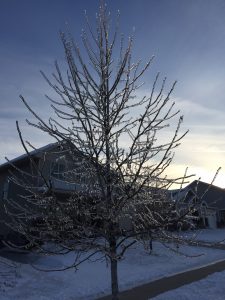
Ice coating an urban tree from a late February 2017 storm in south central Wisconsin.

Ice coating an urban tree from a late February 2017 storm in south central Wisconsin.

Several ice storms have impacted yard and forest trees in southern Wisconsin in 2016/2017. The combination of trees coated in heavy ice and strong winds caused broken branches and bent or broken main stems. Working with storm damaged trees can be very dangerous, so landowners should carefully consider safety concerns and get help from  professional arborists or foresters when appropriate. Continue reading “Ice damage to yard and forest trees”

Historical – what happened 50 years and 25 years ago in the forest health world?

50 years ago – 1967 – Pine Bark Beetles – Ips sp.

Little damage from bark beetles was encountered in the Northwest, West Central and East Central areas. Damage in the east central counties was restricted to trees that suffered from drought in 1966. Advance reproduction was destroyed in two Jackson County timber sale areas (West Central Area) where pulp operations continued through the summer and wood was left in piles until bark beetles had emerged. Continue reading “Historical – what happened 50 years and 25 years ago in the forest health world?”