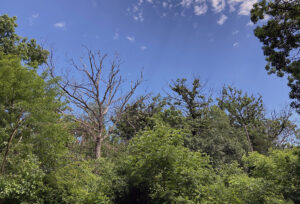
A photo taken June 20, 2025, shows dead and dying oaks near Whitewater Lake in Walworth County, following a period of defoliation and summer drought. / Photo Credit: Wisconsin DNR
By Bill McNee, DNR Forest Health Specialist
Bill.McNee@wisconsin.gov or 920-360-0942
Property owners are encouraged to monitor their trees for signs of decline and mortality, as the last few years have been marked by drought and spongy moth defoliation.
Landowners who have oak, birch, crabapple, aspen, willow, tamarack and basswood (linden) trees should be particularly watchful, because the caterpillars of this invasive insect prefer these species. Many other tree species are not preferred by the caterpillars and are less likely to be heavily defoliated, but are more likely to die if heavy defoliation should happen.
This article focuses on oak impacts.
The 2021-24 spongy moth outbreak has now collapsed statewide; no defoliation has been observed as of late July 2025. Only a few reports of single caterpillars were received by Wisconsin DNR Forest Health staff. (Note: Parts of Wisconsin may be experiencing a continuing outbreak of different caterpillars known as “oak leafroller” and “larch casebearer.”)
Continue reading “Monitor Your Trees For Spongy Moth-Related Decline And Mortality” →
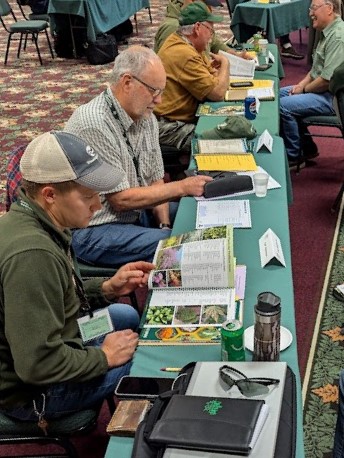
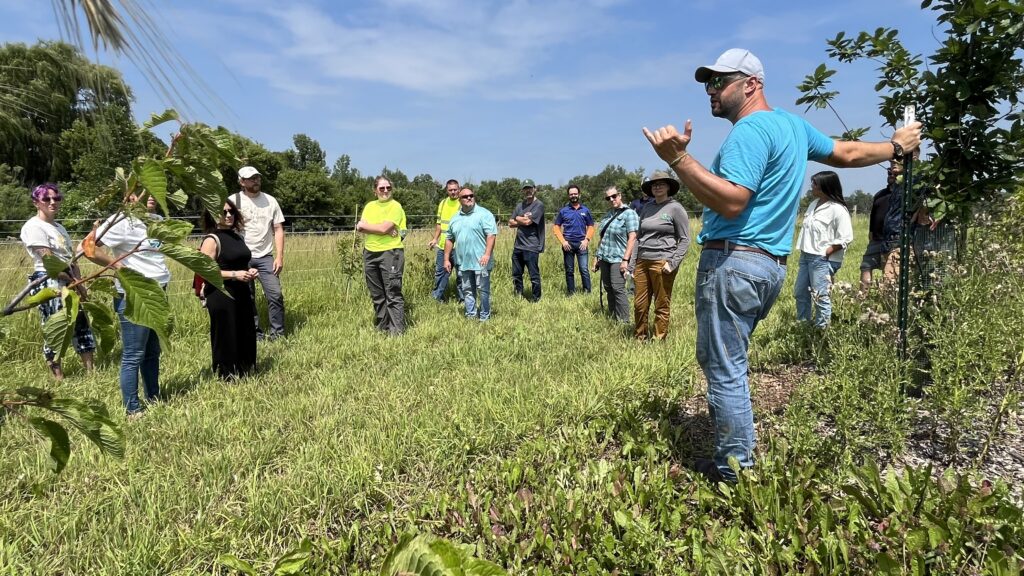 Tree managers met at Riveredge Nature Center (RNC) for a networking meeting/field tour at the end of July. RNC is located in Saukville, ground zero for Emerald Ash Borer (EAB) in Wisconsin, which was discovered in 2008.
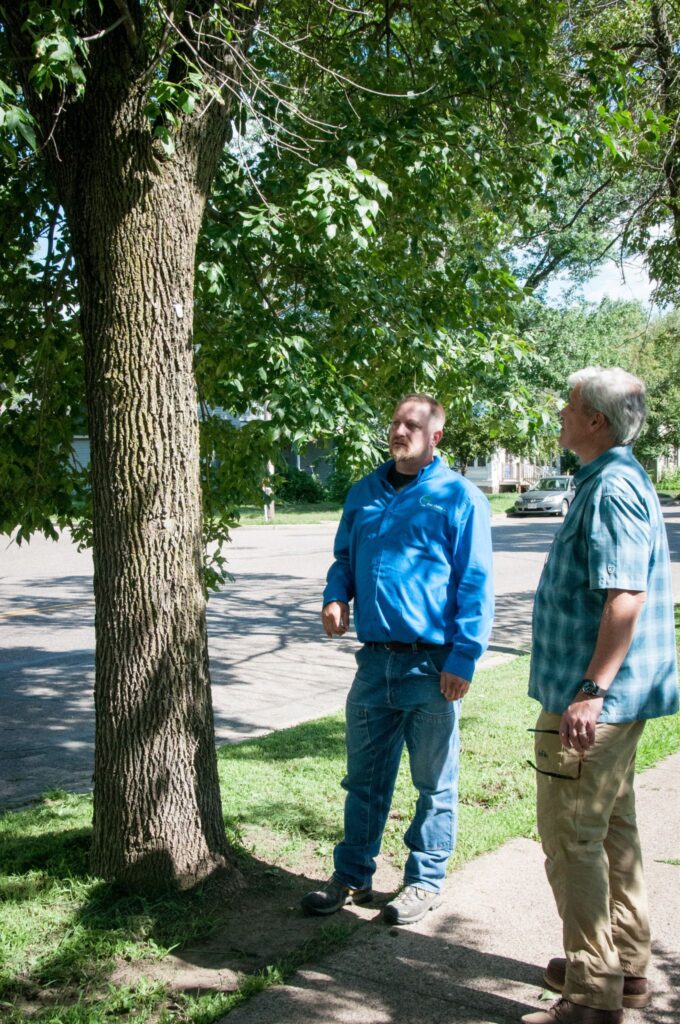 The Urban and Community Forestry Society (UCFS) Industry Trends committee – charged with monitoring the issues impacting your work – is seeking information on your experiences with insurance companies and urban tree canopy. There is growing evidence that insurance companies are directing the pruning or removal of trees, and the committee wants to fully understand the issue. Your responses to the survey below will help compile stories and evidence so that UCFS can work with industry partners and draft position statements.
 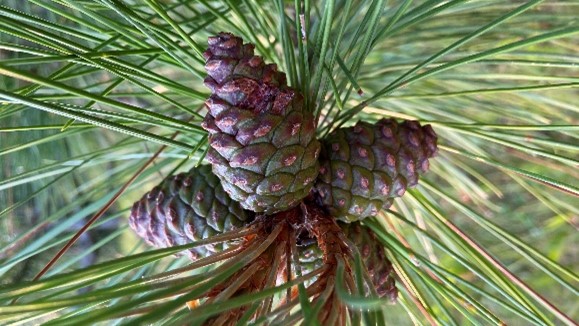 The DNR’s Reforestation Program needs red and white pine cones – more specifically, we need the seeds found within those cones for our reforestation needs. The Reforestation Program produces millions of pine seedlings every year at the Wilson State Nursery in Boscobel, and the only way we can produce those seedlings is with seed collected from the fields and forests of Wisconsin.
  The
The  The Wisconsin Department of Natural Resources (DNR) today announced it is now accepting applications for
  *These training opportunities are provided as an information service only and do not constitute an endorsement from the Wisconsin Department of Natural Resources (DNR).