Oak wilt

Oak Wilt Information Updated

University of Wisconsin-Madison Extension online tool to help with oak wilt decisions.

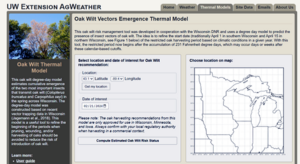
A University of Wisconsin-Madison Extension online tool provides users localized information about the estimated emergence status of the two most important insects that transmit oak wilt in Wisconsin. / Graphic Credit: University of Wisconsin-Madison Extension

By Kyoko Scanlon, DNR Forest Pathologist, Fitchburg
Kyoko.Scanlon@wisconsin.gov

In 2025, oak wilt was detected for the first time in Hughes Township, Bayfield County, a northern Wisconsin location where oak wilt remains uncommon. There were no new county finds in 2025.

Based on the findings in 2025, the maps in the Oak Harvesting Guidelines To Reduce The Risk Of Introduction And Spread Of Oak Wilt (the oak wilt guidelines), oak wilt fact sheet and were updated. The maps in the oak wilt guidelines are good through the end of 2026.
Continue reading “Oak Wilt Information Updated”

Oak Wilt High Risk Period Quickly Approaches

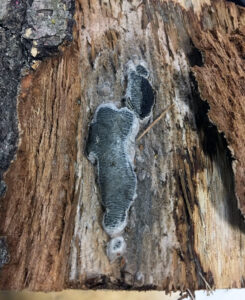
A closeup of a fungal pressure pad under the bark of an oak tree infected with oak wilt.

A fungal pressure pad formed on the outside of the sapwood underneath the bark of an infected tree. The pad will create cracks in the bark, where beetles can enter and visit the pad and become covered in spores. They will then leave and move on to infect new trees through open wounds. / Photo Credit: Wisconsin DNR

By Alex Hornung, DNR Forest Health Specialist, Plover
Alexandra.Hornung@wisconsin.gov or 715-340-3810

It is again that time of year to pause operating in oak stands or pruning oak trees during the high-risk period for oak wilt, which begins in April. The high-risk period begins April 1 in the South, April 15 in the North, and ends in both zones on July 15.

The high-risk period is determined by when the beetles that carry the fungus that causes oak wilt have emerged for the year and when they are carrying the highest number of fungal spores. When wounds are created by logging operations or other activities that expose sapwood, the beetles carry the fungus to the wounded tree, and the disease process begins.

Continue reading “Oak Wilt High Risk Period Quickly Approaches”

Oak Wilt Confirmed In Ashland County

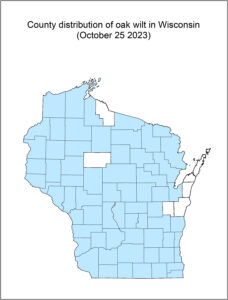
Map showing Wisconsin counties in which oak wilt has been detected.

With the addition of Ashland County, oak wilt has now been detected in 66 of Wisconsin’s 72 counties. / Map Credit: Wisconsin DNR.

By Paul Cigan, DNR Forest Health Specialist, Hayward
Paul.Cigan@wisconsin.gov or 715-416-4920

Oak wilt, a deadly disease of oaks, has been found for the first time in Ashland County.

The Wisconsin Department of Natural Resources (DNR) confirmed the find in wood samples from a red oak tree in the town of Gordon.

“There is always risk of oak wilt spread into new and relatively uninfested areas in northern Wisconsin, such as Ashland County, so it’s always best to practice oak wilt prevention wherever possible to significantly reduce that risk,” said Paul Cigan, a DNR forest health specialist based in Hayward.

Continue reading “Oak Wilt Confirmed In Ashland County”

Oak Harvesting During A Cold Spring

By Kyoko Scanlon, DNR Forest Pathologist, Kyoko.Scanlon@wisconsin.gov or 608-235-7532

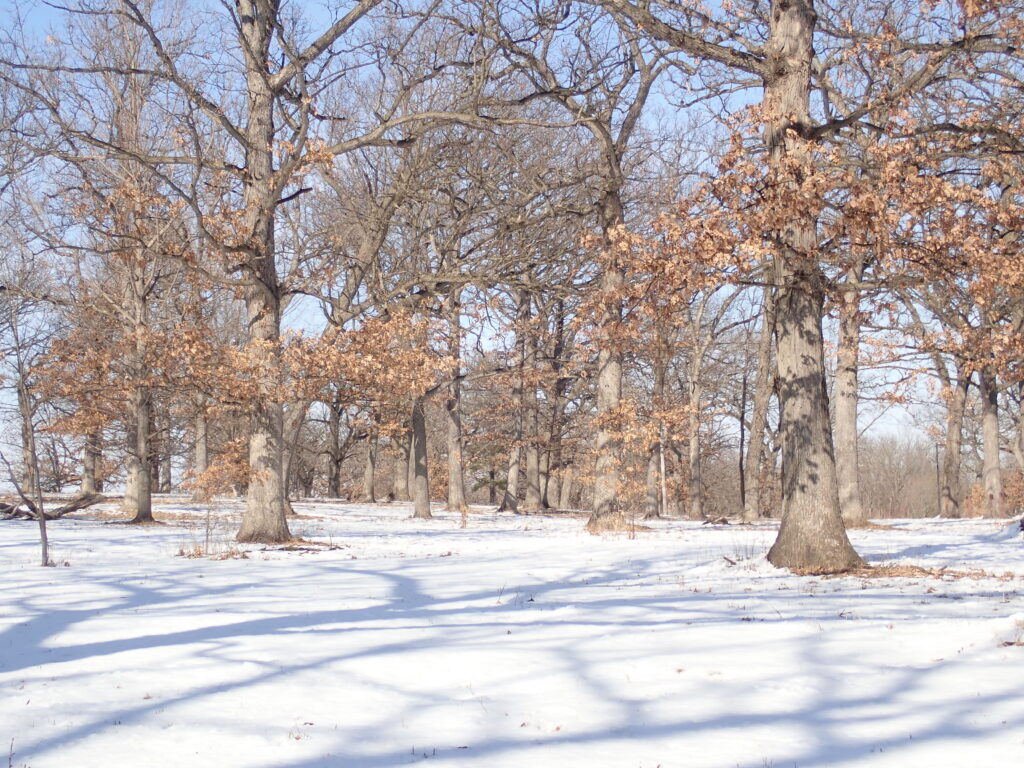
Oak trees in a snow-covered field

The colder weather in spring 2023 might delay the DNR’s recommendations to avoid trimming or cutting from April through July. Photo: Wisconsin DNR

It’s April, but in much of Wisconsin the weather doesn’t seem to have gotten the message.

You may be wondering if the oak harvesting restriction that started on April 1 (south of the tension zone) and will start on April 15 (north of the tension zone) might be pushed back due to unusually cold temperatures.

Even with unusually cold springs, we remain consistent with the same general messages: “Stop pruning in April” and “Avoid harvesting in April (south of the tension zone).” We do this for the following reasons:

  • It is difficult to spread the word in a timely manner about when to begin the restrictions. Often when spring comes late, it arrives suddenly; in those cases, before we know it, we’ve entered the high-risk period.
  • We want to be consistent in stressing the messages of the existing oak harvesting guidelines, so that the public is aware of them.

Continue reading “Oak Harvesting During A Cold Spring”

Protect Oaks During Spring Clean-up

By Paul Cigan, DNR plant pest and disease specialist, Paul.Cigan@wisconsin.gov or 715-416-4920

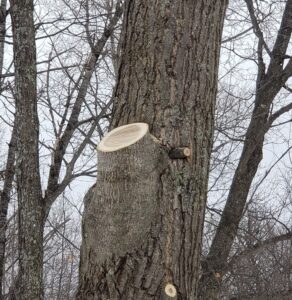
An oak tree with branches trimmed

To prevent the spread of often-fatal oak wilt disease, do not prune, cut or wound oaks from April through July. Photo: Wisconsin DNR

With the arrival of spring, the Wisconsin Department of Natural Resources (DNR) recommends protecting oaks from the often-fatal oak wilt disease by refraining from pruning, cutting or injuring oak trees from April through July.

The highest risk period for oak wilt introduction to a new site is in spring and early summer. Pruning and cutting oaks exposes living tree tissue beneath the bark to potential infection. The disease rapidly kills trees in the red oak group and weakens those in the white oak group.

Sap-feeding beetles spread the disease between oaks by carrying oak wilt spores from infected trees or firewood to fresh, exposed tree wounds. Healthy oaks and freshly cut oak stumps can become infected as quickly as 15 minutes after a wound is made from a pruning cut or broken branch.

Continue reading “Protect Oaks During Spring Clean-up”