Forest Health News

Heterobasidion Root Disease (HRD) Found In Fond Du Lac And Racine Counties

By Bill McNee, DNR Forest Health Specialist, Oshkosh, bill.mcnee@wisconsin.gov or 920-360-0942

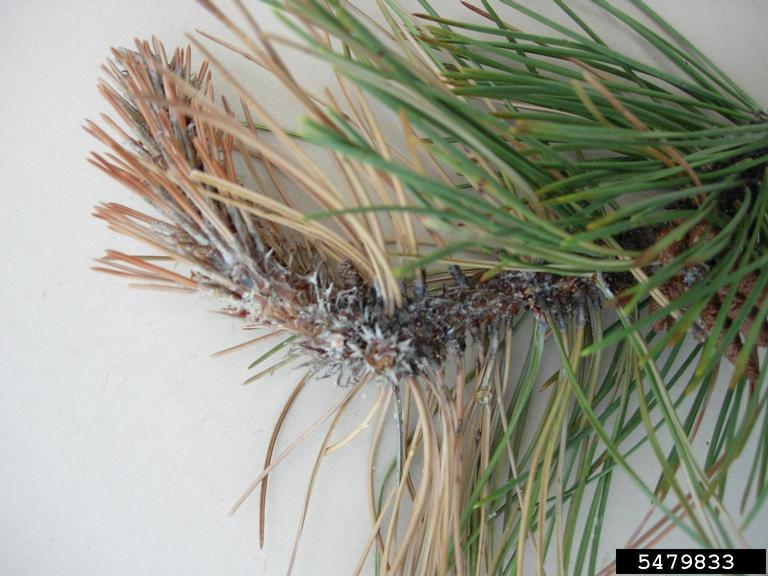
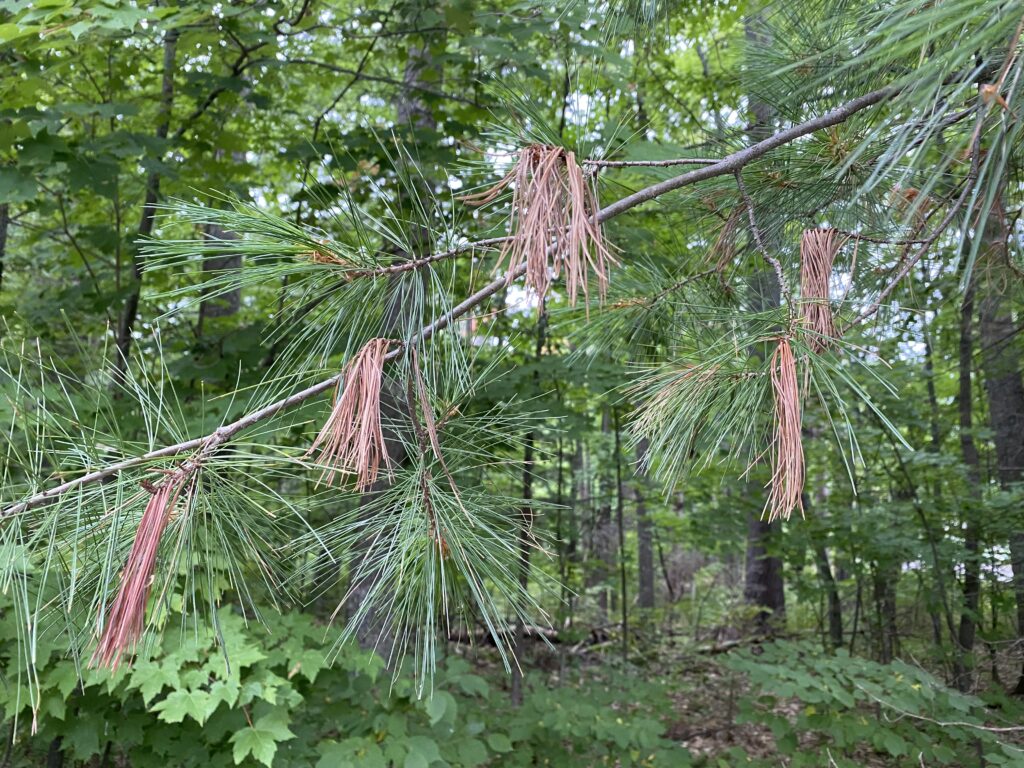
Heterobasidion root disease (HRD), formerly known as annosum root rot, was recently found in Fond du Lac and Racine counties for the first time. Thinned pine stands were surveyed by DNR forestry staff in four eastern counties where the disease had not been previously found (Fond du Lac, Manitowoc, Racine and Winnebago counties).

Counties where Heterobasidion root disease (HRD) has been found as of August 2021 are shown in green.

Continue reading “Heterobasidion Root Disease (HRD) Found In Fond Du Lac And Racine Counties”

Oak Wilt Symptoms Visible Now

By Linda Williams, DNR Forest Health Specialist, Woodruff, Linda.Williams@wisconsin.gov or 920-360-0665. 

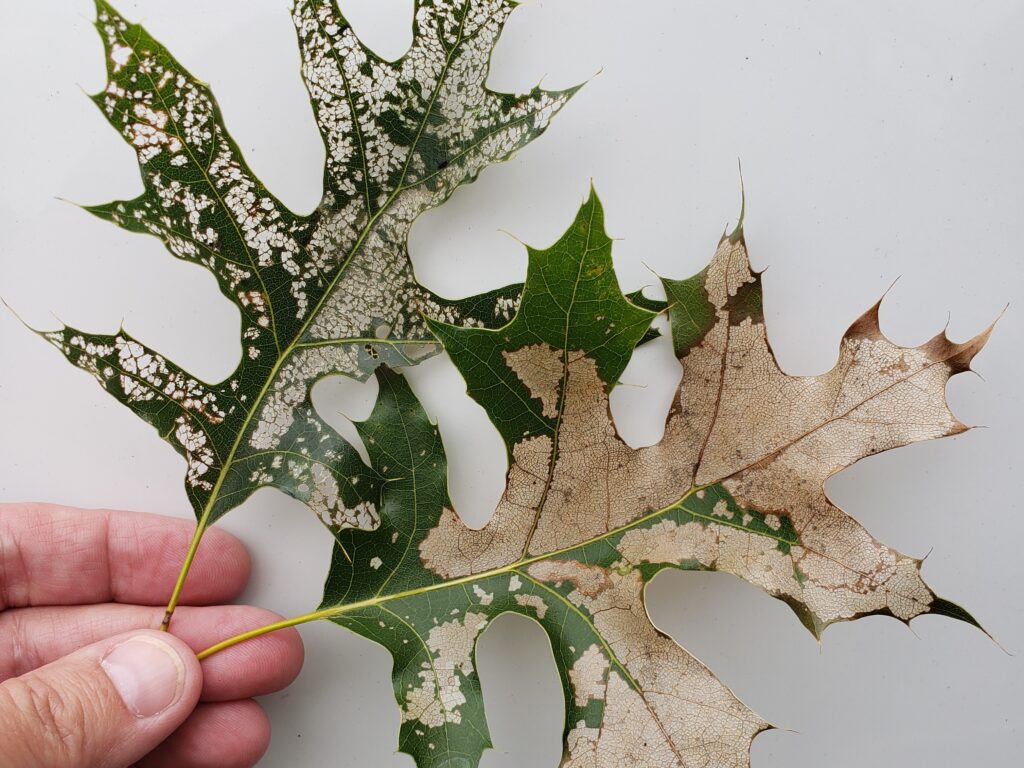
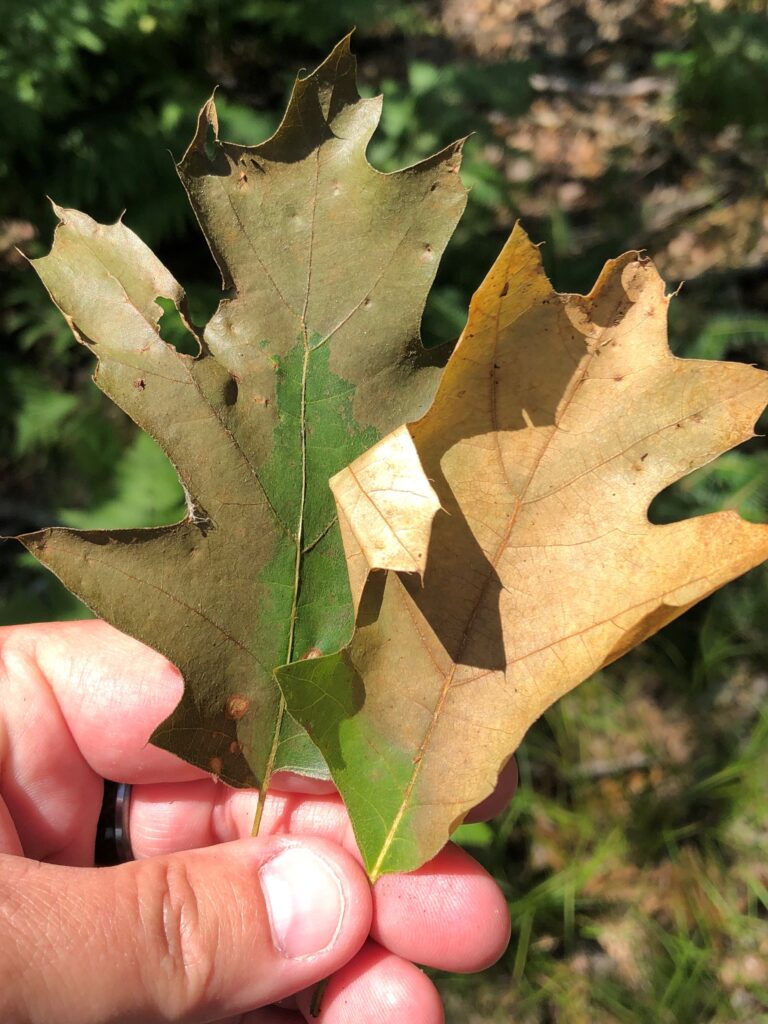
Symptoms of oak wilt are showing up. Look for leaves that suddenly wilt and drop from the tree. Oak wilt is a non-curable, fungal disease specific to oaks. Trees in the red oak family will die quickly from this disease, while trees in the white oak family will die more slowly, with a branch or portion of the crown becoming infected. 

This tree is actively wilting from oak wilt infection and will drop most of its leaves within about 4-6 weeks.

Continue reading “Oak Wilt Symptoms Visible Now”

Oak Timberworm, Not Your Average Weevil

By Linda Williams, DNR Forest Health Specialist, Woodruff, Linda.Williams@wisconsin.gov or 920-360-0665

Oak timberworm, Arrhenodes minutus, is a primitive weevil that can cause defects and degrade in red and white oak timber. They can also infest elm, poplar and beech. Egg-laying females will seek out trees that are damaged, wounded, nearly dead or recently dead. After the eggs hatch, the larvae bore across the grain through the tree then “U-turn” back across the grain to the point of origin, taking two or three years to complete their life cycle and creating a lumber defect called a wormhole. When infested wood is split for firewood, the weevils may emerge in homes or garages if they had already pupated when the firewood was split. 

Male oak timberworm on a Northern red oak that was damaged in a storm.

Continue reading “Oak Timberworm, Not Your Average Weevil”

Lacebugs: Delicate But Damaging

By Linda Williams, DNR Forest Health Specialist, Woodruff, Linda.Williams@wisconsin.gov or 920-360-0665

Lacebugs are tiny, delicate-looking insects that can cause leaves to turn a little off-color. They are typically found feeding on the undersides of leaves, where they insert their mouthparts and suck the sap from the leaves. From the top of the leaves, these areas where the feeding damage occurs are stippled with small white or yellow specks, often in a generally circular pattern. Recently congregations of adult and nymph lacebugs were noted on the twigs of basswood, but it was unclear if they were feeding on the twigs or just resting there. 

Lacebug adults and nymphs have congregated on this basswood twig.

Continue reading “Lacebugs: Delicate But Damaging”

Woolly Aphids Observed And Reported On Social Media

By Linda Williams, DNR Forest Health Specialist, Woodruff, Linda.Williams@wisconsin.gov or 920-360-0665

Have you noticed small, white fluffy things floating through the air? If you have a chance to look closely at these small bits of fluff, you’ll see that they’re actually insects; these are woolly aphids. They produce waxy filaments that help them avoid predators that don’t want to chew on their fluffy excretions.

Woolly alder aphid group is protected by the waxy filaments covering them.

Continue reading “Woolly Aphids Observed And Reported On Social Media”

Wild Cucumber Will Catch Your Attention

Plants that are pokey, viney or spread quickly across the landscape sometimes seem alarming when you discover them in your backyard or woods or when they’re spotted along the highway. Wild cucumber has all these characteristics but is not as ominous as it seems.

Wild cucumber (Echinocystis lobata) is a vine native across the U.S. and found throughout Wisconsin. It has maple-like star-shaped leaves and has pale greenish-white flowers from July through September. A single plant is self-fertile but can also be pollinated by bees, wasps and flies. It produces a pod-like fruit with spikes resembling a cucumber which is unsafe to eat. Each pod produces four seeds that fall to the ground when the pod is ripe. The pods may persist into the winter and become thin brown shells.

Star-shaped leaves, pale flowers, and cucumber fruit of wild cucumber. Photo: Bugwood

Continue reading “Wild Cucumber Will Catch Your Attention”

Emerald Ash Borer Identified In Iron County For The First Time

By Linda Williams, DNR Forest Health Specialist, Woodruff, Linda.Williams@wisconsin.gov or 920-360-0665. 

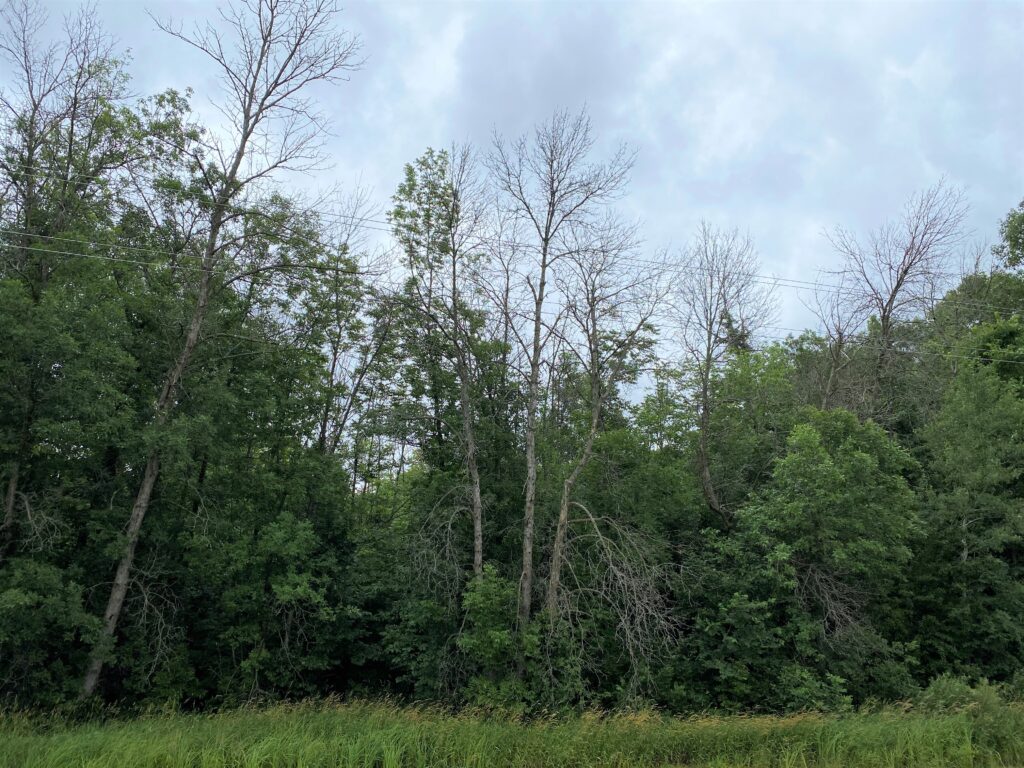
Emerald ash borer (EAB) has been detected for the first time in Iron County, in the Town of Oma. Many of the black ash at this site are already dead, with other trees still declining. EAB was first identified in Wisconsin in 2008 and has now been found in 60 of Wisconsin’s 72 counties.

Did you know that it takes fewer EAB larvae to attack and kill a black ash compared to a green ash or white ash? This means that black ash will have fewer galleries under the bark and consequently less woodpecker flecking than you would typically see with green ash or white ash. 

EAB was federally deregulated as of Jan. 14, 2021 and Wisconsin instituted a state-wide quarantine in 2018, so there are no regulatory changes due to this find. Emerald ash borer silviculture guidelines were created to help landowners make decisions about management in their woods. All forest sites are a bit different and it can be overwhelming to try to decide what management, if any, should be done in your stand and these guidelines are designed to help answer those questions.

Continue reading “Emerald Ash Borer Identified In Iron County For The First Time”

Be On The Lookout For Forest Tent Caterpillar

By Paul Cigan, DNR Forest Health Specialist, Hayward, Paul.Cigan@wisconsin.gov or 715-416-4920; and Bill McNee, DNR Forest Health Specialist, Oshkosh, Bill.McNee@wisconsin.gov or 920-360-0942

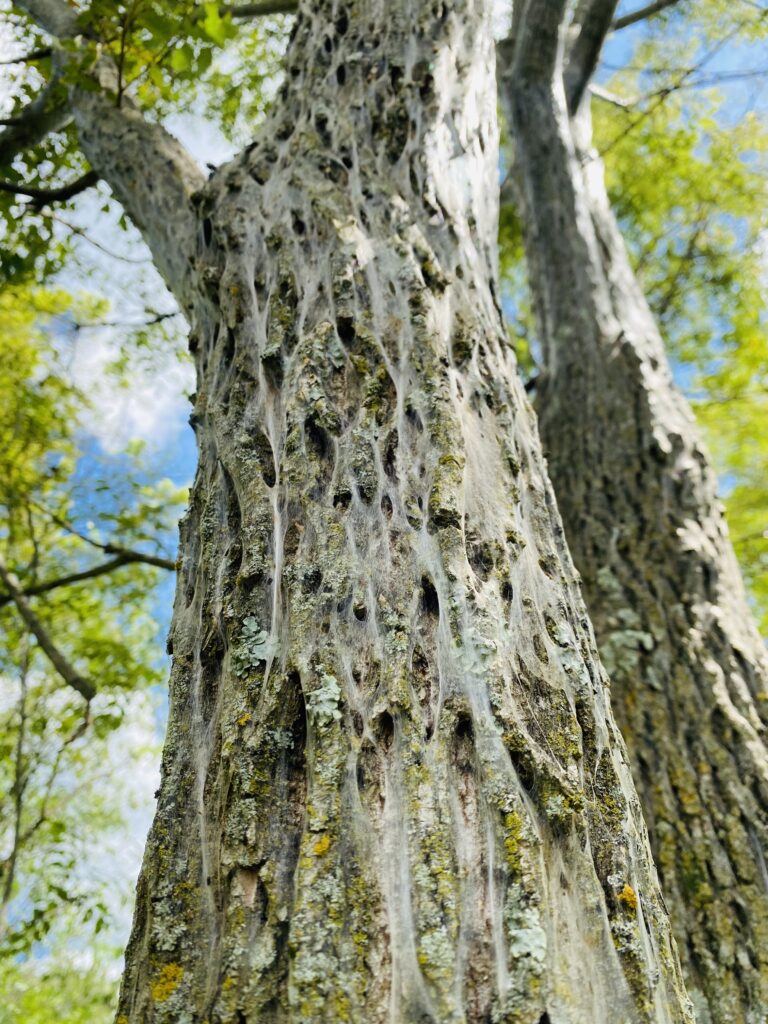
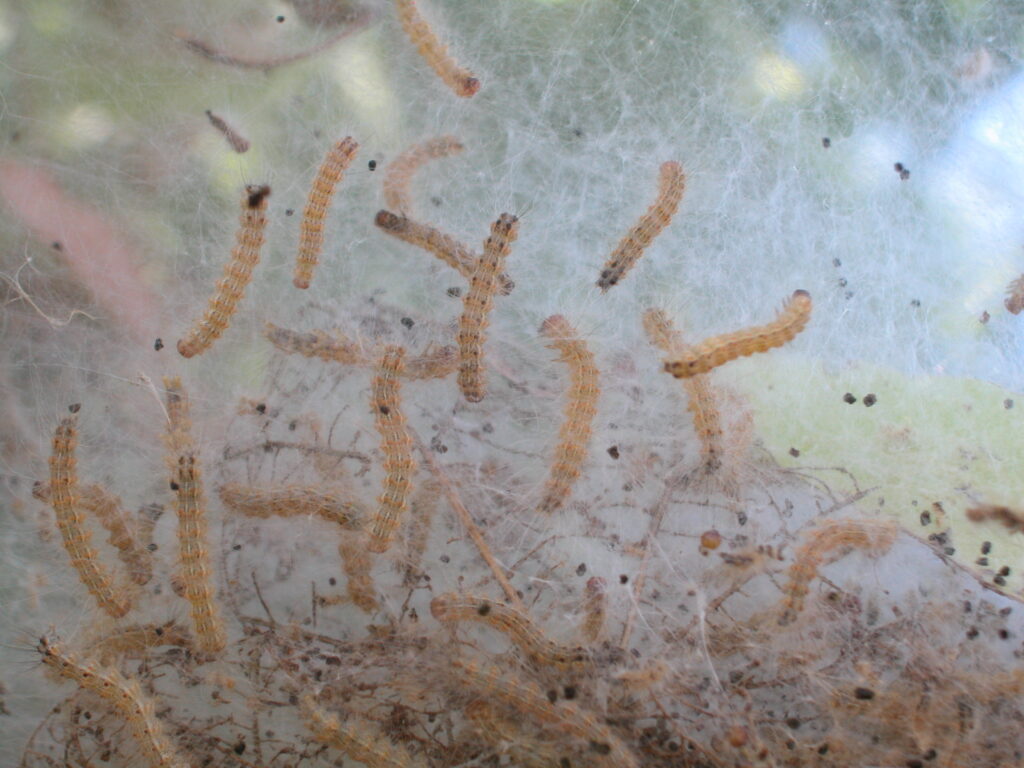
Forest tent caterpillar (FTC) may be making its way back onto the radar of northern Wisconsin property owners in the coming years, as some confirmed reports of defoliation in northern counties have trickled in. A native defoliator with a preference for aspen, oak and birch, this species undergoes periodic population outbreaks every six to 16 years. Widespread outbreaks can last for several years, causing heavy defoliation, reduced growth and temporary stress on affected trees. The last widespread outbreak ended in 2002.

Many forest tent caterpillars gathered together on a tree.

Forest tent caterpillar larvae displaying gregarious behavior on tree stem. Photo credit: Dane Gravesen

Continue reading “Be On The Lookout For Forest Tent Caterpillar”

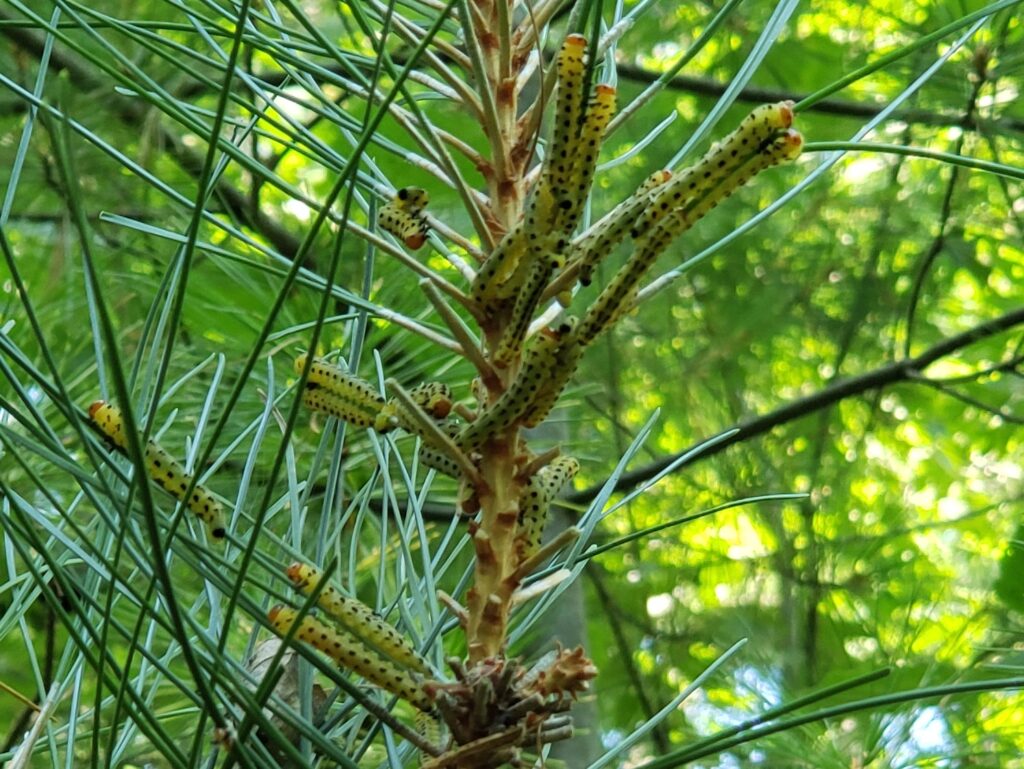
Spruce Budworm, Balsam Fir Sawfly, And Yellowheaded Spruce Sawfly

Linda Williams, DNR Forest Health Specialist, Woodruff, Linda.Williams@wisconsin.gov or 920-360-0665. 

The spruce budworm outbreak continues this year, but the amount of visible defoliation is generally lower than last year. Some areas of the Northwoods have severe defoliation this year, but in many other areas, the amount of new, green foliage far exceeds the amount of defoliation.

In areas where the defoliation appears less severe, you can still find plenty of caterpillars, but the new foliage is less eaten than anticipated. The late spring frost/freeze may have killed some caterpillars, or the long cool spring may have delayed bud-break enough that the caterpillars did most of their feeding on older foliage before the new foliage expanded. 

The spruce budworm outbreak in Wisconsin started in 2012, and outbreaks typically last about 10 years.  Mortality of balsam fir trees started to show up last year following several years of significant defoliation. Even with new growth on the trees this year, they may continue to decline, and mortality could still occur. 

Spruce branches showing defoliation, older needles and new, bright green needles.

Defoliation is still present, but there is lots of new growth on balsam fir this year in many areas of northern Wisconsin.

Continue reading “Spruce Budworm, Balsam Fir Sawfly, And Yellowheaded Spruce Sawfly”

Aphids, Scales And Spittlebugs, Oh My!

Linda Williams, DNR Forest Health Specialist, Woodruff, Linda.Williams@wisconsin.gov or 920-360-0665. 

This seems to be a good year for aphids, scales, spittlebugs and other insects that suck the sap of trees. 

Large conifer aphids have been observed on white pine, jack pine and balsam fir. These large, dark colored aphids insert their mouthparts into the twig and suck the sap. They are often guarded fiercely by ants because aphids excrete a waste product called honeydew that ants collect as food. Sooty mold can grow on honeydew so when it covers the twigs and needles of the trees it makes them look darker than normal. Sooty mold is a problem because it limits the ability of those needles to photosynthesize, which can put the tree under stress if it occurs over multiple years. 

If you have just a few colonies of these aphids, there is no control necessary as tree health shouldn’t be affected. If more than 30% of the branches have ant colonies present, or you’re noticing a buildup of sooty mold, you can spray the aphids with a pesticide or a soapy water mixture. Natural enemies, including ladybugs and lacewings, can be very effective at reducing aphid populations. But if ants are guarding the aphids, it can be difficult for natural enemies to work effectively, so controlling the ants may be necessary.

Aphids on balsam fir. There are several ants in this photo that are tending the aphids.

Aphids on balsam fir. There are several ants in this photo that are tending the aphids.

Continue reading “Aphids, Scales And Spittlebugs, Oh My!”