The Wisconsin Department of Natural Resources (DNR) still has native tree and shrub seedlings available for spring planting.
Conifers available include jack pine 1-0 and 2-0, red pine 3-0, white pine 2-0 and tamarack 2-0. The pines tend to grow fast and perform the best in well-drained soils. The tamarack can grow in wetter soils. All are great for providing thermal cover to wildlife in the winter or privacy along a property line.
Hardwoods include river and white birch, black cherry, hackberry, silver maple, bur and red oaks, sycamore and black walnut. Many of these hardwoods provide forage or mast for wildlife and grow quickly in fertile soils.
Black cherry will begin producing fruit as soon as five years and aspen and birch provide buds for grouse even faster. The oaks and walnut take a while to produce acorns and nuts, but they will supply wildlife with food for many years once they begin. The silver maple, hackberry and sycamore thrive in wetter soils, giving those in heavy clay or lowland sites an opportunity for arboreal cover.
Consider talking to a DNR forester to get more information on tree planting and forest management. A good planting plan can focus a landowner’s efforts and create a strategy to achieve all their property goals. Find a forester near you using the DNR’s Forestry Assistance Locator webpage.
For up-to-date information on seedling availability, please contact the state nursery at 715-424-3700. To order seedlings, print off a seedling application form here. To have the ordering form sent to your residence, please contact a DNR forester near you or nursery staff.
Seedlings sold by the Wisconsin DNR are only for planting in Wisconsin and for reforestation, wildlife habitat and windbreak and erosion control purposes.
For more information about tree planting in Wisconsin using seedlings from state nurseries, please review our Frequently Asked Questions.
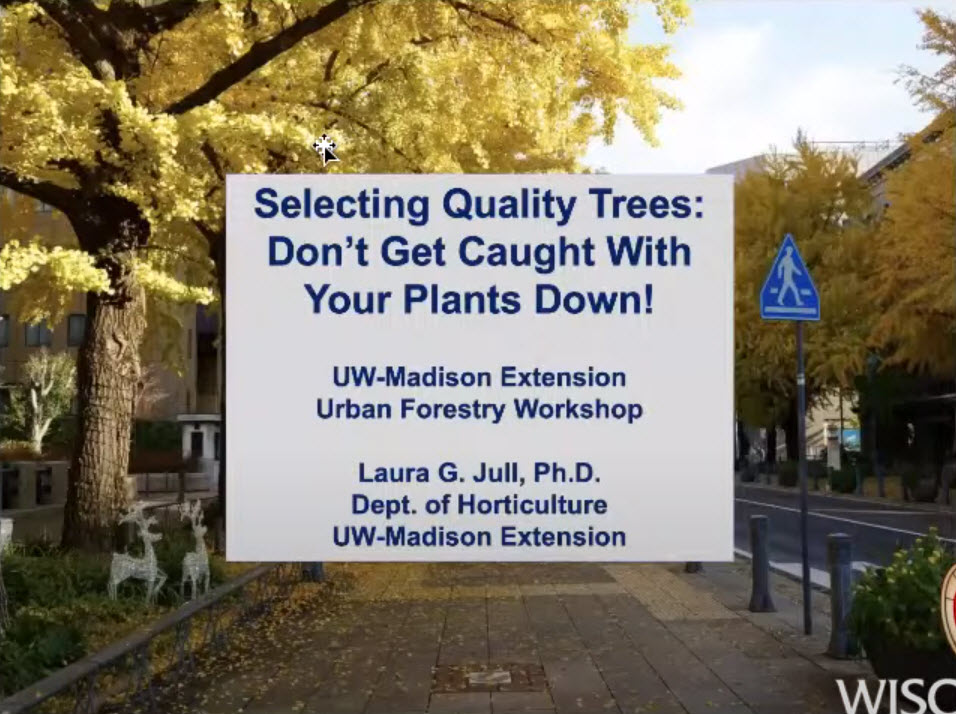 The Wisconsin Department of Natural Resources (DNR) Urban Forestry and UW-Madison, Division of Extension Fall 2020 Workshop Series is now available for viewing on YouTube. Use the links below to watch the videos:
 The Wisconsin Department of Natural Resources (DNR) Urban Forestry program will have a virtual booth at the 2021