By Jonathan Ismail, Outreach Specialist, LEAF K-12 Forestry Education, University of Wisconsin-Stevens Point; Jismail@uwsp.edu or 715-346-3229
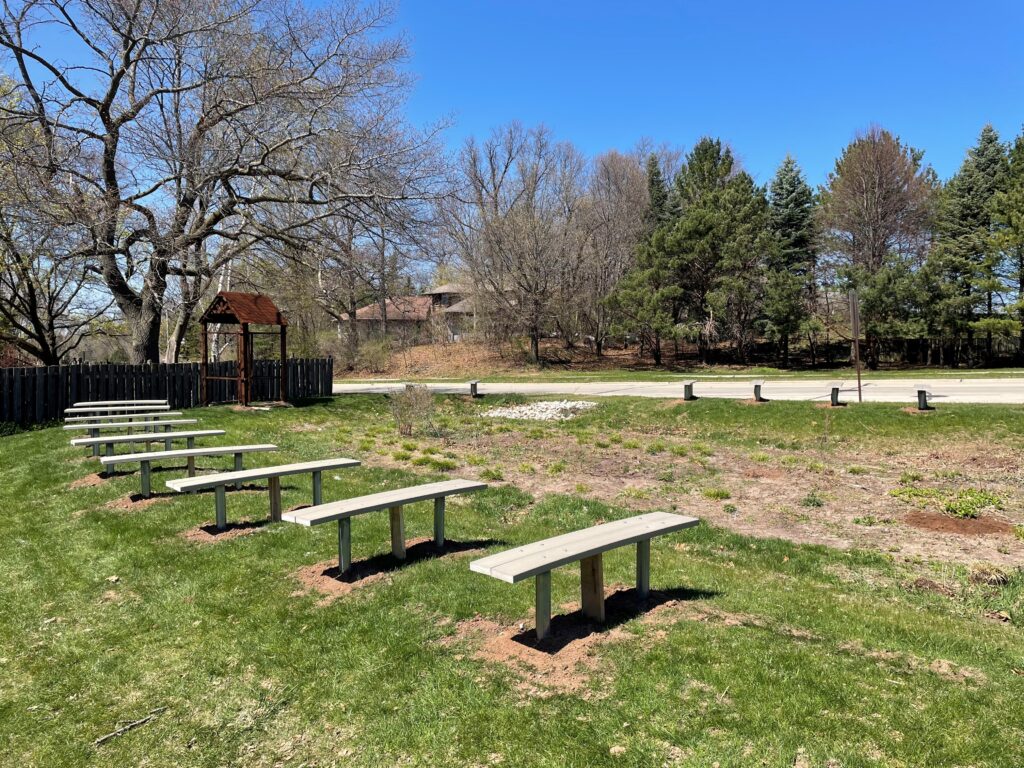
Photo credit: Scott Stromberger
How can learning be enhanced outdoors? What does a tree canopy at a “green” school look like? Can an outdoor classroom be an effective learning environment?
Edison Middle School in Green Bay is exploring outdoor STEM learning opportunities thanks to partnerships with DNR Urban Forestry, American Transmission Company (ATC) and LEAF K-12 Forestry Education. The plan to create an outdoor classroom grew from a discussion Urban Forestry Coordinator Tracy Salisbury had with ATC staff looking for opportunities to give back to communities. ATC’s interest in funding STEM education in their communities was a natural fit for the DNR’s goal to increase tree canopies at schools. Continue reading “DNR Supports School-Based Urban Forest Canopy In Green Bay”