 Ninety-one communities received Bird City Wisconsin status in 2021. Greenfield and Wauwatosa are first-time recipients.
The following communities have renewed their status: Algoma, Altoona, Amery, Appleton, Ashland, Bailey’s Harbor, Baraboo, Bayfield, Bayside, Beaver Dam, Brookfield, Brown County, Brown Deer, Chenequa, De Soto, DeForest, Door County, Eau Claire, Egg Harbor, Elm Grove, Ephraim, Ferryville, Fond du Lac, Fontana-on-Geneva Lake, Fox Point, Glendale, Grafton, Grantsburg, Green Bay, Green Lake, Hales Corners, Horicon, Howard, Hudson, Janesville, Kaukauna, Kenosha County, Kenosha (City), La Crosse, Lake Geneva, Madison, Manitowish Waters, Manitowoc, Marinette, Marquette County, Mayville, McFarland, Menomonie, Mequon, Milwaukee (City), Milwaukee County, Monona, Muskego, Newburg, New London, Oconomowoc, Oconto, Osceola, Oshkosh, Ozaukee County, Pittsville, Plover, Plymouth, Port Wing, Prairie du Chien, Presque Isle, Racine, Reedsburg, Rice Lake, River Falls, River Hills, Rome, Sauk City/Prairie du Sac, Sheboygan, Shorewood, Shorewood Hills, Stevens Point, Sturgeon Bay, Superior, Taylor County, Trempealeau, Washington Island, Waunakee, Wausau, West Bend, Whitefish Bay, Whitewater, Williams Bay and Wisconsin Rapids.
Continue reading “Congratulations To 2021 Bird Cities!” →
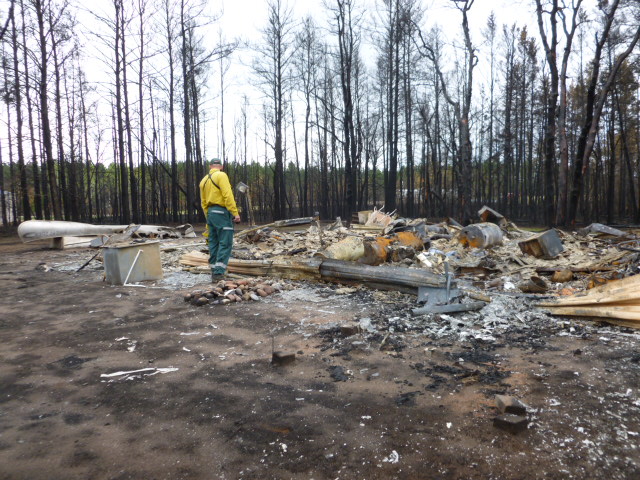
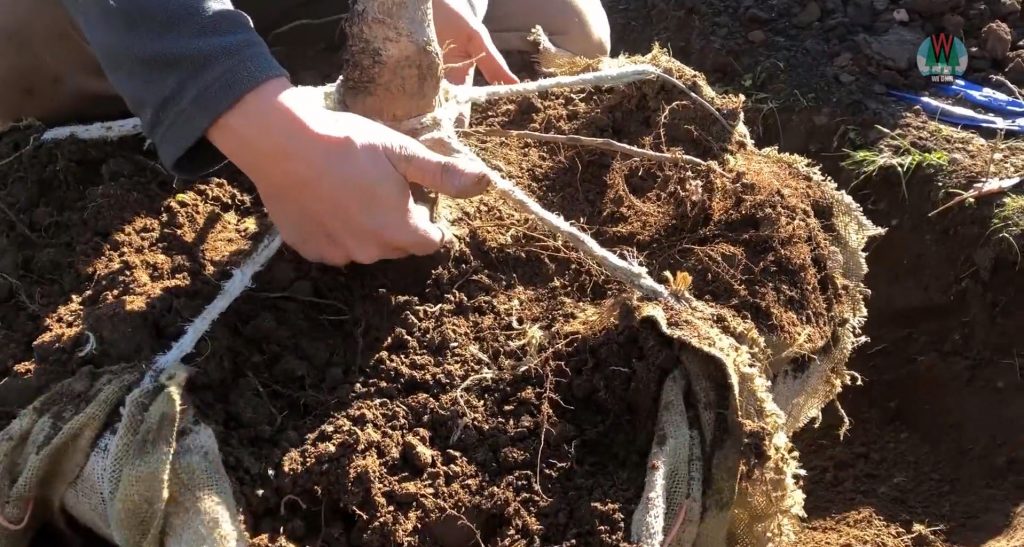 The Wisconsin Department of Natural Resources (DNR) Urban Forestry staff created a series of four videos on how to plant an urban tree.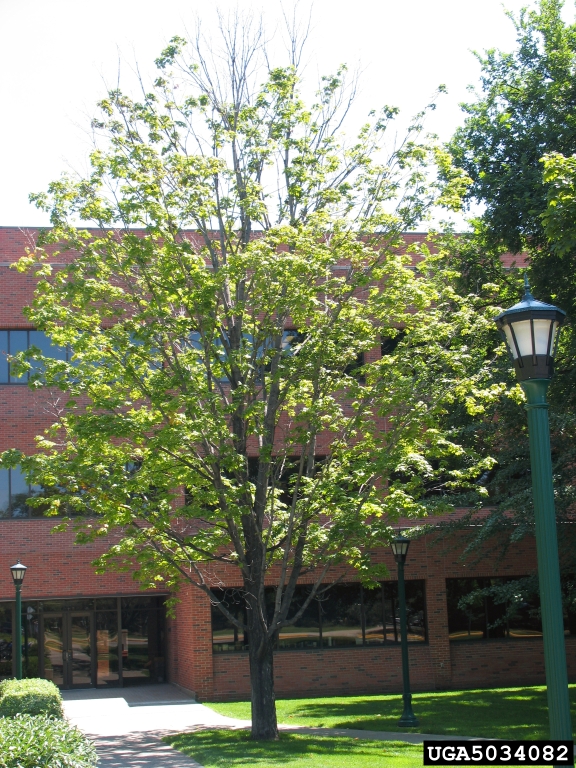
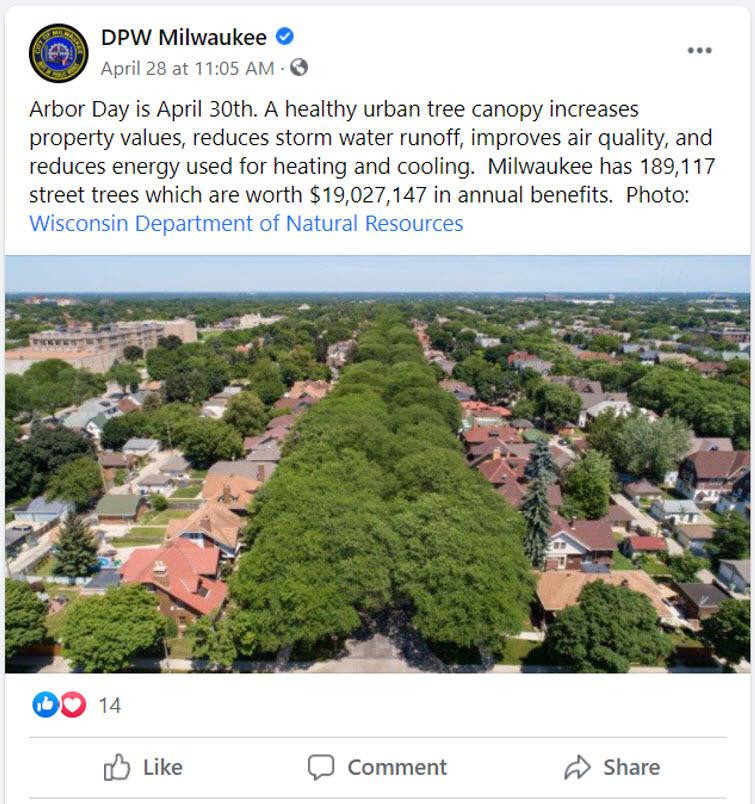 Despite significant challenges this year, many communities adapted their annual Arbor Day celebrations or came up with creative new ideas. Thanks to everyone for going above and beyond in 2021!
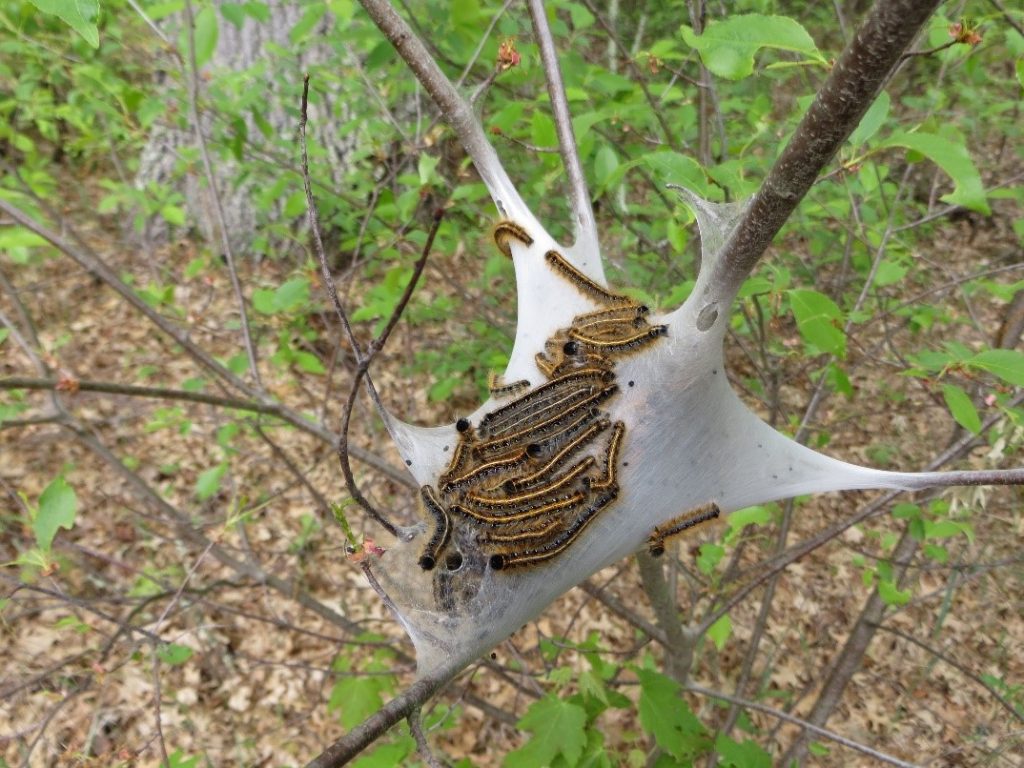
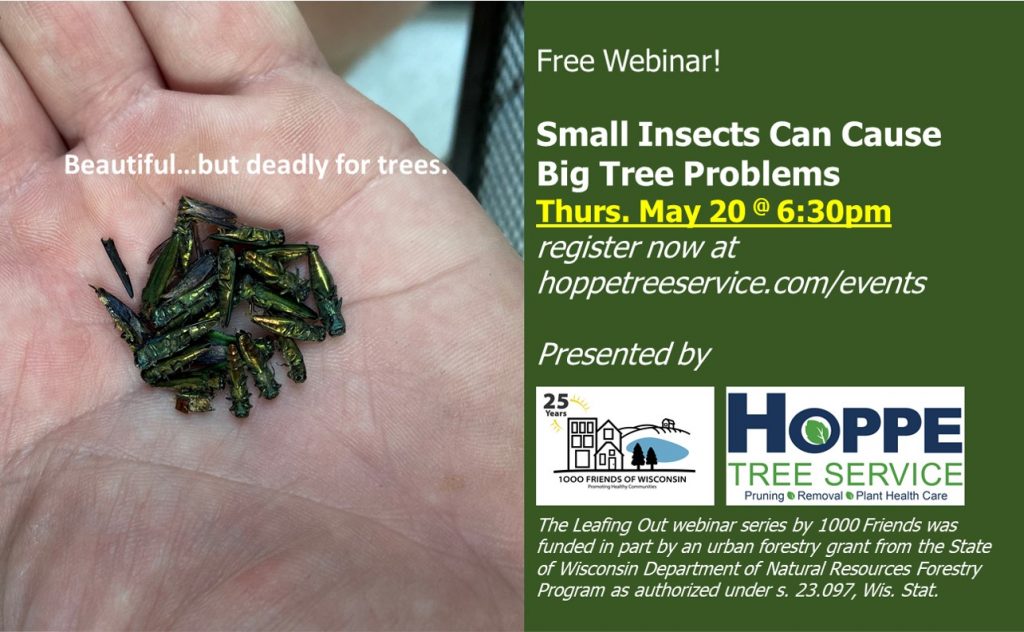 Leafing Out, Episode 6: Small Insects Can Cause Big Tree Problems with August Hoppe