By Patricia Lindquist, DNR Urban Forestry Coordinator
Patricia.Lindquist@wisconsin.gov or 715-574-1314
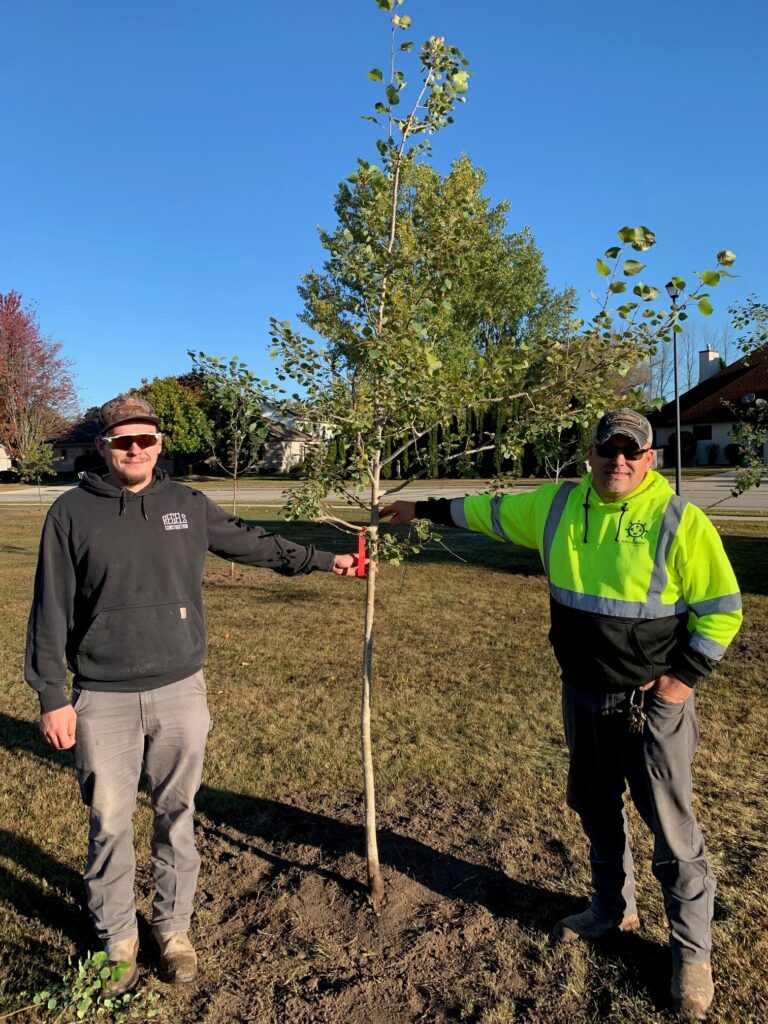
Parks staff Dave Blohowiak and Dawson Boettcher plant a quaking aspen at Fleetwood Park. / Photo Credit: Wisconsin DNR
As a long-time Tree City USA (43 years) and frequent Growth Award recipient (14 years in a row!), Manitowoc has a deep-rooted tradition of supporting urban forestry. After the emerald ash borer was detected in Manitowoc County in 2016, the city redoubled its efforts. Hundreds of dead and declining ash trees have been removed, and thousands of diverse, pest- and disease-resistant trees have been planted to replace the lost canopy.
Manitowoc utilizes a variety of programs, methods and funding sources to plant trees. Read on to learn more about their creative, multifaceted replanting strategy.
Their most unique program is their annual Tree for a Tree Program, now eight years running. City of Manitowoc residents can drop off their fresh-cut Christmas tree at the county recycling center in January, complete a form and receive a voucher in the mail for a deciduous whip. Vouchers are redeemable from Arbor Day through late May. For budgetary reasons, the program is limited to 75 participants.
Manitowoc also offers a tree donation program, where trees can be planted at a city park or cemetery in memory of a loved one. Patrons can select from several tree species and choose one of three donation packages that include engraved markers of different sizes.
A new, important part of Manitowoc’s replanting strategy is its gravel bed system. A gravel bed is a way of holding bare root trees and extending the bare root planting season, allowing a municipality to plant more trees on a tight budget, diversify plantings, decrease labor and ensure sound, healthy root systems. If you would like to learn more about gravel beds, check out this construction guide or contact your DNR urban forestry coordinator.
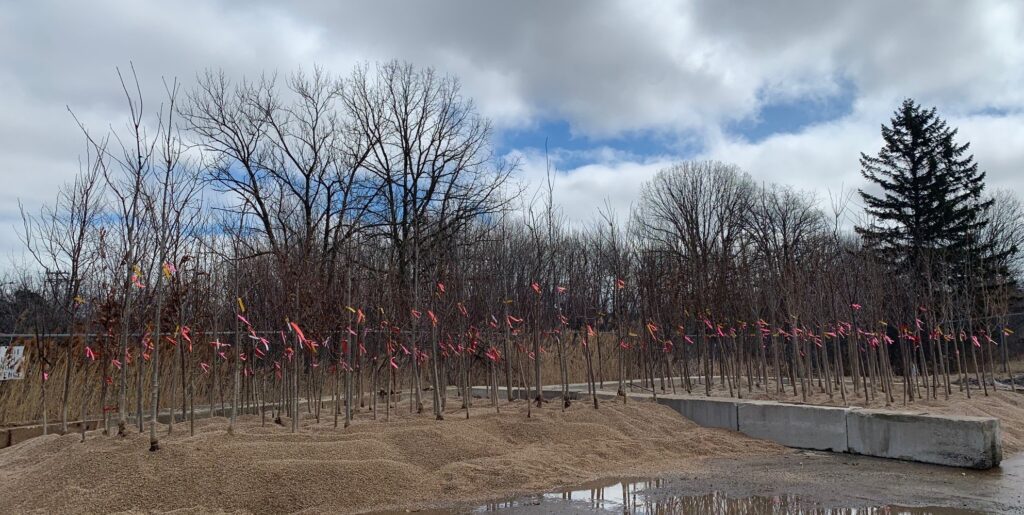
City gravel bed. / Photo Credit: Wisconsin DNR
Manitowoc’s gravel bed was completed in 2025 and can hold 100 trees (1.5” caliper size). City staff are excited to utilize more bare root trees, as they are lightweight and have been growing really well. The gravel bed was such a success that the original bed was expanded in 2026, and a second gravel bed was developed, with total space for over 300 trees. Having trees on hand throughout the summer makes it easier for volunteers to get involved, as the trees are more manageable and simpler to plant.
Grant funding is another key to Manitowoc’s success. In recent years, they received Wisconsin Department of Natural Resources (DNR) Urban Forestry Grants in 2024 and 2026, as well as a Federal Great Lakes Restoration Initiative (GLRI) grant to help reforest eight city parks in underserved communities.
One of the GLRI grant-funded projects included the removal of over 200 EAB-infested trees from Silver Creek Park, followed by the planting of 1,500 new trees with help from volunteers and community partners Stantec and Glacierland Resource Conservation & Development to facilitate forest succession processes.
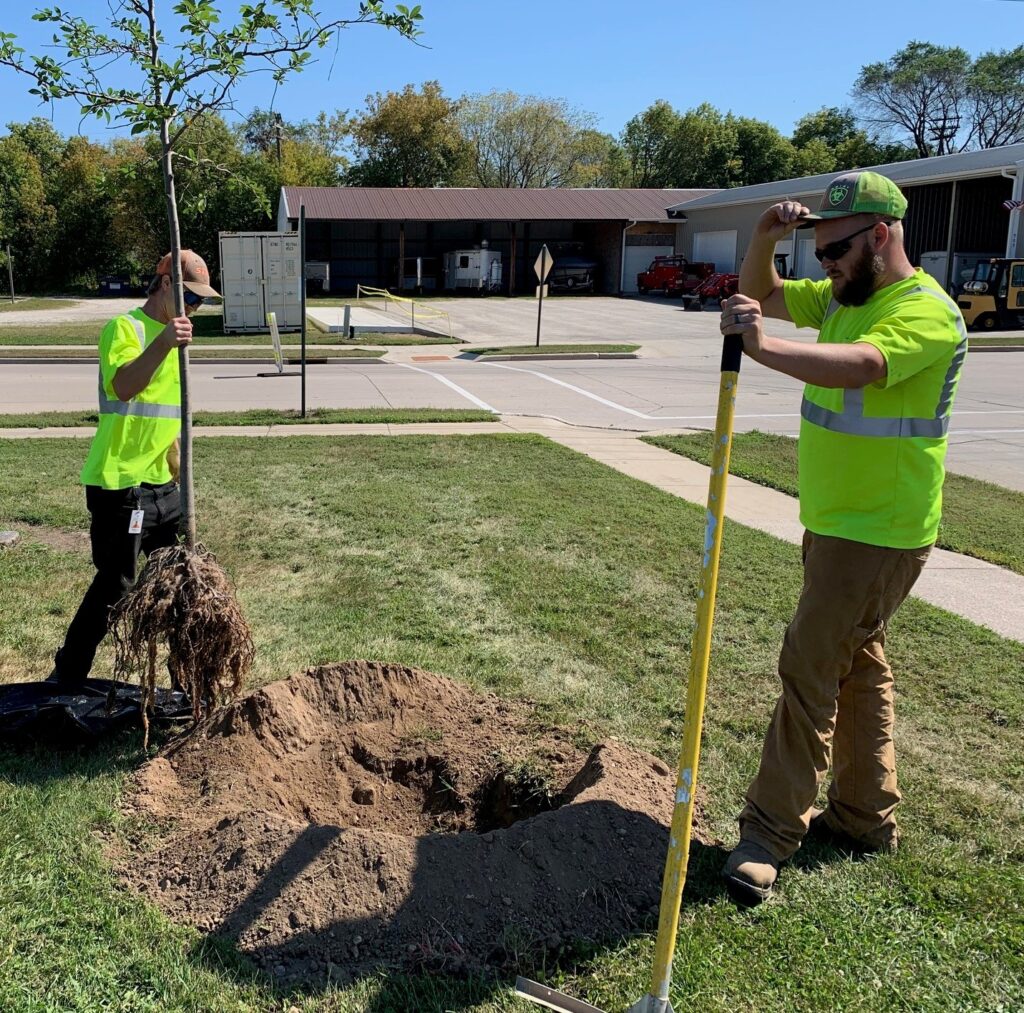
City Forester Abe Butler and Brennan Willert plant a tree at Halvorson Park. / Photo Credit: Wisconsin DNR
“The city has been trying to keep up with removals of EAB-infested, dead and dying ash for so many years that it is a breath of fresh air to pivot our focus toward replanting in recent years,” said City Forester Abe Butler. “Support from the community, Common Council and Mayor, along with state funding through the Urban Forestry Grant Program and the Federal GLRI program, have proven instrumental in this urban reforestation effort. I am excited thinking about future generations growing up alongside the trees we have been planting throughout our community.”