The DNR Urban Forestry Grant program awarded $64,641.14 to four Wisconsin communities for urban forestry projects, during our 2018 second round funding. In order to ensure a pool of catastrophic storm funds throughout the year, we have switched to awarding grants in two rounds instead of awarding all of our funds in December. The communities who received grants in the spring include Beaver Dam, Grafton, North Central Wisconsin Master Gardeners Association, and Slinger. Continue reading “Urban Forestry awards second round of grants”
Providing affordable trees to homeowners in Cambridge
Jay Weiss created the Cambridge Tree Project to supply affordable and interesting trees and shrubs to homeowners to help fund landscaping in Cambridge and Rockdale schools, street and parks. The program was founded over ten years ago with a couple of simple goals: (1) add 1,000 living trees to Cambridge Village forest by 2020, and (2) increase species diversity of the community forest. Cambridge is working towards these goals by consistently offering a variety of tree species for purchase. The trees are available to anyone, regardless of where they live, but the trees must be purchased at the spring sale. Continue reading “Providing affordable trees to homeowners in Cambridge”
Figure out when your trees will bloom
The Morton Arboretum is releasing information monthly on growing degree days. Plants, insects and fungi all develop at various times depending on temperature. Development will speed up or slow down depending on the rise and fall of temperature. Several studies have worked to understand the relationship between heat and development. These studies and information from them help anticipate flowering of trees and shrubs and the emergence of insects based on how many growing days have accumulated. Continue reading “Figure out when your trees will bloom”
Wildfire Report
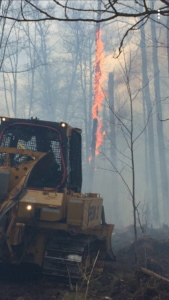
White Birch Fire in Dunbar, WI
Statewide fire danger ranged from Low to Very High this past week. 88 fires burned 156 acres in DNR Protection Areas; 12 buildings were destroyed and another 30 were threatened, but saved with firefighter assistance. The main wildfire causes this week were debris burning and equipment. The largest fire of the week burned 27 acres in Langlade County, caused by a campfire.
People are urged to continue to use caution with all types of outdoor burning, ash disposal and equipment use. Property owners are reminded to remain present when burning debris in a barrel or on the ground – should your fire escape, you can be held responsible for the cost of fire suppression and any damages resulting from the escaped fire. Clear an area around the pile or barrel and make sure a hose is attached to a working spigot. Wet down the burned area before leaving. Stay aware of the current fire danger for your area by checking our website: dnr.wi.gov, keyword “fire”.
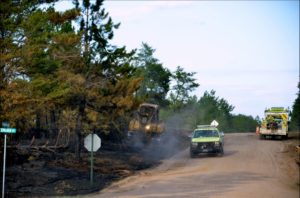
Germann Road Fire
May 14 marks the 5th anniversary of the Germann Road Fire that burned 7,442 acres and 100 buildings (including 22 homes and cabins) in Douglas County.
Firewise Tip: Are there any branches or dead trees close to power lines near your property? Ask the power company to clear them.
Five-Year Anniversary of the Germann Road fire
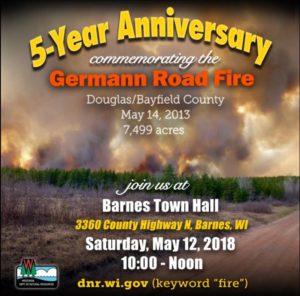 While spring is always much-welcomed after Wisconsin’s long winters, seasonal warm and dry conditions can result in increased wildfire activity. Northwest Wisconsin is taking a moment to highlight and remember the efforts that went into battling the historic Germann Road Fire as well as the recovery efforts still going on today by hosting an open forum on May 12, 2018. There will be a brief presentation about the fire, as well as what the burnt area looks like today as the community and landscape continues to recover.
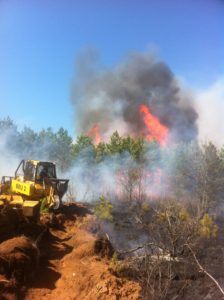
Tractor plow on the Germann Road Fire in 2013
On May 14, 2013, logging equipment sparked the Germann Road Fire in Douglas County that resulted in 7,499 acres burned and numerous structures lost before crossing into Bayfield County. Light rain moved through the area that morning dampening only the fine surface vegetation for a fleeting period. When the sun broke through the clouds, the landscape rapidly dried out becoming a prime receptor for a spark. At 2:45 pm, Brule DNR dispatch started a response that would last the next two days. The fire threatened approximately 450 structures and destroyed 104, including 23 primary residences before being declared contained on May 15.
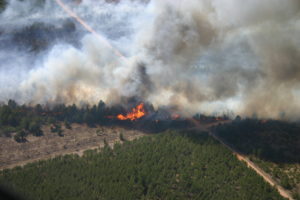
Germann Road Fire
One-hundred sixty-seven Wisconsin DNR personnel with 32 tractor plows, 5 heavy bulldozers and 100 fire engines worked feverishly to contain the fire, while 44 fire departments protected structures threatened by fire. This was the largest use of aircraft for fire suppression purposes on a fire in Wisconsin’s history. Thirteen aircraft including both fixed-wing and helicopters supported the efforts of ground crews.
In the years following, many of the homes and buildings have been rebuilt, yet some remain as a constant reminder of the fire-prone environment in northwest Wisconsin. Vast expanses of burnt forest have been opened giving way to new life on the landscape. In areas where tall pines once stood young seedlings are taking hold and reclaiming the ashes.
Please join the Wisconsin Department of Natural Resources staff and other first responders at the Barnes Town Hall on Saturday, May 12, 2018 from 10:00 am until noon to learn more about the Germann Road Fire and the recovery that continues today. Barnes Town Hall is located at 3360 County Highway N, Barnes, WI 54873.
Contact Ben Garrett, Wildland Urban Interface Specialist, for more information about this event. (715) 635-4088. For more information on Wildfire in Wisconsin, visit dnr.wi.gov search “fire.”
Porcupine and squirrel damage on trees
By Linda Williams, forest health specialist (Woodruff). Linda.Williams@wisconsin.gov; 715-356-5211, x232
During winter and early spring, damage to trees caused by porcupines and squirrels is evident in some areas. As spring arrives, new green leaves will mask the destruction.
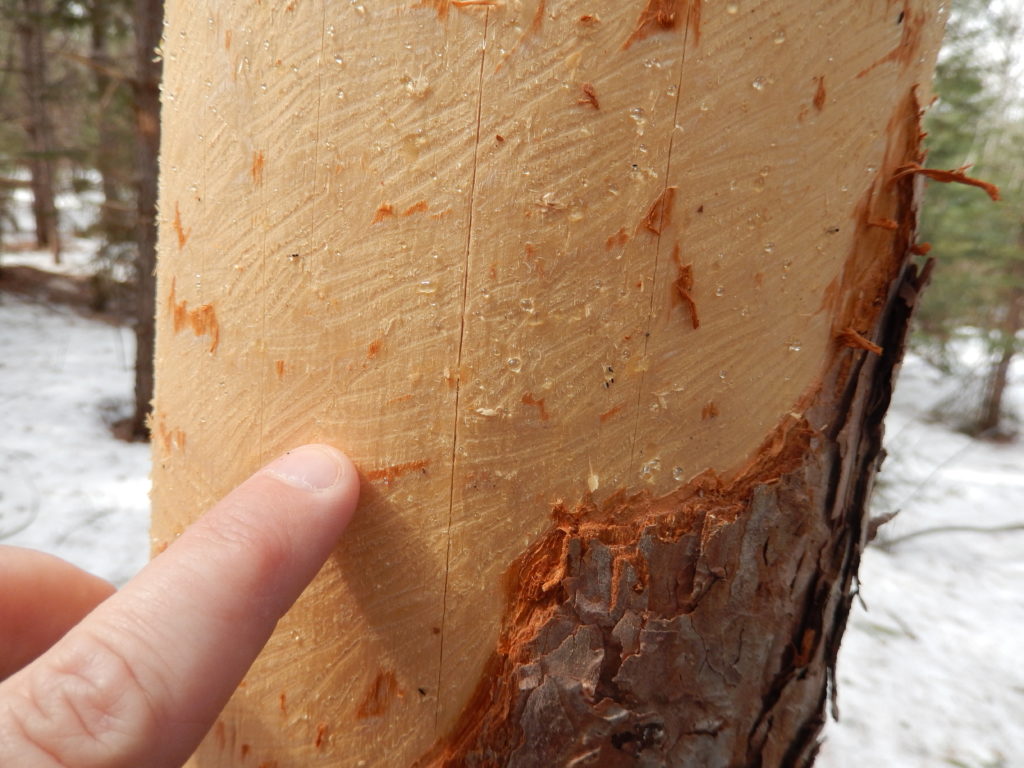
This red pine had the bark stripped off it by a porcupine, which has wider incisors than a squirrel.
Porcupine and squirrels feed on the bark of trees, stripping it from branches and main stems. Stripping bark can girdle trees, resulting in branch dieback which shows up the year following the damage. If the branch isn’t completely girdled, it will start to grow callus tissue over damaged areas in an attempt to recover.
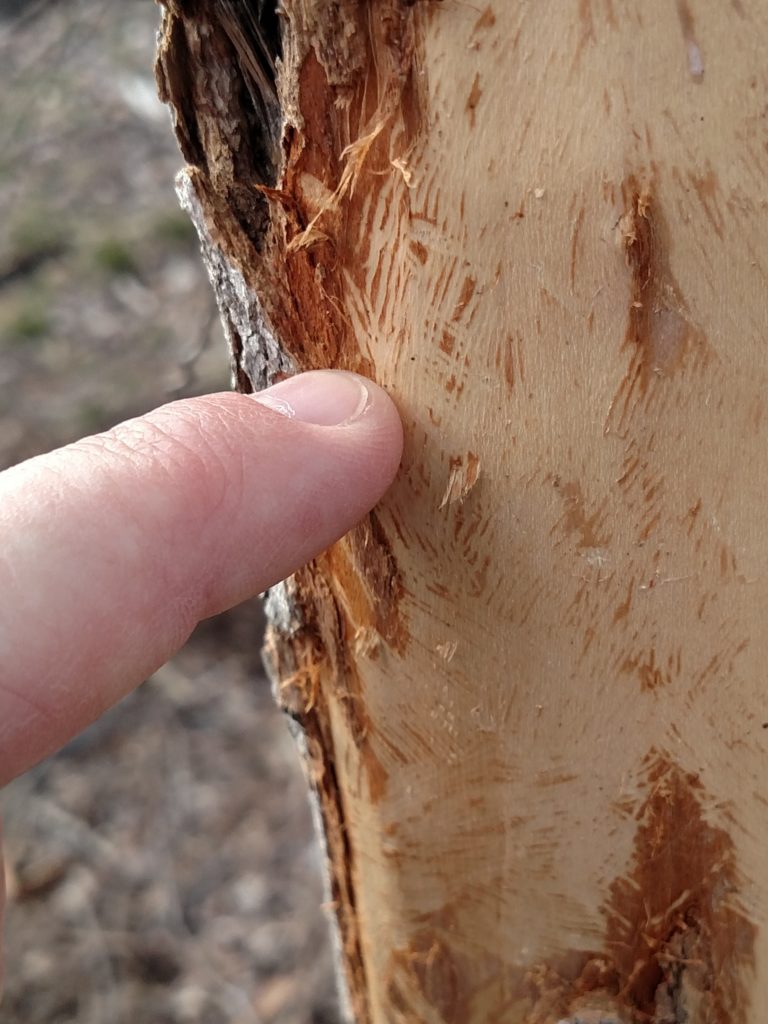
This maple bark was eaten by a squirrel. You can see where the tiny incisors scraped the bark down to the wood.
Both porcupines and squirrels feed on bark in the crowns of trees, so how can you tell which one is doing the damage if you don’t catch them in the act? The size of the teeth marks left in the wood is one clue. A gray squirrel’s incisors leave marks between 1.3 to 1.7 mm wide, while a porcupine’s teeth marks are nearly triple that, from 3.6 to 4.8 mm wide. You should also consider the species of tree being debarked: squirrels prefer maples while porcupines will feed on oak, pine, maple, and even spruce, as well as other species.
Rabbits, mice, and voles can cause similar damage to that caused by squirrels and porcupines, but damage will be located near the base of the tree instead of in the crown.
Another type of tree damage seen in late spring is when squirrels clip 4 to 6 inches off the tips of spruce branches, apparently to consume tasty buds. They drop the remainder of the branches to the forest floor, leaving a carpet of branch tips under spruce trees. I have yet to observe squirrels doing this, but the carpet of branch tips they leave prompts calls from concerned landowners each spring.
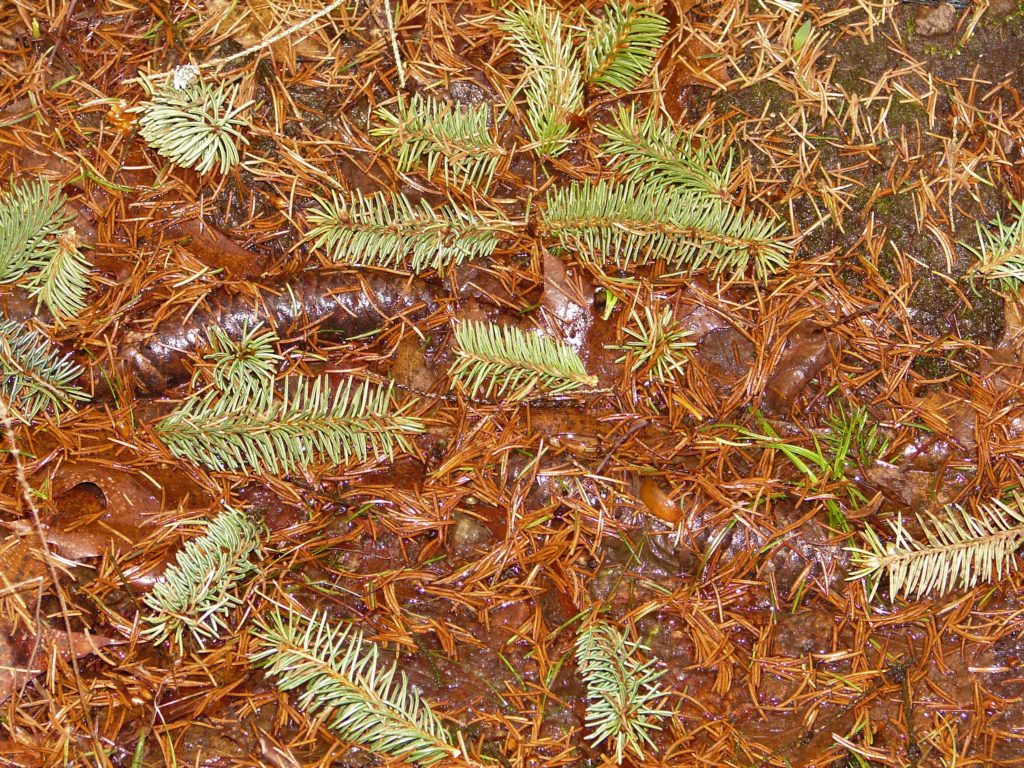
Spruce branch tips litter the ground where squirrels dropped them after clipping them from the tree. Although it can look alarming it rarely does enough damage to affect the overall health of the tree.
UW Extension offers a brochure about squirrels, including control options to share with landowners having trouble with these critters.
You can be a star!
by Jodie Ellis, communications specialist (Madison). Jodie.Ellis@wisconsin.gov; 608-266-2172

Invasive Species Action Month in Wisconsin will be held this year in June. To celebrate, the Wisconsin DNR is teaming up with partners for the “Protect the Places You Play” video challenge. We are looking for video entries from the public (no longer than two minutes, please) that show how you or your group help prevent the spread of invasive species. The winning video’s producer will be invited to attend the Wisconsin Invasive Species Council’s Invader Crusader Awards ceremony on June 6 at Olbrich Botanical Gardens in Madison. Submissions must be received no later than Monday, May 15.
Entries will be voted on by visitors to the DNR’s Facebook page. Voting will be open from May 16 through 25. For instructions on entering your video, see the 2018 Video Challenge page on the Council’s website. Need some inspiration? See last year’s winning submission.
EAB biocontrol releases continue in 2018
By Mike Hillstrom, forest health specialist (Fitchburg). Michael.Hillstron@wisconsin.gov; 608-513-7690
In 2018, the Wisconsin DNR will complete its eighth year of releasing tiny, stingless wasps as biocontrol agents to help manage emerald ash borer. Columbia, Dane and Grant counties are slated for first-time releases this year, and there will be new release sites in Brown, Door and Sheboygan counties. The wasps will be released for a second year at established sites in Brown, Green, Jefferson, Milwaukee and Sheboygan counties. The same wasps that were released in 2017 will be used this year: Tetra sticus planipennisi, Spathius galinae and Oobius agrili.
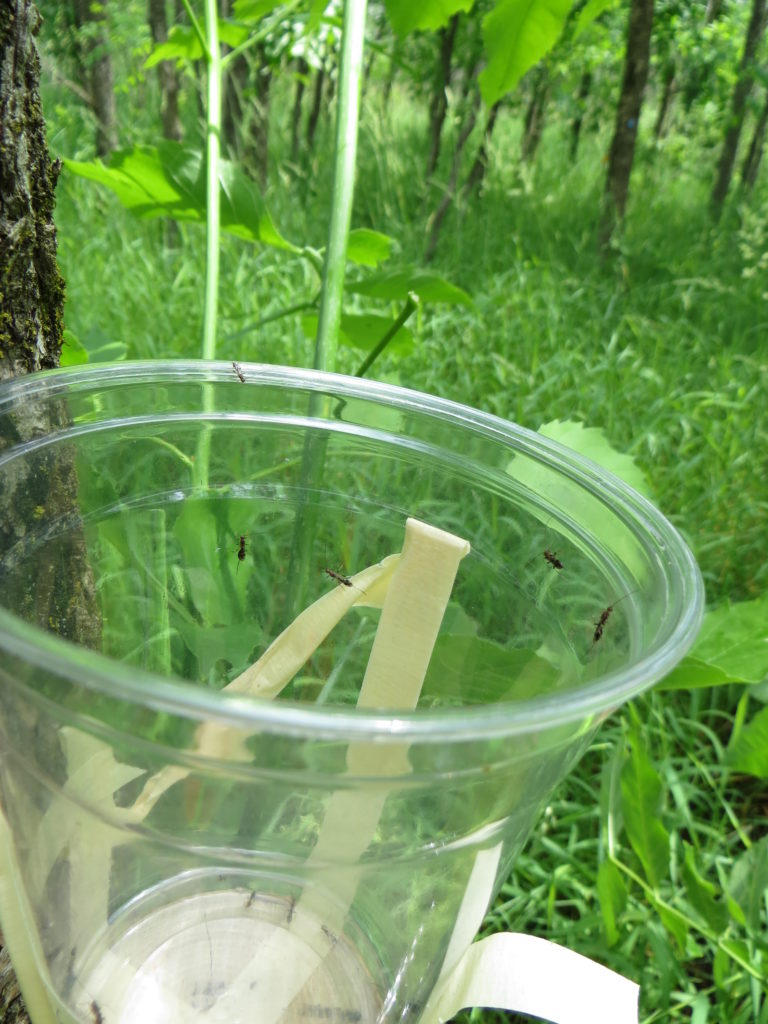
Adult Spathius galinae wasps venture out to find some tasty EAB larvae to parasitize.
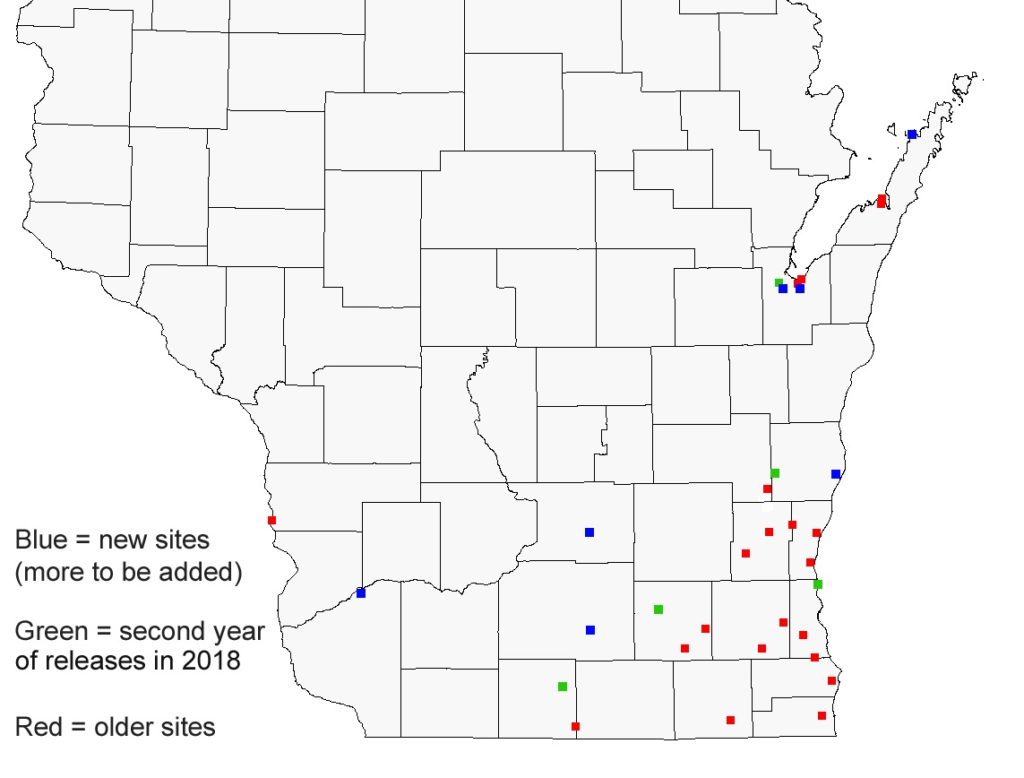
Biological control sites for emerald ash borer in Wisconsin 2011-2018. Figure by Bill McNee.
Phomopsis galls
By Linda Williams, forest health specialist (Woodruff). Linda.Williams@wisconsin.gov; 715-356-5211, x232
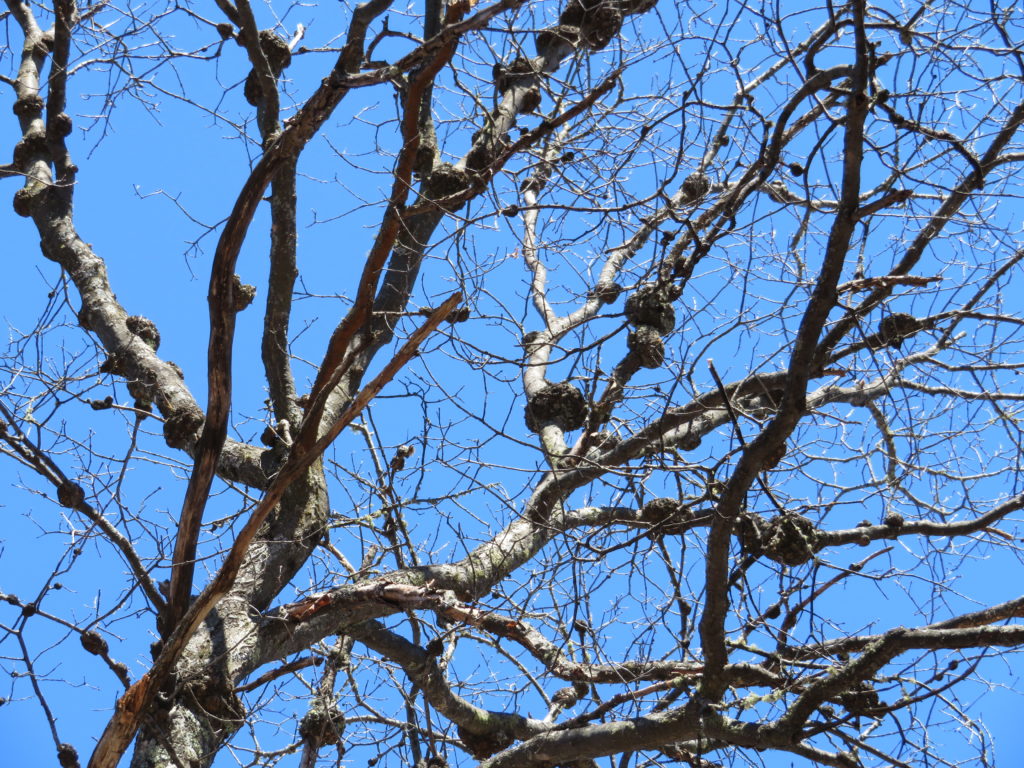
Large swellings on the branches of this oak are caused by the fungus Phomopsis.
Winter and early spring are great times to look for galls on trees. Some galls, including phomopsis galls, can get very large and, because there are often many galls on a single tree, they are easily spotted from a distance. Phomopsis galls are woody swellings caused by a fungus which range in size from very small to larger than a person’s head. They occur on hickory, northern red oak, maple, and a few other tree species. Infections are usually localized to a single tree with neighboring trees being completely unaffected, or a small group of trees may be infected. Occasionally, larger infection centers can be found.
It is suspected that genetic variability plays a role in the susceptibility of individual trees, but a lot is still unknown about this fungus. There is no known treatment for Phompsis galls other than to prune them out and dispose of them; many people choose to simply live with them. If left on a tree, galls may eventually cause dieback or girdling of infested branches, but some trees live for many decades with galls on their main stems. The presence of galls does not necessarily mean the rapid death of a tree, which is especially true for oak trees: they seem to survive for decades with very large galls present on the branches.
Historical Forest Health News – 1993 and 1968
News from 25 years ago (1993)
Jack pine budworm – Choristoneura pinus (Rohwer)
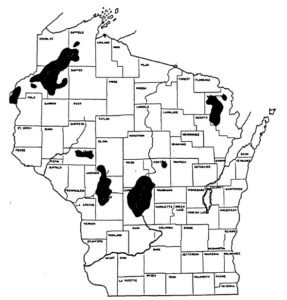
Area of defoliation by jack pine budworm in 1993 shaded in black.
“This defoliator erupted in northern and central Wisconsin to cause moderate to heavy defoliation on 400,000 acres of jack pine. This was the second year of defoliation in Clark, Eau Claire and Jackson counties, and first year defoliation in Monroe County. The largest areas of defoliation were in the northwest where periodic outbreaks are expected. Heavy defoliation occurred in Adams, Juneau, Wood, Clark, Eau Claire, Jackson and Monroe counties. Light feeding was apparent in the Conover area of Vilas county. In Oconto county a 90-acre planting of sapling white pine suffered heavy terminal and upper lateral defoliation. Spotty light to moderate defoliation occurred in Oconto and Marinette counties in the northeast. Defoliation in Marinette county was heaviest in over-mature natural stands of jack pine stands in Silver Cliff Township (Sections 22, 23, 27, 26, 34, 35, T34N, RISE).
In Juneau and Wood counties, tree mortality is expected to be high because many trees lost 90 to 100 percent of their foliage. Salvage harvests were scheduled in the defoliated stands that were predicted to suffer heavy mortality. Some of the harvests in the central and westcentral counties were in potential conflict with the protection of the Karner blue butterfly, a newly listed endangered species. Guidelines were developed to survey for the Karner Blue and for its food plant, blue lupine. The guidelines also contain procedures to prevent damage to known Karner Blue habitat during harvest operations. Many defoliated stands that were scheduled for salvage harvests were surveyed. Late season egg mass surveys revealed a 33% decline from 1992 levels in the northwestern counties portending a decrease in populations and defoliation in 1994. In western and central Wisconsin, the egg mass surveys indicate the budworm populations should remain high in 1994. Egg mass surveys in Wood County averaged 5.8 egg masses per plot. Egg mass surveys in Marinette county indicate defoliation will likely be spotty and variable in intensity again in 1994.”
Continue reading “Historical Forest Health News – 1993 and 1968”