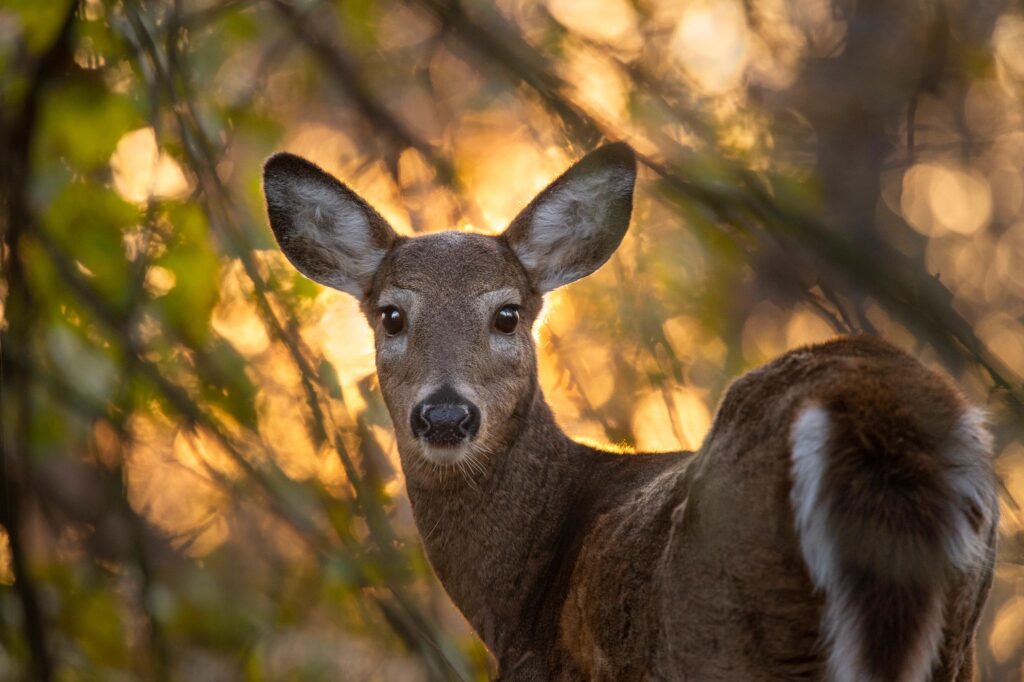
 Urban Wildlife Damage Abatement and Control grants help urban areas develop wildlife plans, implement specific damage abatement and/or control measures for white-tailed deer and/or Canada geese. They are available to any town, city, village, county or tribal government with a population density of not less than 125 persons per square mile. This grant provides a 50% cost share up to $5,000 for eligible costs. The application deadline is Dec. 1.
Best Management Practices
Upcoming Trainings
 *These training opportunities are provided as an information service only and do not constitute an endorsement from the Wisconsin Department of Natural Resources (DNR).
See below for information on training topics and events, including tree management and planning, urban tree diversity, root pruning, invasive species, urban wood, evergreen diseases, EHAP, the TRAQ program and fall foliage. Continue reading “Upcoming Trainings”
Community Spotlight: West Allis’ Tree Inventory System
By Dan Buckler, DNR Urban Forest Assessment Specialist; Daniel.Buckler@wisconsin.gov or 608-445-4578
It was 2021 and the West Allis Forestry Division faced a crisis. For all intents and purposes, its tree inventory was no longer functional. The division had always been a program that kept and used a lot of data, but inefficiencies in the inventory process abounded, and now the software where the data was stored was essentially crashing. The status quo was clearly not working.
But as Winston Churchill apocryphally said, “Don’t let a crisis go to waste.”
Continue reading “Community Spotlight: West Allis’ Tree Inventory System”
Upcoming Trainings
 *These training opportunities are provided as an information service only and do not constitute an endorsement from the Wisconsin Department of Natural Resources (DNR).
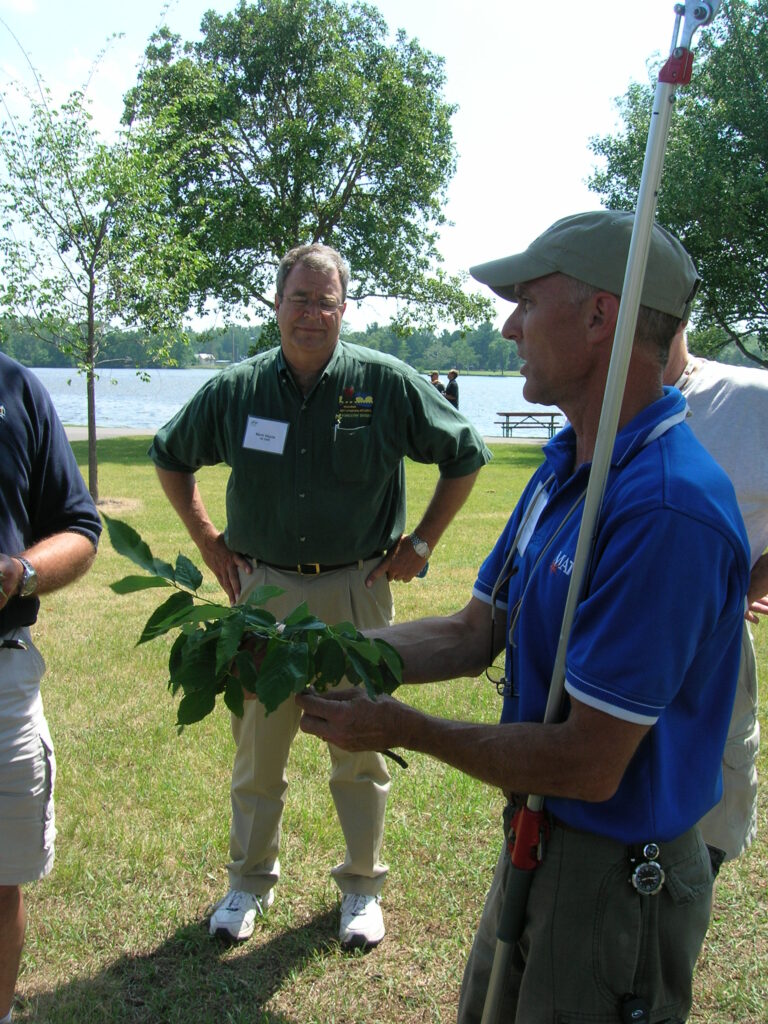
See below for information on training topics and events, including utilizing urban wood, leadership in urban forestry, retaining mature trees, the Women’s Rec & Safety Climb, the WAA Fall Seminar, electrical hazards, climate change, tree pathology and diseases and urban forestry public awareness materials.
Save The Date: Feb. 15-17, 2026 – WAA/DNR Annual Urban Forestry Conference
 The annual WAA/DNR Urban Forestry Conference will again be held at the KI Convention Center in Green Bay, Wisconsin. More information will be available soon! Continue reading “Save The Date: Feb. 15-17, 2026 – WAA/DNR Annual Urban Forestry Conference”
Networking At Riveredge Nature Center
By Olivia Witthun, DNR Urban Forestry Coordinator; Olivia.Witthun@wisconsin.gov or 414-750-8744
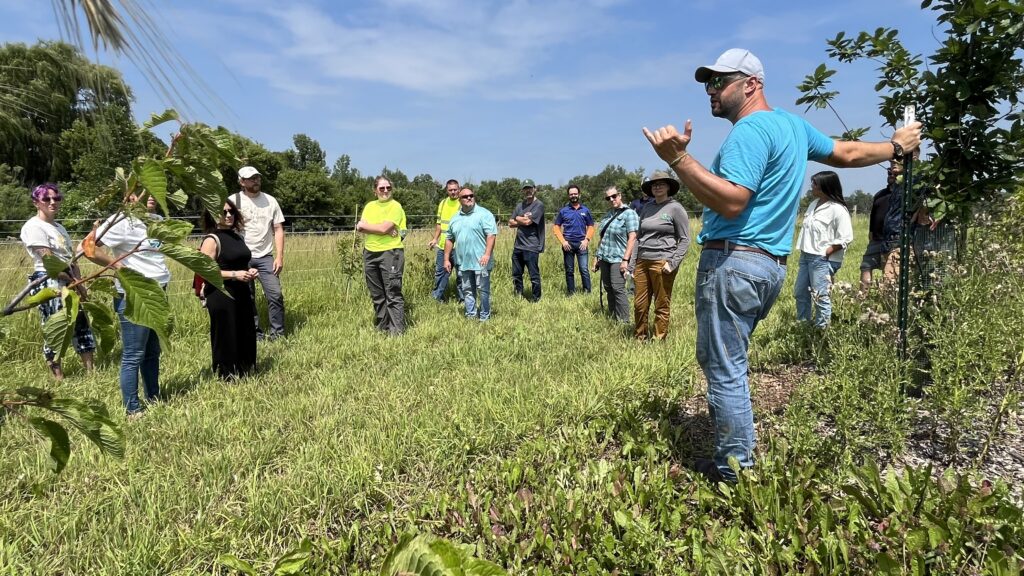 Tree managers met at Riveredge Nature Center (RNC) for a networking meeting/field tour at the end of July. RNC is located in Saukville, ground zero for Emerald Ash Borer (EAB) in Wisconsin, which was discovered in 2008.
The indoor portion of the meeting consisted of updates from DNR Urban Forestry and Forest Health staff. There was also time for open sharing amongst attendees and an overview by Matt Smith (RNC) about what we’d be seeing in the field. Continue reading “Networking At Riveredge Nature Center”
Upcoming Trainings
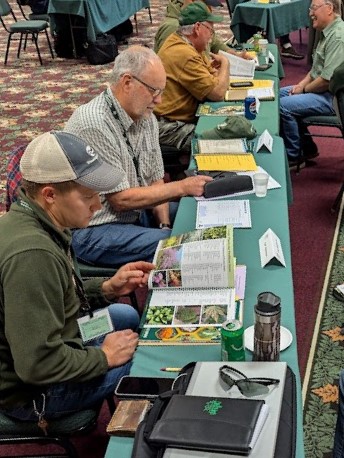 *These training opportunities are provided as an information service only and do not constitute an endorsement from the Wisconsin Department of Natural Resources (DNR).
See below for information on training topics, including Z133 updates, urban tree lifespan, maintaining urban trees on private lands, conferences and watering. Continue reading “Upcoming Trainings”
Monitor Your Trees For Spongy Moth-Related Decline And Mortality
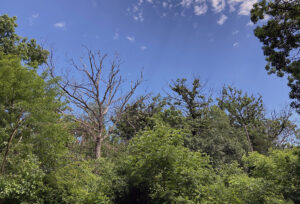
A photo taken June 20, 2025, shows dead and dying oaks near Whitewater Lake in Walworth County, following a period of defoliation and summer drought. / Photo Credit: Wisconsin DNR
By Bill McNee, DNR Forest Health Specialist
Bill.McNee@wisconsin.gov or 920-360-0942
Property owners are encouraged to monitor their trees for signs of decline and mortality, as the last few years have been marked by drought and spongy moth defoliation.
Landowners who have oak, birch, crabapple, aspen, willow, tamarack and basswood (linden) trees should be particularly watchful, because the caterpillars of this invasive insect prefer these species. Many other tree species are not preferred by the caterpillars and are less likely to be heavily defoliated, but are more likely to die if heavy defoliation should happen.
This article focuses on oak impacts.
The 2021-24 spongy moth outbreak has now collapsed statewide; no defoliation has been observed as of late July 2025. Only a few reports of single caterpillars were received by Wisconsin DNR Forest Health staff. (Note: Parts of Wisconsin may be experiencing a continuing outbreak of different caterpillars known as “oak leafroller” and “larch casebearer.”)
Continue reading “Monitor Your Trees For Spongy Moth-Related Decline And Mortality”
New Forest Service Publication Translates Research For Landowners
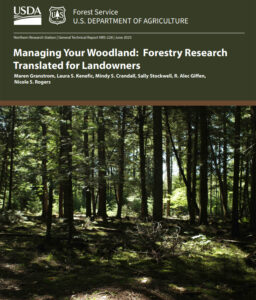
The cover of a U.S. Forest Service publication called “Managing Your Woodland: Forestry Research Translated for Landowners.” / Graphic Credit: USDA Forest Service
By Wisconsin DNR
Have you ever heard a forester talk about shelterwood or group selection and found yourself wondering what they are talking about?
Or maybe you read those terms in your forest management plan and aren’t entirely clear what they mean? If so, you might want to check out a new publication called Managing Your Woodland:
Forestry Research Translated for Landowners [PDF].
The U.S. Forest Service recently released the publication, which breaks down forest ecology, silviculture and various forest management systems for landowners and other non-forestry experts. Although the publication comes out of the Northeast United States, the tree species, forest types and forest management are not entirely different from the forests and forestry practices in Wisconsin.
Invasive Species – Fall Workshops
By Olivia Witthun, DNR Urban Forestry Coordinator; Olivia.Witthun@wisconsin.gov or 414-750-8744
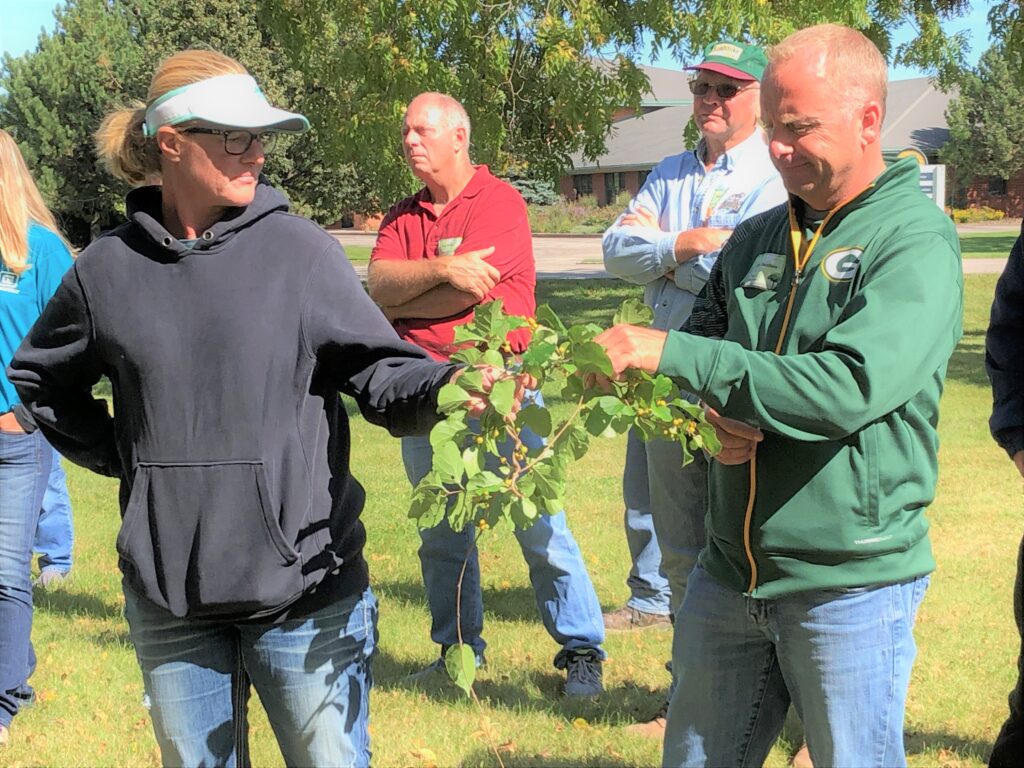 The Wisconsin Department of Natural Resources is partnering with the UW-Madison Division of Extension to host a series of fall workshops on invasive species plant identification and management. Learn about invasive plants in urban settings, focusing on identification, impacts, management and available resources. Dr. Mark Renz (professor and Extension specialist with UW-Madison) will lead the instruction, with Travis Wilson, Matt Wallrath and John Zabrosky assisting. Each workshop will include morning classroom instruction followed by hands-on field demonstrations in the afternoon. The cost of the workshop is $40 and includes lunch. Continue reading “Invasive Species – Fall Workshops”