By Robert Allard, Urban and Community Forestry Coordinator, Rhode Island DEM
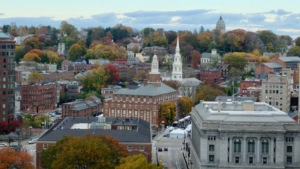 This year, as families all over the country spend more time at home, we have been given the opportunity to appreciate the fresh air that we can enjoy on our own back porches and front stoops more than ever. Trees are a significant factor contributing to the quality of the air we breathe. Recent research shows that even relatively small trees bring benefits to their neighborhoods. Just a single tree has the potential to filter up to one third of fine particulates such as dust, dirt, soot, and smoke within 300 yards, and can reduce particulate matter inside homes by as much as 60%.
 Recognizing that trees and vegetation are among the features that make communities special places for residents and visitors, American Transmission Co. will continue funding for planting projects in communities in its service area through its Community Planting and Pollinator Habitat programs.
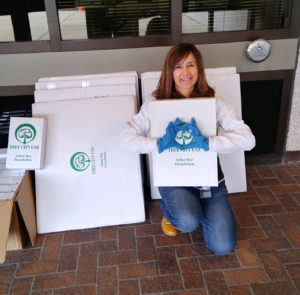 We deeply appreciate the commitment to urban forestry demonstrated by our 2019 Tree City, Tree Campus, and Tree Line USA participants. Thank you for your hard work!
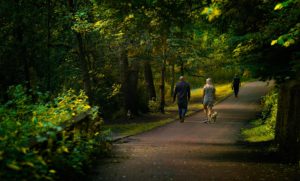 Thanks to the efforts of researchers over the past few decades, we have a solid understanding of the ecological benefits of urban forests, such as reduced greenhouse gases, decreased stormwater runoff, and lessening of the urban heat island effect. In contrast, knowledge of the human health benefits of urban forests is still developing. Existing reviews of health benefits have focused more broadly on nature, green space, and greenness rather than concentrating specifically on urban trees.