
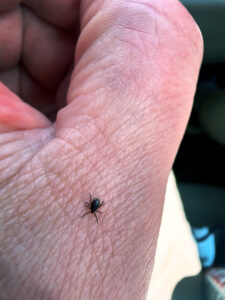
An adult deer tick looks for a spot to attach. / Photo Credit: Wisconsin DNR
By Michael Hillstrom, DNR Forest Health Specialist, Fitchburg
Michael.Hillstrom@wisconsin.gov
Adult blacklegged (deer) ticks are already active this year, as of March 2026. The adults start looking for a host as soon as it warms up to around 40 degrees Fahrenheit.
In Wisconsin, between 20-60 percent of adult ticks are infected with the bacteria that causes Lyme disease. However, the risk of getting Lyme disease is higher with bites from nymphal ticks, which are most abundant in June and July, because they are so tiny and difficult to find. While only 10-28 percent of nymphs are infected with the Lyme disease bacteria in Wisconsin, rapid removal of a tick can reduce the risk of infection because it takes at least 24 hours for the Lyme bacteria to spread.
To reduce the risk of contracting tick diseases, wear long sleeves and pants and use an insect repellent with ingredients such as DEET, Picaridin or oil of lemon eucalyptus. Clothing can also be treated with permethrin (do not use permethrin directly on skin). Recent research (Anholeto et. al., 2026) found that lemon eucalyptus oil (commercial versions of the essential oil that are formulated and marketed for tick repellency) was an effective repellent of both blacklegged ticks and American dog ticks on various fabrics. Permethrin acts through contact toxicity, so a repellent essential oil product is a useful addition to preventative measures.
After potential exposure to ticks, always do a thorough tick check. Be especially careful to check the lower body, because nymphs usually get on by the feet and are easy to miss below the waist. Shower within two hours of coming indoors and put clothes in the dryer on high heat for 10 minutes to kill any ticks that you may have picked up while outdoors.
If you find an attached tick, remove it as soon as possible and monitor for disease symptoms for 30 days.
You can use resources such as the UW-Madison Wisconsin Tick and Tick-Borne Diseases webpage or the Wisconsin Department of Health Services (DHS) “Illnesses Spread by Ticks” webpage to identify ticks and learn about the diseases they cause or submit a photo to the DHS for tick identification.
If you’d like to contribute to tick research, consider downloading The Tick App.
For information about tick safety, visit the DHS Tick Bite Prevention website and watch for their Fight the Bite campaign.