
By: Kevin Sayers, sayersk@michigan.gov or 517-582-3209 or Lawrence Law, LawL1@michigan.gov or 313-316-4137
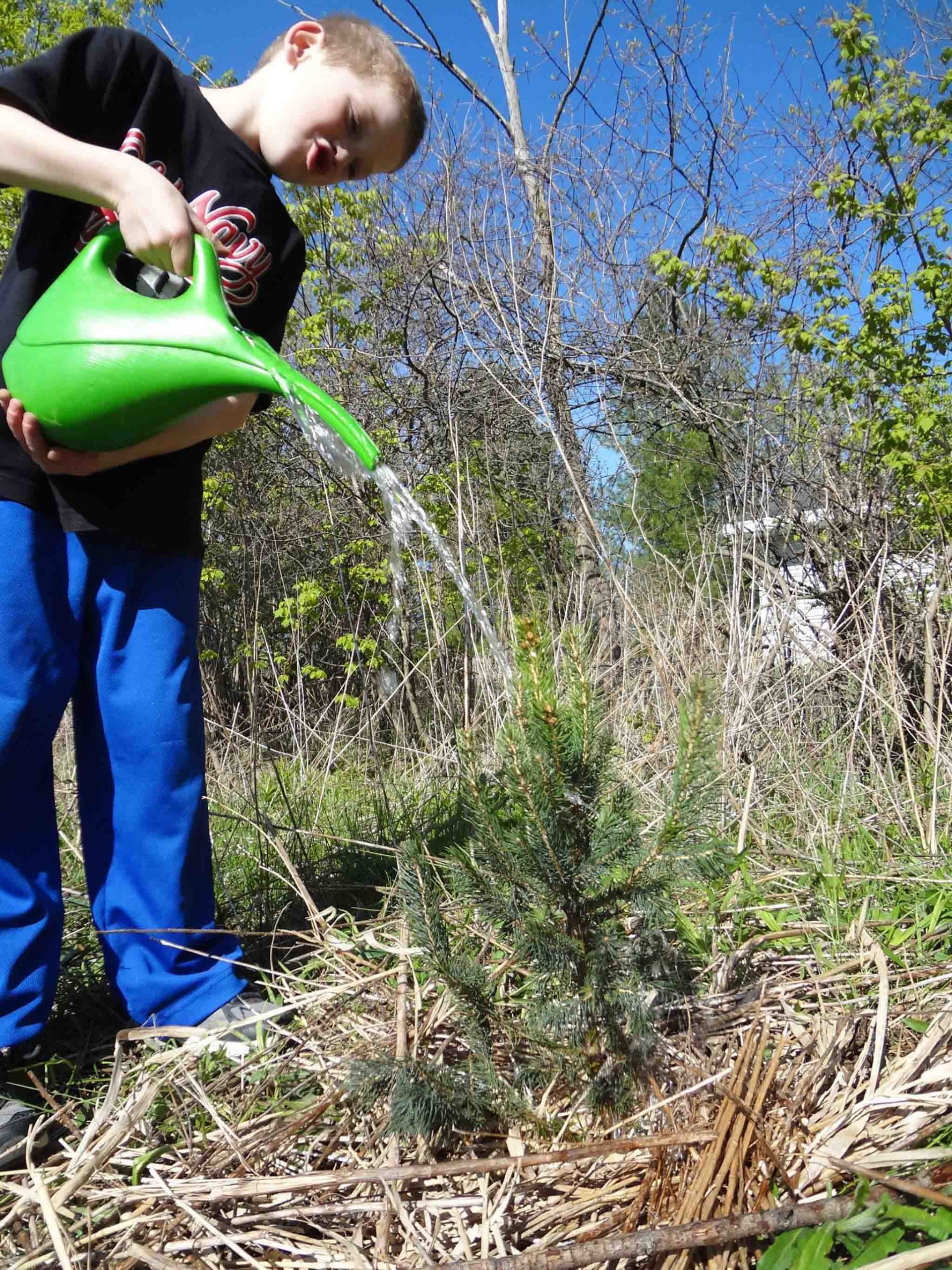
Photo Credit: Wisconsin DNR
You don’t go anywhere in summer without your water bottle, right? In hot weather, your trees may need a drink, too, especially if they’re recently planted.
“When it’s hot and dry outside, your trees may suffer if they are not getting at least an inch of rain each week,” said Kevin Sayers, Urban and Community Forestry Program manager with the Michigan Department of Natural Resources. “Watering your trees during hot, dry spells can go a long way toward keeping them healthy.”
Deciduous trees – those that lose their leaves in fall – show drought stress through curling or drooping leaves. Leaves may “scorch,” or turn brown at the edges, fall off early or exhibit early fall color. Evergreen needles may turn yellow, then red or brown.
Best Ways To Water
When watering, prioritize newly planted or high-value trees and consider these tips.
- Sprinklers: Place an empty container or rain gauge nearby to measure about 1 inch of irrigation.
- Hand watering via hoses: Let water run slowly until the ground is saturated (10 to 12 inches deep) and moist near the base of small trees or at various points under the canopy of large trees.
- 5-gallon buckets: Most newly planted trees need 5 to 10 gallons of water each week.
- Soaker or trickle hoses: These types of hoses provide slow watering that is important in getting moisture deep into the soil where roots need it most.
- Timing. Don’t water during the middle of the day. Much of the water applied at the hottest or windiest time of day is immediately lost to evaporation.
- Mist sprinklers: These sprinklers aren’t as effective for tree watering; as much as 70% of water may be lost to evaporation into the air.
- Fertilizer: Keep in mind that salts found in fertilizer can injure tree roots when soil moisture is limited.
- Mulch: Mulch helps retain soil moisture and save water. Apply 3 to 4 inches of organic mulch under the tree canopy, around but not touching the base of the trunk. You want the finished mulch pile to look like a doughnut, not a volcano.
- Additional resources: Check out Michigan State University Extension’s watering guidance or the previously published article in the Wisconsin Urban Forestry newsletter.