
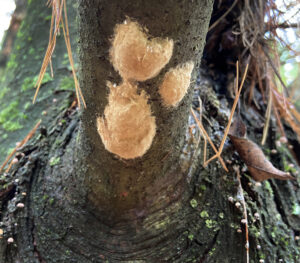
Large egg masses are seen on a tree at the Kettle Moraine State Forest-Southern Unit in 2021. / Photo Credit: Wisconsin DNR
By Bill McNee, DNR Forest Health Specialist, Oshkosh
Bill.McNee@wisconsin.gov
It certainly has been chilly in recent weeks, but spring is coming. When the weather warms up, the annual return of spongy moth caterpillars will begin.
The overall spongy moth population is currently low in Wisconsin. However, egg mass numbers may remain high enough to cause nuisance problems and heavy tree defoliation on individual trees or in small areas.
There’s a way for property owners to help keep the population down: Get out now to locate and properly dispose of spongy moth egg masses, which were produced by adult moths last summer. Each spongy moth egg mass contains hundreds of eggs that will hatch into hungry, leaf-eating caterpillars in the spring.
Property owners have two options for destroying egg masses within reach:
- Gently scrape egg masses into a container of soapy water to soak for a day or two before throwing them in the trash. DNR has produced a short instructional video available online.
- Spray the masses that are safely within reach with horticultural, mineral or neem oil that can be applied to trees. These oils are available online and at many local garden centers, hardware stores and big-box stores. Review the product label to see if it should be applied when temperatures are well above freezing. Do not use motor oil or other lubricants, as these can harm the tree and be a pollutant.
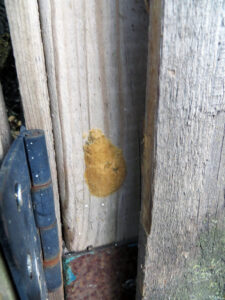
Spongy moth egg masses can be found on outdoor objects other than trees, such as this residential gate in Oshkosh. / Photo Credit: Bill McNee, Wisconsin DNR
Checking for egg masses on trees and outdoor objects also helps property owners predict the level of nuisance caterpillars and tree defoliation that is likely this summer. Those estimates can, in turn, help landowners and managers decide if action should be taken in the spring.
Note that old masses, which hold no viable eggs, appear faded and will feel spongy when touched.
Populations usually reach the highest levels on:
- Preferred tree species (oak, crabapple, birch, etc.) growing in mowed lawns.
- Large oaks with rough bark, especially in or adjacent to mowed lawns.
- Dry sites with sandy soil and abundant oak.
Visit the Wisconsin Spongy Moth Resource Center for information about egg mass oiling and removal, physical controls, population survey methods and insecticide applications to high-value host trees. An arborist or forester may also be a good resource for anyone dealing with spongy moths.
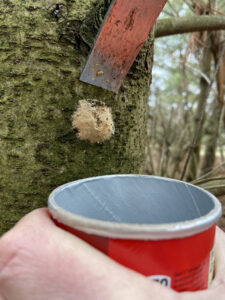
Carefully scraping spongy moth egg masses off trees and into a cup of soapy water will help to hold down caterpillar damage in 2025. / Photo Credit: Bill McNee, Wisconsin DNR