Does Cold Weather Bug The Bugs?

A map of Wisconsin showing cold temperatures on Jan. 25, 2026.

Cold temperatures across the state of Wisconsin on Jan. 25, 2026. / Graphic Credit: National Weather Service

By River Mathieu, DNR Forest Health Specialist, Fitchburg
River.Mathieu@wisconsin.gov or 608-772-2758

Wisconsin experienced a polar vortex in late January 2026, and temperatures got chilly throughout the state, even reaching close to -40⁰ F in some places! Although it has warmed up, the cold weather is still fresh in everyone’s minds, leaving insect and forest lovers alike wondering how insects survive temperatures that cold.

The Wisconsin Department of Natural Resources Forest Health staff has received several questions over the past month about how insects survive cold weather in winter and whether the January temperatures were cold enough to kill insect pests.

Continue reading “Does Cold Weather Bug The Bugs?”

Protect Valuable Ash Trees Against Emerald Ash Borer

An ash tree in Oshkosh shows damage from woodpeckers feeding on emerald ash borer larvae beneath the bark.

An ash tree next to a walking trail in Oshkosh has been damaged by woodpeckers feeding on emerald ash borer larvae beneath the bark. / Photo Credit: Wisconsin DNR

By Bill McNee, DNR Forest Health Specialist, Oshkosh
Bill.McNee@wisconsin.gov or 920-360-0942

Property owners with healthy, valuable ash trees are encouraged to treat them with insecticide this spring to protect against emerald ash borer (EAB).

The invasive pest is currently the most damaging threat to trees in Wisconsin, killing more than 99% of the ash trees it infests.

Woodpecker damage during the winter is often the first sign that an ash tree is infested. The birds remove pieces of bark while feeding on EAB larvae inside the tree. Insecticide treatment of infested ash trees is more likely to be successful if the trees have low or moderate levels of woodpecker damage.

Continue reading “Protect Valuable Ash Trees Against Emerald Ash Borer”

Wisconsin’s Urban Forestry Council 2025 Biennial Report Published

By Jenn Janness, Urban Forestry Council Liaison
Jennipher.Janness@wisconsin.gov or 920-809-9330

2025 report coverThe purpose of the Wisconsin Urban Forestry Council is to advise the state forester and the Wisconsin DNR on the best ways to preserve, protect, expand and improve Wisconsin’s urban and community forest resources. Members are appointed by the DNR Secretary and represent a wide array of stakeholders, including municipal and utility foresters, medical and higher education professionals, nursery and green industry staff, environmental groups, public works and parks staff, organizations such as the Wisconsin Arborist Association (WAA), the Urban Wood Network Wisconsin, the League of Wisconsin Municipalities and government agencies such as WisDOT and DATCP. Continue reading “Wisconsin’s Urban Forestry Council 2025 Biennial Report Published”

LEAF Lessons

Leaf websiteArbor Day is right around the corner, but why wait to start celebrating and learning about trees? The LEAF K-12 Forestry Education Program provides resources to incorporate into the classroom for Arbor Day or any day! The downloadable Urban Forest Lesson Guide provides a pathway for teachers to engage students and teach them about the trees in their neighborhood. Forestry Education Kits on a variety of different themes are also available for checkout for both formal and non-formal educators. Check out the LEAF website and consider utilizing the resources they have to offer this spring. Continue reading “LEAF Lessons”

Tree Fund Scholarships And Grant Deadline March 15, 2025

Tree FundTREE Fund offers scholarships for undergraduate students who aspire to careers in arboriculture, urban forestry and related fields. Before applying for any scholarship, carefully read the guidelines for each scholarship provided on the website. Contact a staff member at TREE Fund directly should you have questions or require additional information about these programs.

Apply online by March 15, 2026. Continue reading “Tree Fund Scholarships And Grant Deadline March 15, 2025”

Upcoming Training

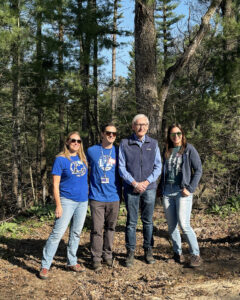
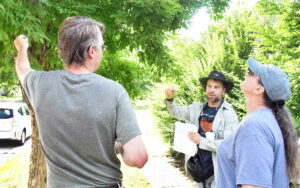
group of people listening to a speaker in the woods* These training opportunities are provided as an information service only and do not constitute an endorsement from the Wisconsin Department of Natural Resources (DNR).

See below for information on training topics and events, including shade trees, fruit trees, chainsaw certification, tree diseases and pests, pruning and public perspectives on trees. Continue reading “Upcoming Training”

USDA Forest Service Requests Proposals for Wood Innovations Grants

A stack of logs

A stack of logs guards an old conifer seed orchard near Lake Tomahawk in the Town of Hazelhurst in 2024. / Photo Credit: Wisconsin DNR

By United States Department of Agriculture Forest Service

The United States Department of Agriculture’s Forest Service today announced up to $95 million in competitive grant funding through its Wood Innovations program for projects that advance innovative wood uses, expand wood-based construction, and grow U.S. wood energy markets and forest product processing capacity.

Continue reading “USDA Forest Service Requests Proposals for Wood Innovations Grants”

2026 Wisconsin Forest Products Market Update

photo of lumber at a mill.

Lumber is produced at a mill. / Photo Credit: Twin Oaks Lumber

By Elle Soderberg, DNR Forest Products Specialist

​The Wisconsin Department of Natural Resources Forest Products Services team ​would like to share some perspectives based on our conversations with forest products industry contacts and information sources. Our goal in sharing these informational updates is to provide material to help you understand how the state’s forest products industry is being impacted, not only by market/seasonal trends, but also by major announcements (e.g., mill closures, expansions, economic factors, etc.).

Continue reading “2026 Wisconsin Forest Products Market Update”

Wisconsin DNR’s Forest Regeneration Monitoring Program

Workers learn about FRM data collection.

New hires familiarize themselves with FRM data collection. / Photo Credit: Wisconsin DNR

By Gabe Spangler, DNR Forest Regeneration Monitoring Coordinator

The Forest Regeneration Monitoring (FRM) program was initiated to better assess the status of naturally regenerating forests across the state and to provide data on forest regeneration success or failure in relation to deer herd population density across Wisconsin. Previous forest monitoring methods were not intensive enough to tell a precise, county-level story of the impacts of deer browse (herbivory) on forest regeneration or the quality of the forest habitat available to deer.

Continue reading “Wisconsin DNR’s Forest Regeneration Monitoring Program”