Vibrant cities cultivate thriving urban forests that boost public health, safety, sustainability and economic growth. A city’s green infrastructure — trees, vegetation and water — is just as important as its roads, pipes and power lines.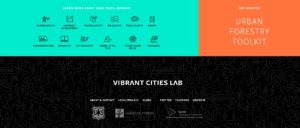 Continue reading “Vibrant Cities Lab”
CTMI graduate workshop II
Twenty-one Community Tree Management Institute (CTMI) graduates from communities across Wisconsin came together on two of the most beautiful days in September to participate in the Graduate Workshop II. This training and hands-on practice directly increases a community’s capacity to effectively manage its tree program.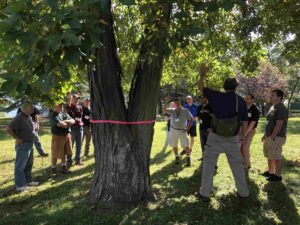 Continue reading “CTMI graduate workshop II”
Wisconsin Active Together recognizes new communities
Wisconsin Active Together names three new communities! Check out their work to advance strategies for safe places to walk, bike and be active!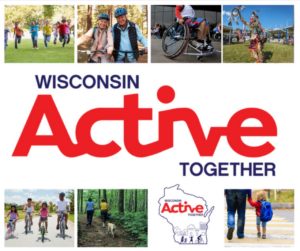 Continue reading “Wisconsin Active Together recognizes new communities”
Fall is a great time to look for HRD
By Mike Hillstrom, forest health specialist, Fitchburg, Michael.Hillstrom@wisconsin.gov, 608-513-7690
Considered one of the most destructive diseases of conifers in the northern hemisphere, HRD is very difficult to eradicate once established. Infestation of a conifer stand may significantly impact stand management, making early detection of the disease extremely important.
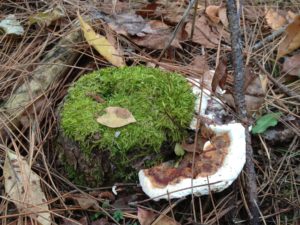
HRD fruit body with new white growth on infested stump. Credit: DNR Forest Health.
Oak health issues in summer 2019
By Mike Hillstrom, forest health specialist, Fitchburg, Michael.Hillstrom@wisconsin.gov, 608-513-7690
The most commonly reported forest health issue in recent weeks has been unhealthy looking oaks. Symptoms ranging from rapid mortality to gradual decline to superficial have been observed on all species of oak this summer.
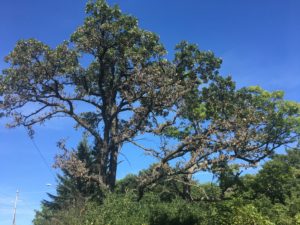
White and bur oaks are being impacted by a variety of health issues in late summer 2019, including fungal leaf infections and bur oak blight. Symptoms are most severe in the lower half of this tree’s canopy. Credit: DNR Forest Health.
It’s Firewood Awareness Month: do you know what your options are?
By Andrea Diss-Torrance, invasive forest insects program coordinator, Andrea.DissTorrance@wisconsin.gov, 608-516-2223
Most people know that using locally-sourced firewood helps prevent the spread of invasive pests and diseases. What may be less well known are the processes for finding local sources of firewood or learning where and how you can collect it yourself. During Firewood Awareness Month, we want to share what options are out there so you can take steps to protect the places you love.
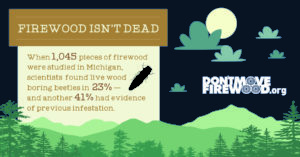
Infested firewood can carry invasive insects and diseases to new places. Buy or gather firewood where you will use it or buy firewood that has been certified as heat-treated and free of pests and diseases. Credit: dontmovefirewood.org.
Continue reading “It’s Firewood Awareness Month: do you know what your options are?”
Seedling sales begin October 7
The DNR’s reforestation program will be accepting orders starting October 7, 2019 from Wisconsin forest landowners for trees and shrubs to be planted in spring 2020. For more than 100 years, the Wisconsin DNR has provided high-quality seedlings of native species, appropriate for planting throughout Wisconsin.
Seedlings grown by the state nurseries are used for reforestation and conservation plantings on private, industrial, state and county forest lands. These seedlings can provide future forest products and revenues, wildlife habitat and fodder, soil erosion control, living snow fences and aesthetics and shade to landowners and managers in every county of the state. Continue reading “Seedling sales begin October 7”
WAA upcoming fall conference

Join the Wisconsin Arborist Association (WAA) for their fall conference at SentryWorld’s award-winning golf course in Stevens Point, WI on Wednesday, October 23rd. The program committee has put together another excellent lineup for this event. They are offering three tracks of education, two indoors and one outdoors, a little something for everyone.
September 21 – Urban Forest Fest
The Lynden Sculpture Garden is delighted to be partnering once again with Wisconsin Urban Wood to present Urban Forest Fest 2019. Urban Forest Fest brings together a range of individuals and organizations with an interest in sustainability–and particularly in the fate of the trees that surround us in our urban and suburban neighborhoods. Continue reading “September 21 – Urban Forest Fest”
Fall tree planting
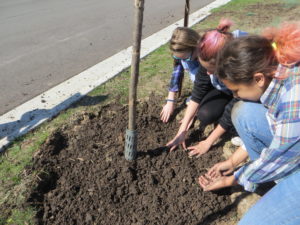 Every wonder if you can successfully plant trees in the fall? Which species are suited to a fall planting and which aren’t? Check out this article from Iowa State University Extension and Outreach. Even though it originates from out of state, much of the information is applicable to the Midwest, including Wisconsin.