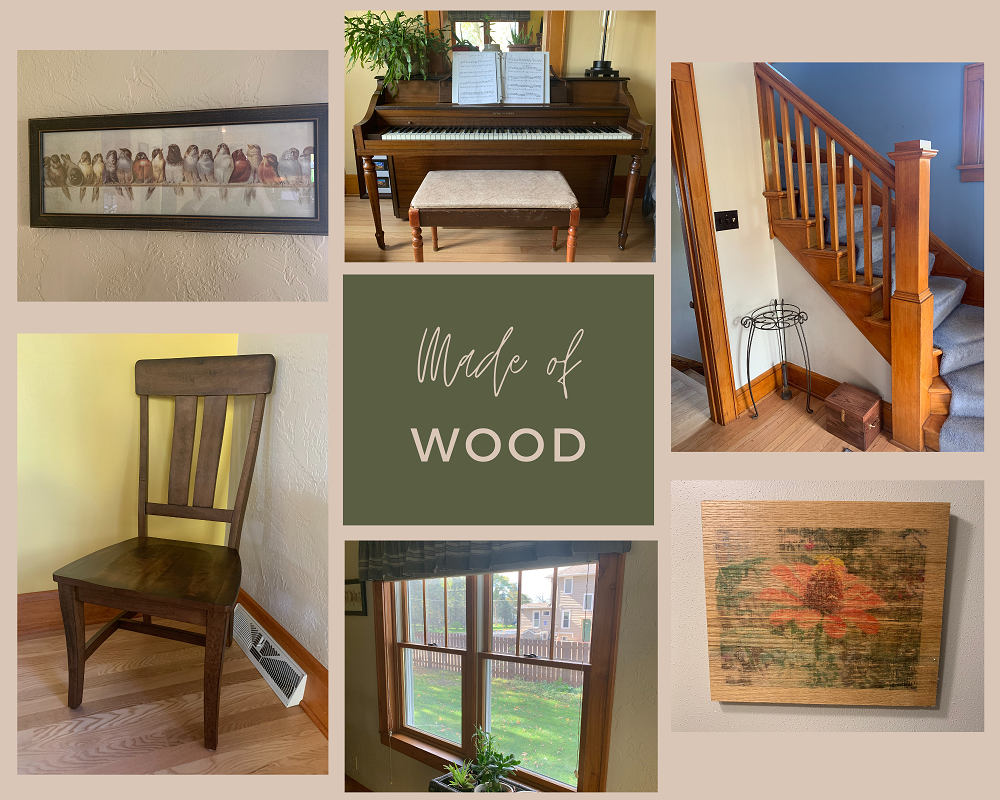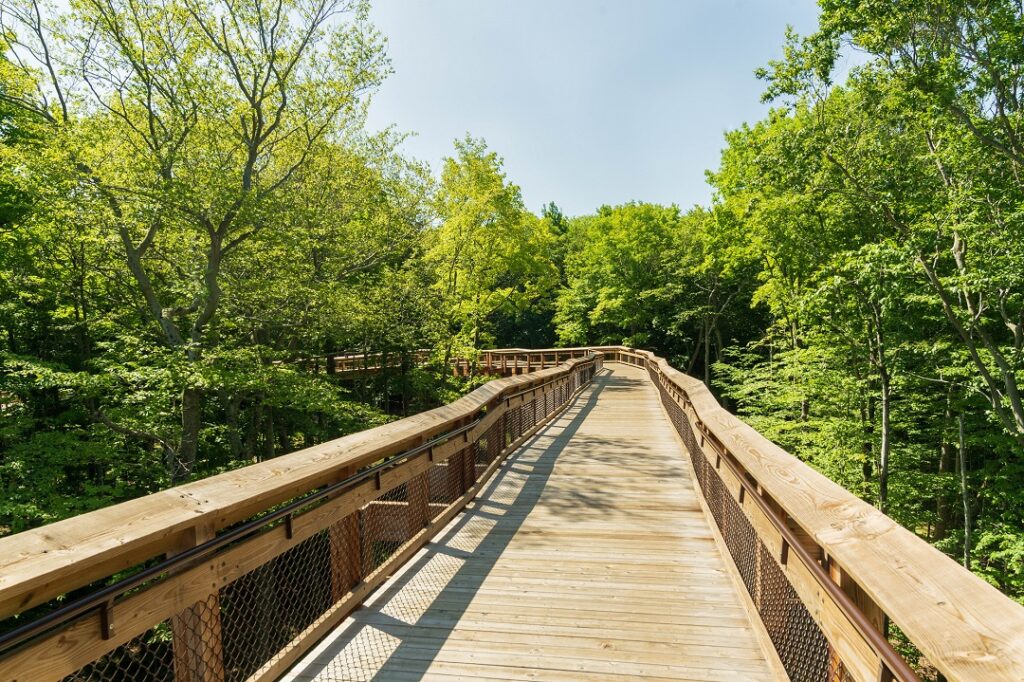
Dressers, beds, tables, chairs, pianos, guitars, boardwalks and birdhouses. What do they all have in common? They’re all forest products! These are just a few of the creations that are made from timber and they all are spectacular. all forest products! These are just a few of the creations that are made from timber and they all are spectacular.
The People Behind the Products

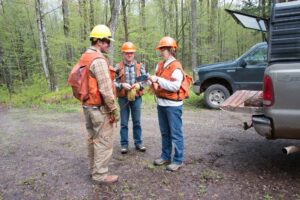
DNR Division of Forestry at work/ Credit: Rena Johnson/Courtesy of NASF
During Forest Products Week, we took time to reflect on all the wonderful things that come from forests and the great people who work in the forest products industry as well as our Division of Forestry staff.
Acorn Weevils Make Acorns Float
Article By: Linda Williams, DNR Forest Health Specialist, Woodruff
Linda.Williams@wisconsin.gov or 920-360-0665
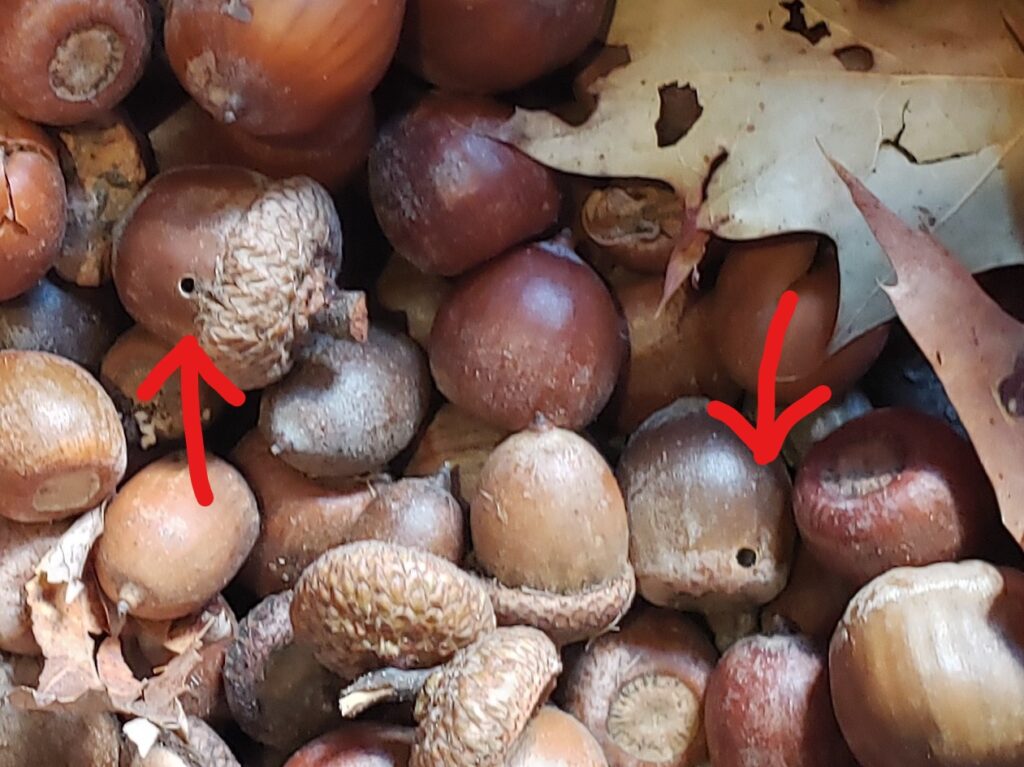
Have you seen small round holes in acorns? These holes are a sign of acorn weevil damage that can occur in all Wisconsin oak species.
Got Buckthorn?
Article By: Jaqi Christopher, DNR Forest Invasive Plant Specialist, Rhinelander, Jacquelyn.Christopher@wisconsin.gov

Common Buckthorn leaves with berries. Notice the prominent leaf veins and small thorns at the end of the branches.
Photo Credit: Wisconsin DNR
You can find buckthorn just about anywhere these days. It can sneak into the tidiest of gardens, as well as woodlots and forests. It aggressively outcompetes native plants and even tricks wildlife into spreading it to new areas. For example, birds are enticed to eat the berries, but buckthorn berries have a laxative effect, robbing birds of nutrition and ensuring the seeds are spread quickly across the landscape.
There are two species of buckthorn in the state: common buckthorn and glossy buckthorn. The plants are similar in appearance and equally harmful to native ecosystems. Common buckthorn and glossy buckthorn grow to be 20-25 feet tall. Glossy buckthorn has round, glossy leaves with prominent leaf veins and a smooth margin, while common buckthorn has dull green leaves with small teeth on the margin. The branches of common buckthorn will have a small thorn at the tip of the twig. The bark is similar in both species, being rough and flakey. Native cherry and plum trees have similar bark, but buckthorn can be identified by leaf appearance andby cutting into the bark to expose the bright yellow and orange wood underneath.
Did You Know?

Did you know? Wood window and door manufacturing alone contributes $1.2 billion annually to Wisconsin’s economy.
A Day Without Forest Products
By Grace Hershberg, DNR Forestry Associate Communication Specialist
Last week Oct. 17-23 we celebrated Forest Products Week!
This week championed our forests and the products they create to enhance our everyday lives. What would your day look like without wood to build houses, furniture to sit on, paper to write on, tires on your car and even toothpaste to brush your teeth? All of these (and more than 5,000 others) have a connection to wood products!
Forest products make our lives a little easier while promoting sustainability.
Interested in learning more about forest products? Visit https://dnr.wisconsin.gov/topic/ForestBusinesses.

Forest Socioeconomics: An Introduction
By Grace Hershberg, DNR Forestry Associate Communication Specialist
Take a walk through a forest on a fall day and what do you see? Probably a lot of trees. Some may be vibrant, their leaves painted shades of orange, yellow and red while the conifers hold tight to their striking green needles. But amidst the beauty and tranquility it may not dawn upon forest users to consider the socioeconomic impacts of forests.
Wisconsin is home to almost 17 million acres of forest land, making it a hub for diversified forest markets and non-market benefits a like. From the lumber and paper industries that fall under the forest products sector, to the ecosystem services provided by forests such as carbon sequestration, forests play a crucial role in our lives through the goods and services they provide.
Arbor Day Foundation Now Accepting Tree City USA Applications
Did you know that Wisconsin had 201 Tree City USAs this year? It’s the first time we’ve crossed the 200 threshold!
We hope you join us again this year in continuing our strong commitment to growing and maintaining a healthy tree canopy across Wisconsin. The application portal for Tree City USA is now open and available here. Applications are due Dec. 31.
Communities that have received Tree City designations for at least one year may be eligible for Growth Awards.
Continue reading “Arbor Day Foundation Now Accepting Tree City USA Applications”
Necedah Hosts Urban Forestry Seminar For Neighboring Communities
By Patricia Lindquist, DNR Urban Forestry Communications Specialist, patricia.lindquist@wisconsin.gov, 608-843-6248
Part of our mission at the Wisconsin Department of Natural Resources (DNR) is to bring community foresters together to learn from one another and to provide training opportunities. Recently, one village administrator took it upon himself to do just that within his county.
We were thrilled when Roger Herried of Necedah approached us with his plans to hold a Juneau County Area Urban Forestry Seminar this fall. Roger’s intent was to provide much-needed training for his public works department and other small communities that don’t have a lot of resources. With some help from the DNR and other partners, Roger hosted a well-rounded, day-long program to help strengthen urban forestry programs in his area.
Continue reading “Necedah Hosts Urban Forestry Seminar For Neighboring Communities”
A New Way To Measure Tree Equity
By Dan Buckler, DNR Urban Forest Assessment Specialist, Madison, daniel.buckler@wisconsin.gov or 608-445-4578
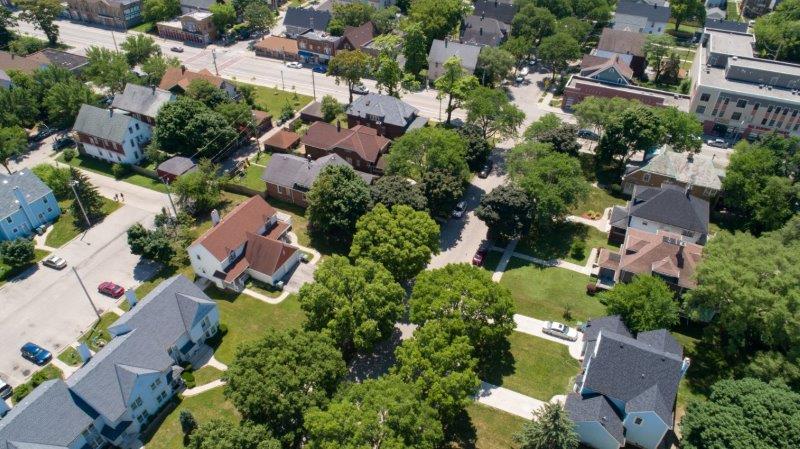
One needs only to look outside their window or at an aerial image to see that trees are not distributed evenly in their community. Of course, this is often expected and not indicative of any significant problem. One would expect, for example, for many parks to have more trees than densely developed parts of town.
However, sometimes uneven canopy distribution reveals something more harmful – that some neighborhoods and communities, often more wealthy ones, enjoy more canopy cover and thus more of the benefits trees provide. To help identify and mitigate this issue, American Forests recently released Tree Equity Score.

Figure 1 – an example of Tree Equity Score used in Oshkosh, WI. See the score along with demographic and environmental information on the left column.