
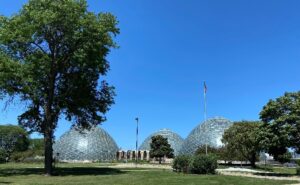
Mitchell Park Domes. Credit: WDNR
Wisconsin DNR urban forest assessment specialist Dan Buckler had been monitoring weather forecasts for a month, waiting for just the right blisteringly hot day to launch a much-anticipated Milwaukee heat island mapping project. He’d been laser-focused on getting the one-day blitz in the books, and July 21 turned out to be go time.
The urban heat island effect explains the phenomenon that densely developed urban spaces are warmer than outlying places due to man-made surfaces (such as asphalt) absorbing and reradiating heat through the day and night. Trees are one method of reducing urban temperatures by providing shade and by putting more water vapor into the air via evapotranspiration.


 The Wisconsin Department of Natural Resources’ Forest Health team recently completed the 2020 Forest Health Annual Report. The report summarizes impacts from pests, diseases and weather on the health of Wisconsin’s forests. Highlights from 2020 include: