By Brian Zweifel, DNR Forest Products Specialist, Brian.Zweifel@wisconsin.gov
What is Biochar?
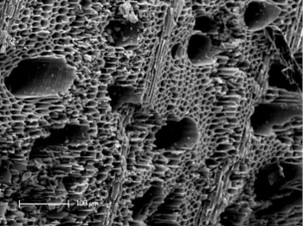
Microscopic structure of biochar. Photo credit: UK Biochar Research Centre
Biochar is basically just charcoal with a special mission, to be used in the soil. The US Biochar Initiative (USBI) defines it as “carbonized biomass obtained from sustainable sources and sequestered in soils to sustainably enhance their agricultural and environmental value under present and future management.”
Biomass, such as unmerchantable wood waste, is transformed into this carbon-rich material in a low oxygen environment, cooking most non-carbon materials out of it and leaving the material’s basic structure intact. This carbon skeleton is what gives biochar many of its desirable properties.
Continue reading “Wisconsin DNR Begins State Nursery Biochar Trial”
 The Wisconsin Department of Natural Resources’ Forest Health team recently completed the 2020 Forest Health Annual Report. The report summarizes impacts from pests, diseases and weather on the health of Wisconsin’s forests. Highlights from 2020 include: