Urban Forestry News

$175,000 additional Urban Forestry Grant funding available for EAB – Ash Tree Removals and Replacements

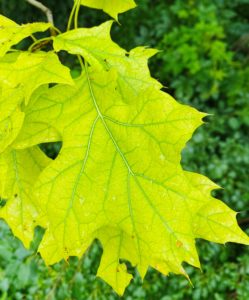
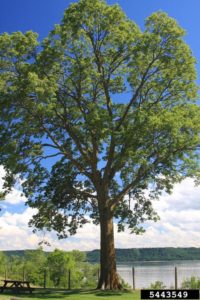
Credit: Leah Bauer, USDA Forest Service Northern Research Station, Bugwood.org

The WDNR received $175,000 from the USDA Forest Service, Forest Health & Resilience funds, to assist communities in response to the catastrophic loss of urban tree canopy due to EAB.  The $175,000 will be administered through the competitive State Urban Forestry Grants program and sub-awarded to cities, villages, towns, counties, tribes and 501(c)(3) nonprofit organizations.  Projects funded with the Forest Health & Resilience funds will focus on EAB response on public lands, including ash tree removals and replacements.  EAB treatment will not be funded with these dollars.  These projects will further the Forest Service National Priorities to ‘protect forests from threats’ and ‘enhance public benefits from trees and forests’, and make Wisconsin communities safer, healthier and happier places to live, work and play.

2021 DNR Urban Forestry Grant Application opening soon

Cities, villages, towns, counties, tribes and 501(c)(3) nonprofit organizations in or conducting their project in Wisconsin are encouraged to apply for a regular or startup 2021 Department of Natural Resources Urban Forestry Grant! The grants range from $1,000 to $25,000, and grant recipients must match each grant dollar for dollar. A startup grant of up to $5,000 is available for communities that want to start or restart a community forestry program. Grants are awarded to projects that align with state and national goals for increasing the urban forest canopy and the benefits it provides. Also available this grant cycle is an additional $175,000.00 federal funding to be used for ash tree removals and replacements. EAB treatment will not be funded with these additional monies. Applications can be submitted starting July 1, 2020 until October 1, 2020.

To view the application and apply visit the Urban Forestry Grants website. If you have questions regarding application process and eligible projects contact your DNR Urban Forestry Coordinator.

Arbor Day 2020: Celebrating trees in a time of social distancing

Many Wisconsin communities found creative and resourceful ways to celebrate Arbor Day this year. These celebrations included drive-through tree giveaways, videos, art contests, games and puzzles, self-guided tree walks, small in-person celebrations and tree planting following social distancing guidelines, and more! Here is a sampling of the Arbor Day events that took place in Wisconsin this spring:

Adams: The city of Adams held a celebration on April 16th. Mayor Roberta Pantaleo read the Arbor Day Proclamation, and City Forester Joel Fell and another public works employee planted two trees in Burt Morris Park and four trees along boulevards.

Cedarburg: Please follow this link to read how Cedarburg Green celebrated its Year of the Tree despite Covid-19.

Continue reading “Arbor Day 2020: Celebrating trees in a time of social distancing”

Cedarburg Green celebrates Year of the Tree despite Covid-19

By Jeanne Mueller, Cedarburg Green

“2020 is the year to focus on trees” read the headline in Cedarburg’s local newspaper. In January, a proclamation signed by Cedarburg’s mayor kicked off Cedarburg Green’s yearlong, multi-faceted promotion of trees. Cedarburg Green’s first success, a community talk on “Selecting the Right Trees for your Yard”, exceeded attendance expectations by over 225%. Interest in trees at this standing-room-only, inaugural event, held on February 24, seemed to be setting the stage for great things to come. Another hopeful sign was the mounting orders for trees being received as part of the organization’s annual bare-root tree sale.

Continue reading “Cedarburg Green celebrates Year of the Tree despite Covid-19”

Upcoming webinars

Check out the six upcoming webinars/webinar series listed below. Especially during this time of social distancing, webinars are a great training opportunity. Some of them even offer ISA CEUs when watched live (recordings of past webinars are also available but do not offer CEUs).

Click on the links below to learn more and to register in advance. Space may be limited.

Continue reading “Upcoming webinars”

Outdoor Hazards in Wisconsin: A Guide to Insects, Plants, and Wildlife

Published by UW-Madison, Division of Extension, this guide will help you recognize, avoid, and handle potential problems caused by wildlife, insects, or plants.

Contents:

  • Amphibians (salamanders, toads)
  • Reptiles (turtles, snakes)
  • Birds (defending territory, handling birds)
  • Mammals (short-tailed shrews, bats, skunks, porcupines, coyotes, gray wolves, deer, black bears)
  • Stinging insects (bees and wasps)
  • Blood-feeding insects (mosquitoes, deerflies and horseflies, blackflies, biting midges, ticks, chiggers)

Continue reading “Outdoor Hazards in Wisconsin: A Guide to Insects, Plants, and Wildlife”

New insect and disease factsheets available

By Mike Hillstrom, forest health specialist, Fitchburg, Michael.Hillstrom@wisconsin.gov, 608-513-7690

The forest health team has produced four new factsheets since the start of 2020. These resources are designed to be informative, 2-page documents for a wide audience that includes landowners, foresters and natural resource professionals, educators, and more. The new factsheets of 2020 are linked below, and more will be announced as they are finalized:

Please check them out and our other recently updated factsheets about Heterobasidion root disease, oak wilt, conifer bark beetles, and hickory decline and mortality. You can find all of these and more forest health publications in the publications catalogue and on the DNR forest health webpage.

The Tick App! ‘Your Tick Expert On-The-Go!’

By Bieneke Bron, Midwest Center of Excellence for Vector-Borne Diseases, UW-Madison

Do you ever wonder why you are always finding ticks on yourself or around you, but your friends never do? Researchers at the University of Wisconsin – Madison have developed a mobile application that allows users to share their experiences with ticks to help prevent future tick bites.

Continue reading “The Tick App! ‘Your Tick Expert On-The-Go!’”

What’s that orange goo?!

By Mike Hillstrom, forest health specialist, Fitchburg, Michael.Hillstrom@wisconsin.gov, 608-513-7690

What’s the orange goo on that tree?!

Should I fight or should I flee?

I bet forest health staff can ID!

Close-up of orange gelatinous gall growing on cedar caused by cedar apple rust.

The spore-producing, slimy, orange gall caused by cedar apple rust fungus.

Continue reading “What’s that orange goo?!”

The evolving landscape of invasive species and their control options in Wisconsin

By Andrea Diss Torrance, invasive insects program coordinator, andrea.disstorrance@wisconsin.gov, 608-516-2223

Many people know that invasive species are a concern in Wisconsin’s natural communities both on land and in water. But fewer people are aware that invasive species are not a new threat and that over time, we have developed strategies to reduce their spread and limit their damage to a tolerable level.

As soon as people from other continents started arriving in Wisconsin, so did the non-native plants, insects and microorganisms that came with them. Most of these non-native species are either beneficial or cause no harm, including well-known examples like honeybees, daffodils and even the bacteria used in cheese production. In contrast, the non-native species that damage native and domestic plants are known as invasive species, and over the years people have developed policies and practices to limit their impacts to native plant communities.

Continue reading “The evolving landscape of invasive species and their control options in Wisconsin”