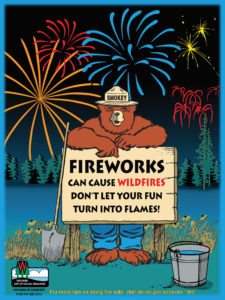
 The Wisconsin Department of Natural Resources urges people to take precautions and prevent wildfires caused by fireworks now and during the next few weeks. Most wildfires caused by fireworks occur around the July 4th holiday or under extended drought conditions, but the reality is, wildfires can occur anytime the ground is not completely snow-covered.
Exploding fireworks, such as firecrackers, m-70’s, bottle rockets, and roman candles, cause the most fireworks-caused wildfires. Paired with hot and dry weather, even sparklers and fountains pose a significant threat in dry grassy areas. Anyone responsible for starting a wildfire in Wisconsin is liable not only for the cost of putting the fire out, but also for any damages.
Fireworks are restricted in Wisconsin and permits may be required. It’s best to check with local officials before purchasing and lighting them. A city, village, town or county may also enact an ordinance more strictly limiting fireworks sales or possessing them.
In addition, the DNR does prohibit the use of all fireworks on state lands including state parks, state forests and state owned public hunting and fishing properties. Anyone planning on camping in a Wisconsin state park or forest for the Fourth of July should enjoy fireworks displays in nearby communities — not at picnic areas, campsites or other areas within state parks, forests and trails.
As of the last week of June, fire dangers levels throughout Wisconsin were low across the state, but even in low fire danger times, fireworks can start wildfires. So far in 2018, DNR records show nearly 700 wildfires have burned more over 1,800 acres in DNR fire protection areas of Wisconsin. Wildfires caused by fireworks only amount to 5 percent of the annual total; however, these fires typically occur in a condensed timeframe around the Fourth of July holiday.
For more information about how to prevent wildfires from fireworks, visit the DNR homepage at dnr.wi.gov and search keyword “wildfire causes.”