Publications

New Publication Highlights Technology, Training Needs in Northeastern Lumber Drying Operations

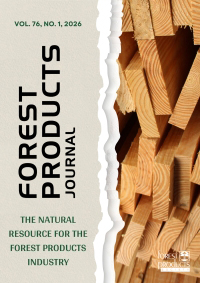
Cover of Forest Products JournalBy Scott Lyon, DNR Forest Products Team Leader

A new study published in the Forest Products Journal by the University of Wisconsin-Madison Extension, the United States Forest Service and the Wisconsin Department of Natural Resources examined dry kiln operations across the northeastern and north-central United States.

The research explored current technology use, production practices, and workforce training needs in the hardwood lumber drying industry, with the goal of helping training providers and industry leaders better tailor education and support to real-world operating conditions.

The survey found that most firms dry a wide range of hardwood species, reflecting the region’s diverse forest resources. Eastern white pine was the only softwood species dried by a majority of respondents. While species diversity was common across operations, the study revealed a clear divide between small and large kiln facilities in technology use, investment plans, and quality-control practices.

Continue reading “New Publication Highlights Technology, Training Needs in Northeastern Lumber Drying Operations”

USDA Forest Products Lab Offers Newsletter

logoThe United States Department of Agriculture Forest Service Forest Products Laboratory, based in Madison, is now offering a free newsletter to interested subscribers.
The newsletter covers a variety of topics related to forest products research and can be accessed online on the USDA Forest Service website.

To sign up for the newsletter, go to the bottom of the linked webpage under the heading “Sign Up for Our Newsletter” and enter your contact information.

Heterobasidion Root Disease Resources Updated

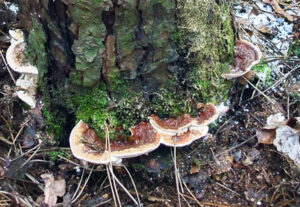
Heterobasidion root disease fruiting bodies grow on base of tree

A tree shows fruiting bodies of Heterobasidion root disease at the base of its trunk. / Photo Credit: Wisconsin DNR

By Kyoko Scanlon, DNR Forest Pathologist
Kyoko.Scanlon@wisconsin.gov or 608-235-7532

In 2025, Heterobasidion root disease (HRD), a destructive fungal disease, continued to be found in Wisconsin counties where the disease had previously been detected. There were no new county finds in 2025.

Based on the findings in 2025, the maps in the HRD stump treatment guidelines and online viewer have been updated. The 6-mile and 25-mile buffer zone maps in the guidelines are updated annually and good through Dec. 31, 2026.

Continue reading “Heterobasidion Root Disease Resources Updated”

Forest Health Specialists Spread The News

By Art Kabelowsky, DNR Outreach and Communications
Arthur.Kabelowsky@wisconsin.gov or 608-335-0167

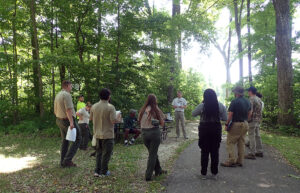
A DNR group in a forest discusses forest health issues .

Wisconsin DNR Forest Health specialist Bill McNee presents a hazard tree training talk to other DNR workers at Lizard Mound State Park in 2023. / Photo Credit: Wisconsin DNR

Did any of your trees explode during the recent cold snap? Likely not.

Social media — and some traditional news outlets — grabbed hits and headlines by warning folks that the January cold snap could spark a phenomenon they called “exploding trees.”

But Bill McNee, an Oshkosh-based Forest Health specialist for the Wisconsin Department of Natural Resources (DNR), was there to prune the branches of the fast-growing viral story.

Continue reading “Forest Health Specialists Spread The News”

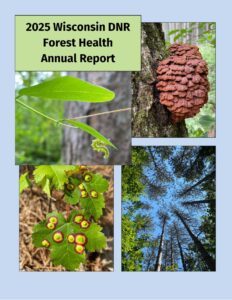
Forest Health Annual Report Hot Off The Presses

The cover of the 2025 Wisconsin Department of Natural Resources Forest Health Annual Report.

The cover of the 2025 Wisconsin Department of Natural Resources Forest Health Annual Report. / Graphic Credit: Wisconsin DNR

By Art Kabelowsky, DNR Outreach and Communications, Fitchburg
Arthur.Kabelowsky@wisconsin.gov or 608-335-0167

The Wisconsin Department of Natural Resources (DNR) has made its 2025 Forest Health Annual Report ready to view and download.

This year’s edition contains 55 pages of reporting on forest health issues throughout Wisconsin, detailing methods employed by the DNR and other agencies to control pests, diseases and invasive plants.

Continue reading “Forest Health Annual Report Hot Off The Presses”

Go-To Online Resources For Urban Forestry

By Allen Pyle, UW-Extension Horticulture Outreach Specialist and Jay Dampier, DNR IRA Grant Coordinator, Jason.Dampier@wisconsin.gov or 920-765-1935

Reliable and up-to-date research-based information is vital for tree care professionals and urban foresters to make sound, scientific management decisions. To make trusted resources more accessible, UW-Extension’s Horticulture Program and Wisconsin DNR’s Urban Forestry Program have developed this curated selection of useful webpages with free information and resources for urban forestry professionals and community tree managers. Continue reading “Go-To Online Resources For Urban Forestry”
New Forest Service Publication Translates Research For Landowners

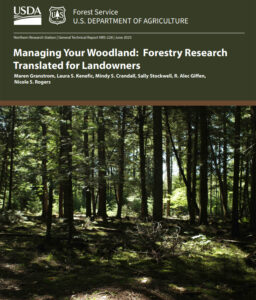
The cover of a USDA Forest Service publication called "Managing Your Woodland: Forestry Research Translated for Landowners"

The cover of a U.S. Forest Service publication called “Managing Your Woodland: Forestry Research Translated for Landowners.” / Graphic Credit: USDA Forest Service

By Wisconsin DNR

Have you ever heard a forester talk about shelterwood or group selection and found yourself wondering what they are talking about?

Or maybe you read those terms in your forest management plan and aren’t entirely clear what they mean? If so, you might want to check out a new publication called Managing Your Woodland:
Forestry Research Translated for Landowners [PDF]
.

The U.S. Forest Service recently released the publication, which breaks down forest ecology, silviculture and various forest management systems for landowners and other non-forestry experts. Although the publication comes out of the Northeast United States, the tree species, forest types and forest management are not entirely different from the forests and forestry practices in Wisconsin.

DNR Debuts Fact Sheet On White Grubs

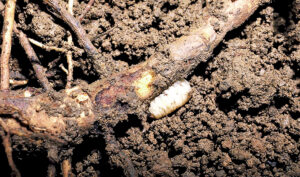
Closeup photo showing a white grub in topsoil, feeding on a root.

A white grub feeds on a root. / Robert L. Anderson, USDA Forest Service, Bugwood.org

By Art Kabelowsky, DNR Outreach and Communications
Arthur.Kabelowsky@wisconsin.gov or 608-335-0167

White grubs, the larvae of Wisconsin’s native May/June beetles (Phyllophaga spp.), can cause significant damage to forest plantings.

To help those who plan to plant seedlings and saplings, the Wisconsin Department of Natural Resources’ (DNR) Forest Health team has produced a fact sheet on white grubs, aimed specifically at forest plantings.

Continue reading “DNR Debuts Fact Sheet On White Grubs”

Watch Out!

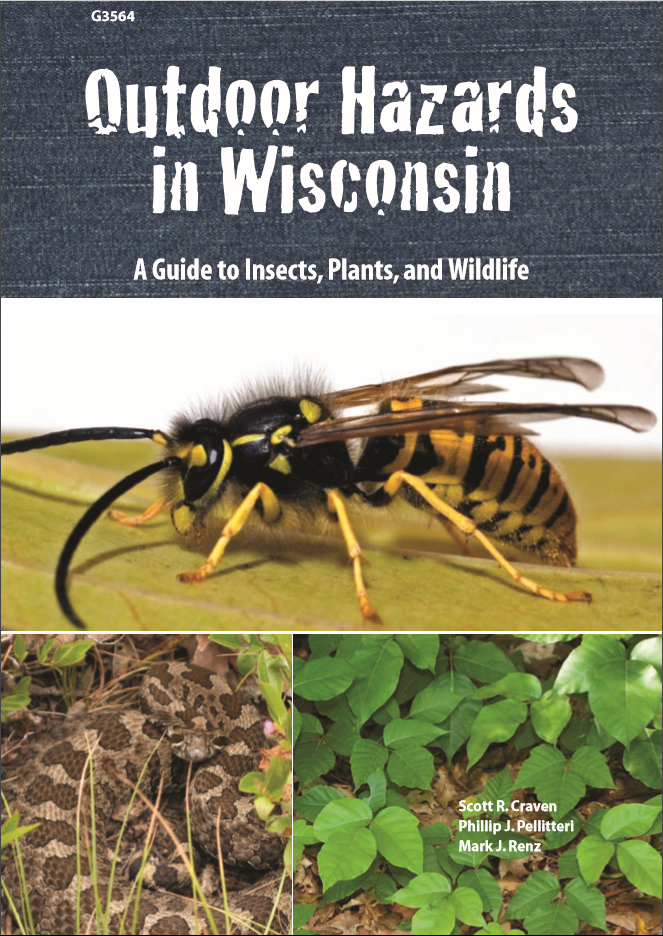
Have you ever walked through a patch of poison ivy or brushed up against wild parsnip? If so, you probably learned an uncomfortable lesson about encountering harmful plants. Luckily, there is a less painful way to learn about dangerous vegetation hidden among Wisconsin’s natural beauty. Now is the time to brush up on hazards you may encounter while working or recreating outdoors.

Outdoor Hazards in Wisconsin, a guide published by the University of Wisconsin-Madison Division of Extension, will help you recognize, avoid and handle potential problems caused by wildlife, insects and plants. Continue reading “Watch Out!”

DNR Offers Two Knotweed Fact Sheets

A roadside photo showing how quickly species in the knotweed complex can grow and create large infestations.

Species in the knotweed complex grow very quickly, causing large infestations on roadsides like this one. / Photo Credit: Randy Westbrooks, Invasive Plant Control, Inc., Bugwood.org

By Wisconsin DNR

With the scourge of knotweed about to gear up for another growing season, the Wisconsin Department of Natural Resources (DNR) is offering information.

The DNR has created two fact sheets to instruct general and urban landowners on the best control methods for the fast-growing invasive plant.

Continue reading “DNR Offers Two Knotweed Fact Sheets”