By Dwayne Sperber, owner, Wudeward Urban Forest Products and appointed member, Wisconsin Urban Forestry Council
When a company has publicly committed to corporate social responsibility, environmental conservation, or working with and through the local community, a new construction project is the time to put these philosophies into action. Unfortunately, this is easier said than done.
Designs may get drawn up with the best sustainably-minded intentions — locally-sourced, low emissions, recycled, reused, energy efficient, the list goes on. But as familiar as the design and construction industries are with using environmentally-friendly materials, most of these products do not come in standard sizes, colors or volumes. And they don’t always fit seamlessly into a standard construction management process. Continue reading “Making room for sustainable sourcing”
 Approximately seventy people attended the event including architects, structural and civil engineers, forest products industry representatives, and researchers. Architects and engineers were targeted for this seminar due to their role in planning, designing, reviewing construction projects, and using of building materials (e.g. wood and mass timber products).
 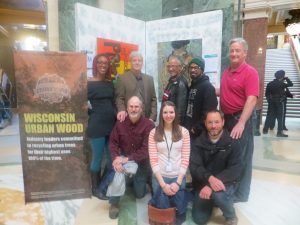 The cabinets in your kitchen, your dining room table, floors in your office, and even the paper you write on are all products made from wood. Usually rural wood is used to make the products, but over the past several years a shift has been made, introducing the use of wood from urban areas to make these, and other, products. For example, urban wood has successfully been used in architecture, creating bowls, staircases, tables and now art.