
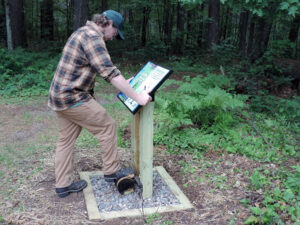
Many state properties have boot brush areas to help visitors remove potentially troublesome seeds and insect larvae from their muddy boots. / Photo Credit: Wisconsin DNR
By Wisconsin DNR
When Wisconsin deer hunters take to the woods with their guns and bows each fall, their minds are understandably focused on a successful and safe hunt.
The Wisconsin DNR urges hunters to consider another point: The crucial role they play in forest health and conservation.
Responsible hunters prevent the spread of invasive plants and insects by making sure they follow three key points:
- Bring nothing damaging into the forest.
- Leave nothing damaging behind.
- Carry nothing damaging out.
Tracking deer through remote woods can mean that hunters’ boots, gear and vehicles can inadvertently transport troublesome invasive plants, seeds and insects. It might not seem as if a few seeds or bugs can make a difference. But there’s no question that these transplanted aggressive invaders can disrupt the balance of native ecosystems and damage the very same wildlife habitats that support healthy game populations.
What’s more, bringing invasive plant seeds or insect larvae home could put your neighborhood trees or wooded areas at risk.
By adopting a few simple, responsible habits, hunters can help to fight the spread of troublesome invasive plants and pests.
Here are some tips to help hunters ensure they honor the three key points of forest conservation:
- Scrub your footwear. Use trailside boot-brush stations before entering and immediately after leaving a hunting area. If none are available, pack a hand-held boot brush to remove caked mud, which frequently harbors microscopic weed seeds and insect larvae.
- De-burr your clothing. Check your socks, pants cuffs and safety harnesses for sticky burrs or seeds before transitioning to a new location.
- Buy firewood where you burn it. Destructive, tree-killing insects such as the emerald ash borer and spongy moth can travel hundreds of miles inside firewood. Keep your firewood source local, ideally within 10 miles of camp.
- Build clean blinds. If you create temporary hunting blinds, rely on artificial blind materials or use local vegetation. Never transport plants across county lines to use as cover.
- Stick to designated paths. Keep vehicles on established roads and parking areas to minimize disturbing pristine ground or picking up established invasive seeds or larvae.
- Power-wash undercarriages. Off-road vehicles, ATVs, and trucks can collect a large collection of seeds and dirt in their tires and wheel wells. Spray down your vehicle with water or compressed air after traveling on unpaved roads. Do not dump trailer debris onto public lands.
Last of all, if you spot an unfamiliar pest or an aggressive, nonnative plant taking over your hunting grounds, document it. Take sharp, close-up photos, log the GPS coordinates and contact your area’s DNR Forest Health specialist.