Deep winter frost may lead to tree and shrub problems in spring

By Todd Lanigan, forest health specialist, Eau Claire, Todd.Lanigan@wisconsin.gov, 715-210-0150

The first part of the winter of 2018-2019 was rainy and icy and remained pretty much snowless until February. These conditions allowed frost to penetrate deep into the exposed ground, likely causing root injury to trees and shrubs that will manifest as temperatures rise this spring.

At the end of January, the frost depth was two to four feet down and was still two to three feet down in mid-March. Frost at those depths is likely to have caused some root injury to trees and shrubs over the winter.

If there is any root injury, the severity of the damage will influence how the tree or shrub responds in the spring. If there is very little or no damage, the plant should look normal. As the damage increases, you may notice more dead twigs or branches than you would normally see in a healthy plant. These could either be scattered throughout the plant or more heavily concentrated in one part. The plant could also produce less foliage, making it look thinner and more transparent than you would expect. In some cases, the plant may produce very little foliage but have high seed or fruit production. The worst-case scenario for root damage is the tree or shrub will send out new foliage that quickly dies or there is no new growth at all in spring.

Whether or not to remove the injured tree or shrub is up to you. If you know the plant is dead, then removal is a good choice, especially for hazard trees. A hazard tree is a tree that is likely to hit some target (e.g. house, car, shed, picnic table, swing set, etc.) if either the branches or tree were to come down. If you are not dealing with a hazard tree, you may want to let the tree or shrub grow for the summer and re-evaluate after the growing season.
Seedlings still available for spring 2019 planting

DNR employees at the Wilson Nursery have been busy harvesting, grading and packaging our native trees and shrubs for distribution across the state. For landowners interested in creating wildlife habitat, starting a plantation for future wood production, stabilizing an erodible bank or field or adding to the aesthetic beauty of the landscape, the Wisconsin DNR reforestation program may be able to help.

We still have white pine, red pine, silver maple, black cherry, aspen and American plum seedlings available for sale. All are well suited for the soils of Wisconsin. Contact our nursery hotline at (715) 424-3700 for up-to-date information on seedling availability and to place an order.

To determine how many seedlings we have available to sell, we sample a portion of our rows, place that data into some formulas and then estimate inventories. Sometimes we underestimate and sometimes we overestimate. Most of the time we are close. We don’t know how accurate we were until the seedlings are lifted out of the fields, graded and counted. This year, we have some species that had much healthier volumes than we anticipated.

Seedlings sold by the Wisconsin State nurseries can only be used for reforestation, wildlife habitat and windbreak and erosion control purposes and must be planted in Wisconsin. Answers to the most common questions are available on our “Frequently Asked Questions” page.

Written by Jeremiah Auer, Regeneration Specialist,  Jeremiah.Auer@wisconsin.gov, (715) 459-1999

Increased fire danger on April 26th

Increased fire danger

Expect to see strong, gusty winds today (Friday, April 26) ahead of a storm front as fire danger ranges from High to Very High statewide. There are burning permit suspensions in 27 counties. Check burning permit restrictions at dnr.wi.gov, keyword “fire.” Sparks from campfires, hot equipment, woodstove ashes also a concern today, until the rain or snow arrives and winds are calm.  Fire crews will be on high alert and shifting ground resources in areas of elevated risk.   In addition, three contract single-engine air tankers are on stand-by for quick initial attack, stationed in Necedah and Siren. Report fires early by dialing 911.  Check fire restrictions here.

Prevent a wildfire

Wildfire Prevention Week

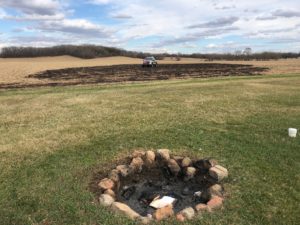
Embers can remain hot for days and start a wildfire.

Never leave your fire unattended and make sure it’s completely out before you leave.

It’s Wildfire Prevention Week!
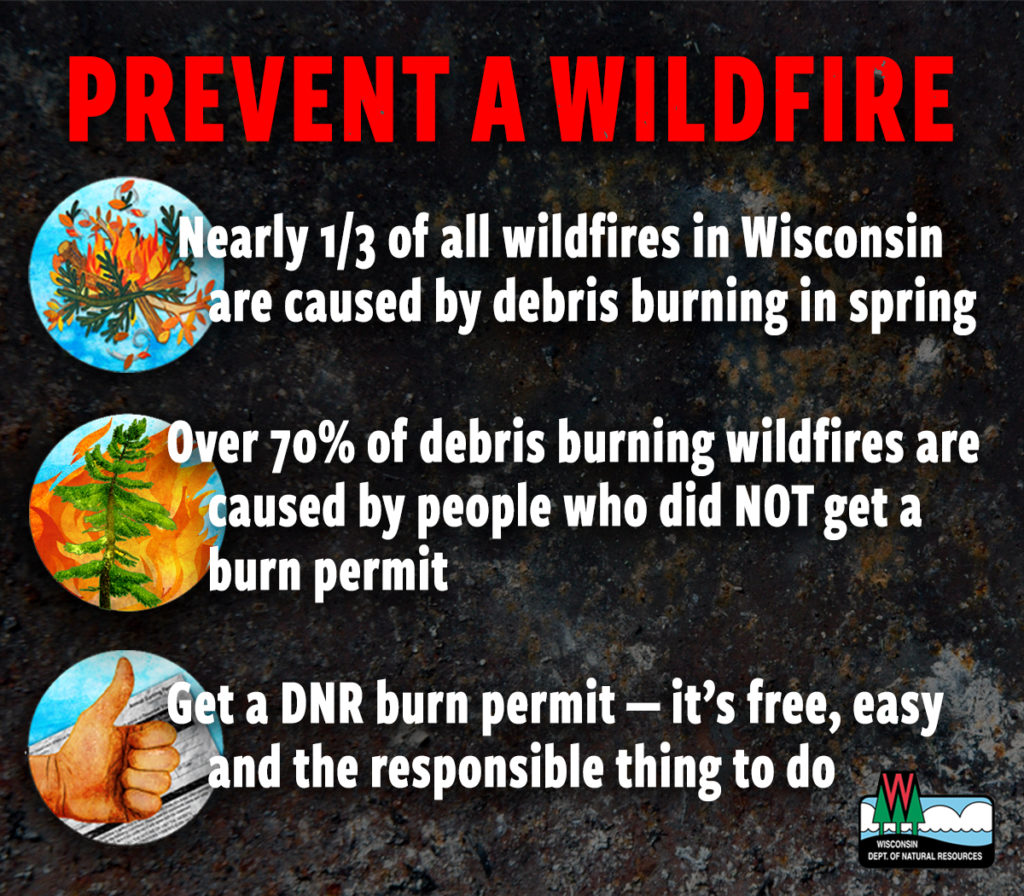
One way you can help us celebrate, is to get a free DNR burn permit before burning.  It takes less than two minutes and we can email you the burn permit right away.  Or, call our hotline 1-888-WIS-BURN (947-2876) and customer service can issue you one over the phone. Then, on the day of the burn, call or check online for the fire danger and burn restrictions in your county after 11 am.  Never leave your fire unattended and make sure it’s completely out before you leave. Got questions or not in an area where the DNR regulates?  Local fire officials are always willing to help.  Following these simple steps can greatly decrease your chances of starting a wildfire.  Visit this page to get your free DNR burn permit.


Wildfire Report for April 25, 2019

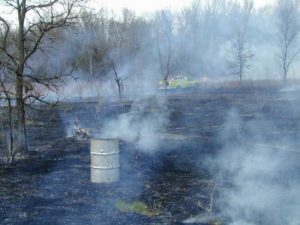
Debris burning caused half of Wisconsin's wildfires last week.  Burn barrels use is one form of debris burning.

Half the fires last week were caused by debris burning.

Last week 72 wildfires burned 177 acres in DNR Protection Areas;. Half of the fires were caused by debris burning (brush and leaf piles, burn barrel use, burning household trash and broadcast burning).  Other minor causes included campfires, equipment, power line and improper ash disposal. Forty buildings were threatened by wildfires but saved by fire suppression actions; four were destroyed.

The DNR wants to remind everyone to be careful with anything that can start a wildfire when you’re out fishing, hunting, camping, doing yard work, or looking for mushrooms. Fire danger can vary greatly from one day to the next this time of the year, depending on weather and dryness of the vegetation. Check this site for current statewide fire danger and burning permit restrictions: dnr.wi.gov (search ‘fire danger’).

Firewise Tip: Wondering if your home is in an area at risk for wildfire? Go through our checklist and find out.

Wildfire Report for April 18, 2019

Last week 14 wildfires burned 39 acres in DNR Protection Areas; nine of the fires were caused by debris burning. Five buildings were threatened by wildfires, but saved by fire suppression actions; one was destroyed. Snow is quickly melting in parts of the state that still have partial snow cover. This time of year there is still a great deal of dead vegetation that dries out quickly and is available fuel for a wildfire. Low relative humidity, warm temps, and gusty winds quickly drive up the fire danger. Stay aware of fire danger and burning restrictions by calling 1-888-WIS-BURN (947-2876) or check online at dnr.wi.gov, keyword “fire”. Curious about where wildfires are actively burning? Check out our fire activity webpage at dnr.wi.gov, keyword “fire” and click on “View current wildfire activity.”

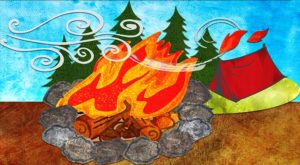
A campfire can quickly become a wildfire on a windy day.

A warming or cooking fire on a windy day can quickly become an out of control wildfire.

Firewise Tip: Turkey hunters are reminded to be extra cautious with anything that can start a wildfire when you’re outdoors. Be especially mindful of the weather. A warming or cooking fire on a windy day can quickly become an out of control wildfire.

Annual work plans available for state forests

Annual Property Implementation Plans now offer the ability to see planned management actions on state forests and other state-owned properties. The plans, including a searchable tool, can be found on the DNR website (dnr.wi.gov – keyword “APIP”).

State forests are governed by property master plans, which are developed with significant input from the public, but these plans cover long periods of time (up to 15 years) and do not describe annual activities.

Annual plans, developed by the forester, wildlife biologist, property manager, ecologist and others, identify the major work during the next year to implement the master plan for that property. These activities encompass a variety of forest and habitat management work, including timber sales, tree plantings, prescribed burns and invasive species control. In addition, plans are shared for recreation and infrastructure improvements, including trails, campgrounds, buildings, boat landings, roads or expanded parking. APIPs do not include routine maintenance or minor actions including mowing, building maintenance, inventory or field surveys.

If you are interested in planned work on one of our northern state forests (Black River, Peshtigo River, Governor Knowles, Northern Highland-American Legion, Flambeau River or Brule River State Forest), visit the Annual Property Implementation Plan webpage. Direct questions or comments to the state forest property managers listed in the plan.

2019 Spring Awakening

Written by Jeremiah Auer, Forest Regeneration Specialist

Spring has arrived, and, in the small southwestern Wisconsin community of Boscobel, the Wilson State Nursery has sprung into action. As soon as the frost leaves, it is the task of these dedicated employees to shake off the cold, start up the tractors and prepare to harvest 2.4 million tree and shrub seedlings for their journey from these fields to pine forests in Brule, wind breaks in Montello, wildlife plots in Merrill, erodible hill sides in Pepin and everywhere in-between. Wisconsin nursery seedlings provide future forest products, wildlife food and habitat, erosion protection and erosion control throughout the state. Continue reading “2019 Spring Awakening”

Wildfire Report

A total of 26 wildfires burned in DNR Protection Areas over the past week, burning 73 acres. Half of the fires were caused by debris burning. Eleven buildings were threatened and one was destroyed. Widespread rain and snow then lowered fire danger across the state.

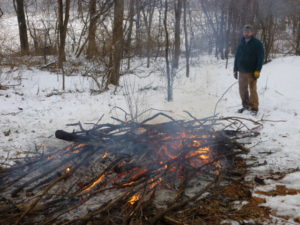
Burning brush when the ground is completely snow covered.

The safest time to burn leaves, brush and pine needles is when the ground is completely snow-covered.

Spring is wildfire season and it’s important to remember that storm systems bringing snow and rain give a short reprieve in fire danger. While burning debris should always be your last alternative, the safest time to burn leaves, brush and pine needles is when the ground is completely snow-covered and will remain so for the duration of the burn.

As we dry out, expect fire danger to increase. There is plenty of dead grass and fallen leaves on the land that makes it easy for a wildfire to start and spread. Stay apprised of fire weather conditions by checking the DNR fire danger webpage each day after 11 a.m.: dnr.wi.gov, keyword “‘fire”.

Firewise Tip: Remove leaves and other debris that has accumulated next to buildings, in lawns, and on and under decks. Take special care to clean out dead material from evergreen shrubs near buildings. Compost these materials or take to a leaf collection site.

Make trees mean more

Spring is upon us and that means the tree planting season is too. Trees are vital to our environments; they provide individuals and communities with clean air, clean water, reduced cooling costs, safer neighborhoods, and a place to play and gather. But trees provide much more than that, they can help show how much we care for others, a beautiful living reminder of the legacy of a person. Arbor Day is this month, and it is the perfect time to plant a tree and illustrate our feelings for others. Continue reading “Make trees mean more”