
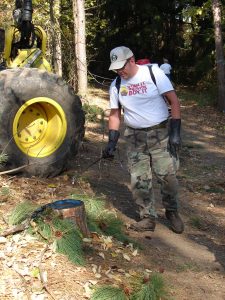
Applying a preventative treatment to a fresh pine stump using a backpack sprayer. Photo by: Linda Williams, WI DNR.
There are currently two products available to treat fresh pine stumps to prevent new infections of heterobasidion root disease (HRD), which was previously called annosum. The products are Cellu-Treat and Rotstop-C. Both are water soluble and can be sprayed on the stump. Sporax, a granular/powder product, was previously available but is no longer being manufactured. If you still have a supply of Sporax you can continue to use it. The one-page factsheet on HRD (Annosum) has been updated with information on where to purchase the available products.
For more information on Cellu-Treat and Rotstop-C please check out these websites:
Written by: Kyoko Scanlon, forest pathologist, Fitchburg (Kyoko.Scanlon@Wisconsin.gov), 608-275-3275.
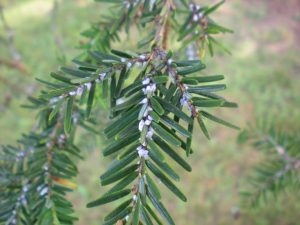
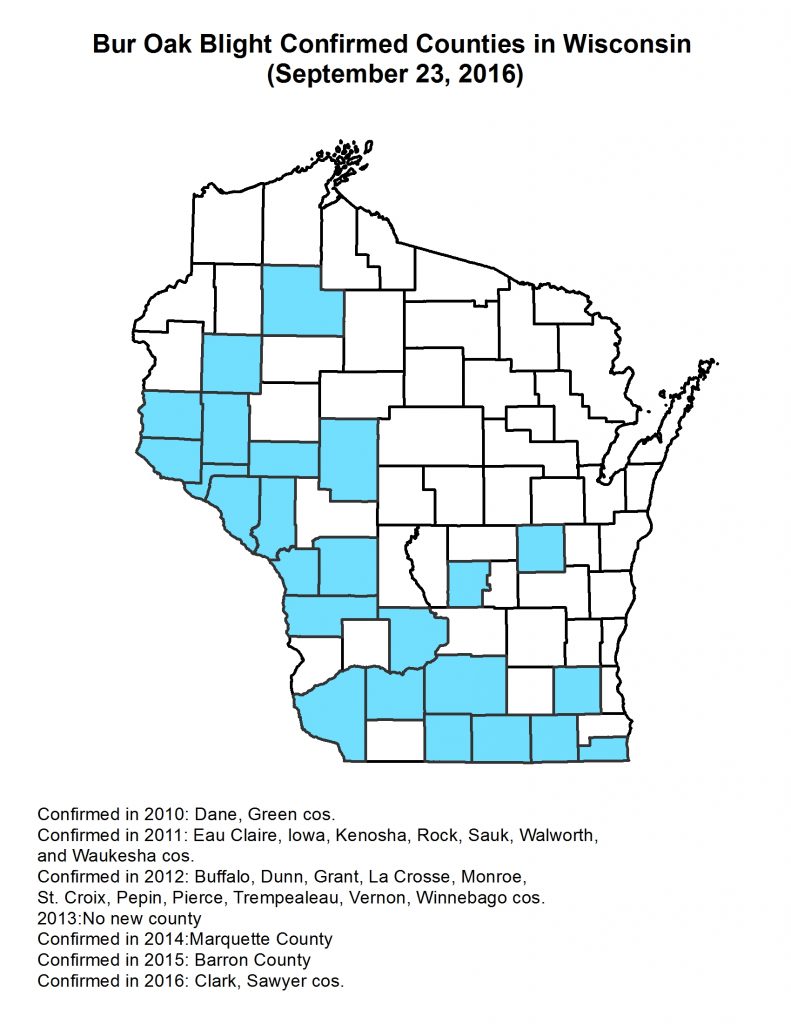
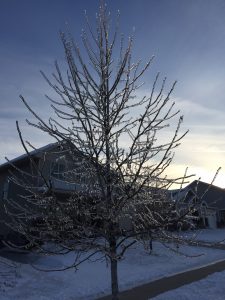
 Recently, the DNR Urban Forestry Program and the Wisconsin Arborist Association (WAA) recently held the annual Wisconsin Urban Forestry Conference in Green Bay, Wisconsin. With the theme “Healthy Benefits to Enriching Your Arboriculture and Urban Forestry Knowledge,” the conference was three full days of exhibits, presentations from experts across the world, and networking events and opportunities. There was record attendance this year, beating out last year’s record of 750. This year, the WAA offered a new Utility Track of presentations that allowed members to learn more about technologies in community forestry and other topics to help those who attended.
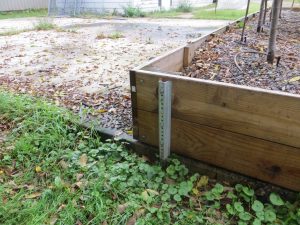 Gravel beds, a way of holding bare root trees and extending the bare root planting season, have been growing in popularity, especially in the Midwest. Several municipalities and other organizations throughout Wisconsin have been utilizing gravel beds to plant more trees on tight budgets, diversify plantings, decrease labor and ensure sound, healthy root systems. Hudson and Racine are wonderful examples of the success of gravel beds.
 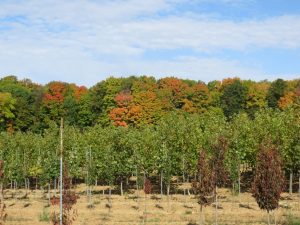 “Plant a tree to thrive, not to simply survive.” Dan Traas, Ranger Service, echoes the sentiment of most arborists and urban foresters’. There are numerous crucial steps in the tree planting process, location, soil type and temperature must all be considered. However, the species of tree chosen may be the utmost central consideration.