Dan Buckler, Urban Forestry Assessment Specialist, Daniel.Buckler@wisconsin.gov
Trees are sometimes called the lungs of the Earth. You might also call them and the neighborly Lake Michigan the air conditioners of Milwaukee.
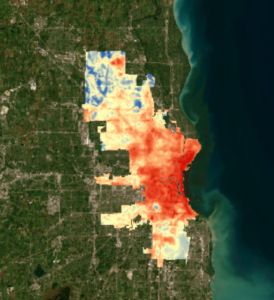
A preview of the Milwaukee Heat Map
The Wisconsin Department of Natural Resources helped coordinate a heat mapping campaign in the City of Milwaukee in 2022. A resulting map shows where it is relatively hot or cool.
Trees provide shade and conduct evapotranspiration, the process by which water moves from the ground, through their stems, and out their leaves as water vapor. In these ways, trees helped make parks and other green spaces temperature oases, with evening air temperatures up to seven degrees cooler than nearby locations.
Densely developed urban areas tend to be warmer than more open rural spaces due to the concentration of manmade surfaces, such as asphalt and concrete, that absorb and reradiate heat. This phenomenon, known as the urban heat island effect, is further compounded by rising temperature trends due to climate change.
Urban neighborhoods are also affected by this heat island dynamic, particularly in large cities such as Milwaukee, where there is a great variety of land covers and uses. The mapping campaign recorded a 10-degree difference in the evening between the hottest and coolest parts of the city. Continue reading “Heat Mapping Results From Milwaukee Published” →

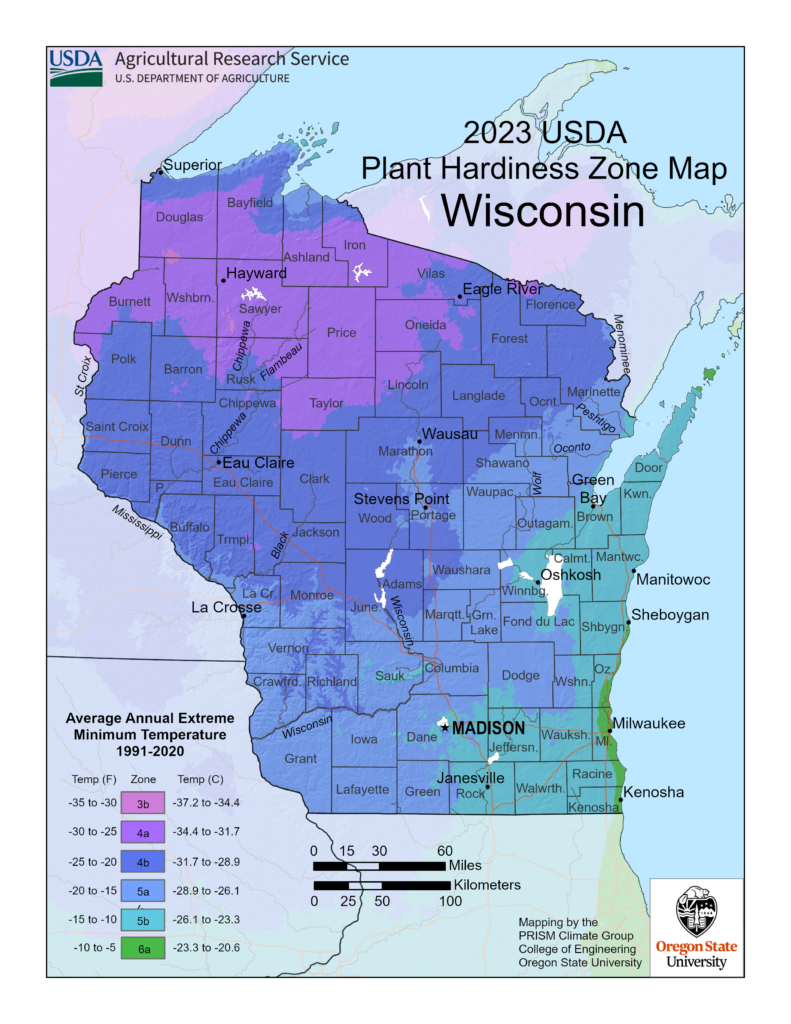 Thirty years of data was reviewed by a group of horticultural, botanical and climatological experts for the latest USDA Plant Hardiness Zone Map revision. This was determined to be the best balance between the fluctuations of year-to-year weather variation and the concept that, during their lifetimes, perennial plants mostly experience what is termed “weather” rather than “climate.” A complex algorithm was used for this edition of the Plant Hardiness Zone Map to enable more accurate interpolation between weather reporting stations. This method accounts for factors such as elevation change and proximity to bodies of water, making mapping zones more accurate.
 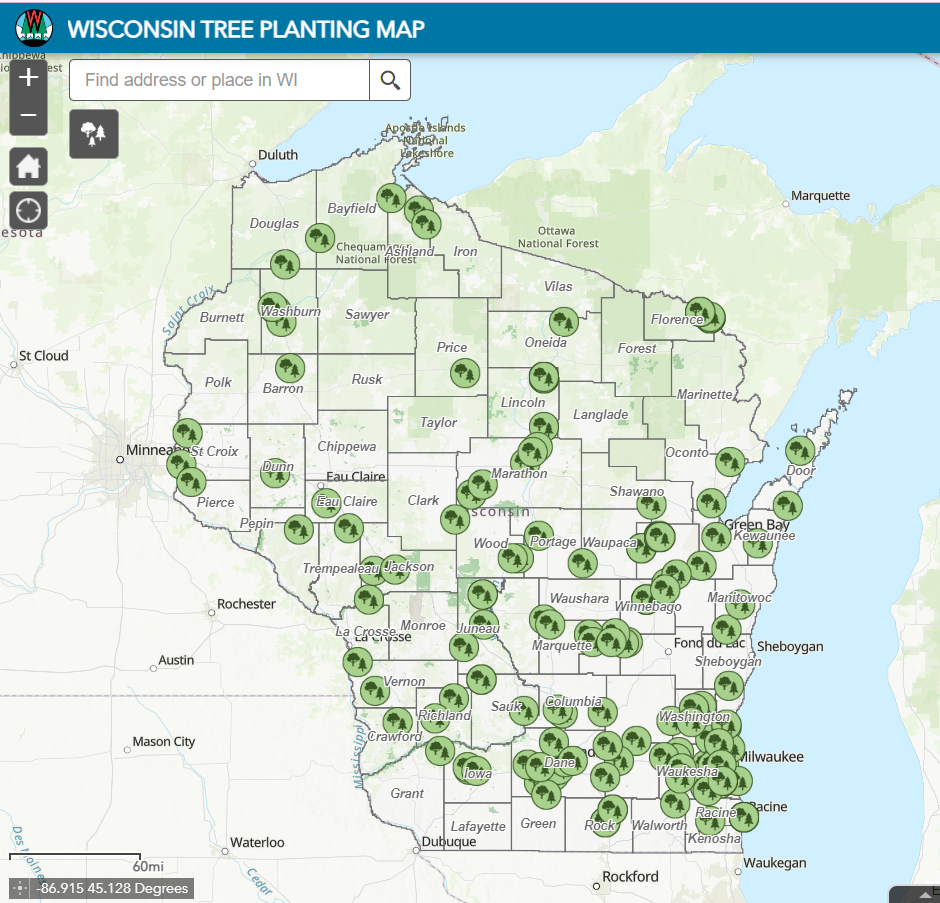 Autumn is a great time to plant trees. After the trees go in the ground, please take a few minutes to document the effort in the
 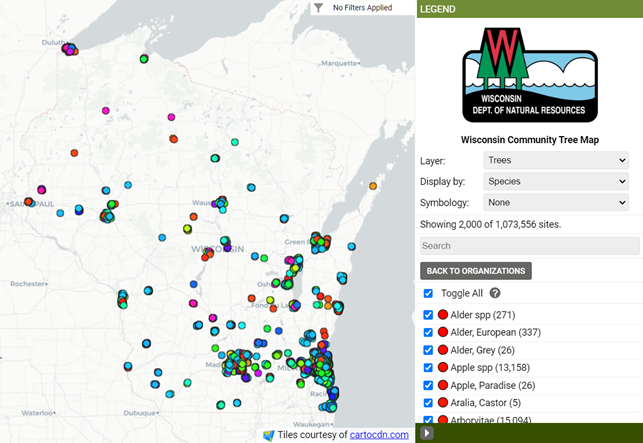 Ever since it launched in 2017, the
 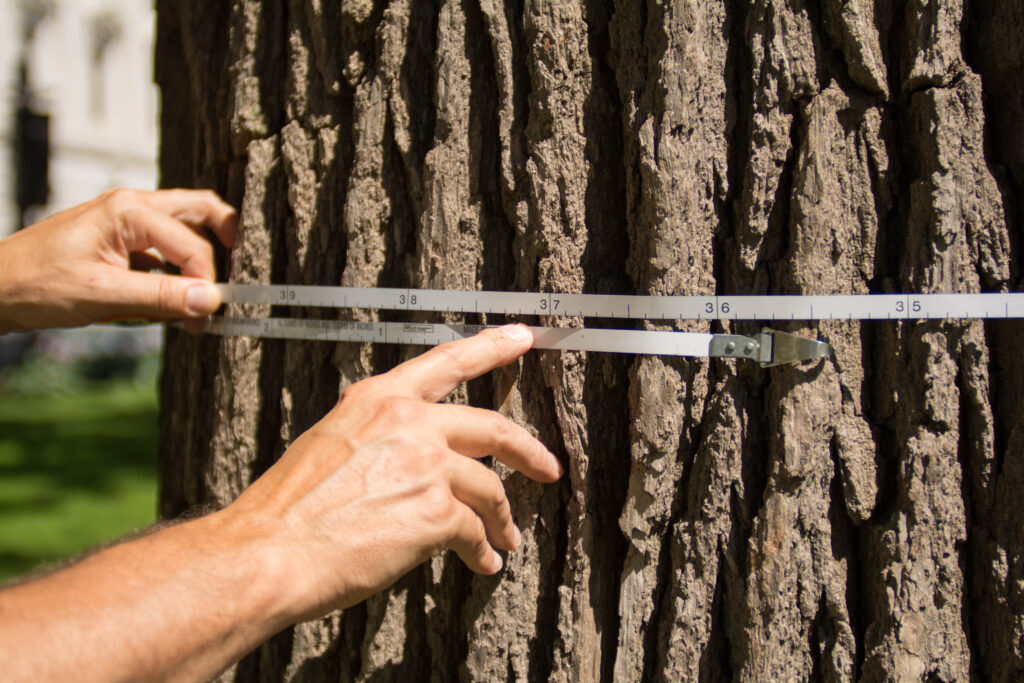 Tree inventories are foundational elements of sustainable urban forestry programs. You need to know what you have to best manage your trees. Because of the importance of these datasets, the Wisconsin DNR Urban Forestry program often funds inventories through their annual grants (