
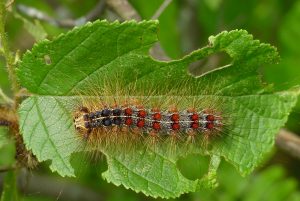
Gypsy moth caterpillar with distinctive blue and red dots
This June, gypsy moth populations may rise to damaging levels in parts of Wisconsin. High numbers of gypsy moth caterpillars are a tremendous nuisance and can strip trees of their leaves. Combined with other stresses, such as drought or attacks by additional tree pests, this may kill the tree. The insect’s favorite food is oak leaves, but it will feed on many other tree species such as aspen, birch, crabapple and willow. You can take action to reduce the number of caterpillars that will feed on your trees, including placing sticky barrier bands on the susceptible tree species. Continue reading “Prepare now – gypsy moth caterpillars return”
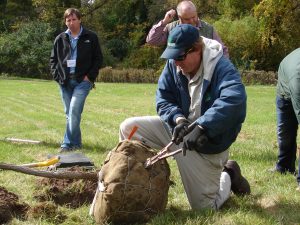 In April we celebrated Earth Day and Arbor Day, the perfect time to plant trees. Planting trees in urban areas provides communities with many benefits, but in order to receive the benefits it must first be properly planted. There are several resources that can help ensure that trees are planted properly.
 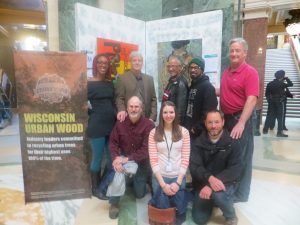 The cabinets in your kitchen, your dining room table, floors in your office, and even the paper you write on are all products made from wood. Usually rural wood is used to make the products, but over the past several years a shift has been made, introducing the use of wood from urban areas to make these, and other, products. For example, urban wood has successfully been used in architecture, creating bowls, staircases, tables and now art.
 The State of Wisconsin is leading the way in the green industry by providing the nation’s first Arborist Apprenticeship Program, which will include plant health care as well as tree care. Currently, there are three private tree care companies who have signed on five apprentices who are learning and developing their skills under the direct guidance of certified and skilled arborists. More employers are needed to support the program and be willing to hire apprentices. Apprenticeship is a proven method in numerous industries and the benefits greatly outweigh the commitment incurred by employees of all sizes. It provides a structured training program for developing safe, skilled and productive employees and workforce. This program brings additional benefits: providing a career pathway for individuals to join, growing individuals within the industry, getting the arborist profession recognized as a skilled trade with the U.S. Department of Labor, and helping our private businesses and municipalities find and retain qualified employees.
 CTMI is a continuing education course specifically tailored to the needs of municipal parks, planning or public works employees who have tree related responsibilities, but do not have a strong background in urban forestry. This training is appropriate for those who manage or contract forestry work, review planting plans, issue permits, or inspect trees. The course focuses heavily on management, rather than the technical aspects of municipal forestry programs.