By Bill McNee, DNR forest health specialist, Oshkosh, bill.mcnee@wisconsin.gov, 920-360-0942
Spring is the best time to evaluate valuable ash trees and determine if they should be treated to protect them from emerald ash borer (EAB). Emerald ash borer is currently the most damaging threat to trees in the state, killing more than 99 percent of the ash trees it infests.
Insecticide treatments to prevent EAB infestation are usually applied between mid-April and mid-May, so it is important to start planning now. The first thing homeowners should do is check their ash trees for signs of infestation. Woodpecker damage is easy to see this time of year and is often the earliest visible sign of EAB. Photos of other signs and symptoms can be found on the DNR EAB website.
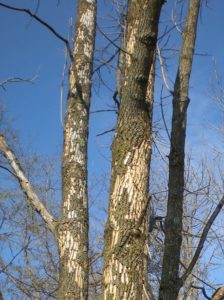
Signs of EAB infestation include woodpecker damage where the birds pick away ash tree bark to feed on larvae.
Emerald ash borer has become so widespread that homeowners should consider treating valuable ash trees no matter where they are in Wisconsin. The highest risk of EAB infestation is within 15 miles of a known infestation, but it is widely believed that there are additional, undetected EAB infestations throughout the state. To see a map of known EAB infestations, visit the Wisconsin EAB website.
While the best time to treat ash trees is before they are infested, treatments of infested trees can still be successful if done while EAB populations within the tree are low or moderate. Some ash trees may be too heavily infested to save or they may have other problems that make them poor candidates for treatment.
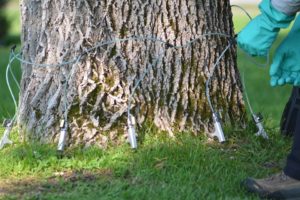
Trunk injection treatment to protect against EAB. Credit: Matthew Karst.
You should consider several factors when deciding whether to treat your ash trees. Insecticide treatments can be costly, but the investment may be worthwhile if you consider the many benefits that healthy yard trees provide, including higher property values, better air quality, shading and cooling for homes and more. Removing and replacing your ash trees is another option and may be the best choice for heavily infested and lower value trees. For trees that you decide are worth saving, however, the cost to treat may still be less than removing and replacing them with other species. This factsheet from UW-Extension can help you decide whether a tree is worth treating.
If you decide to treat, or if you want to discuss treatment options with a professional, call a certified arborist or search online and in phone books for other businesses. Check the credentials and insecticide applicator certification of any business before hiring them to treat your ash trees.
Treatments are not economically practical for ash found in woodlots. Any questions about woodlot management should be directed to a professional forester.
Despite the cold winter temperatures in late January and early February, don’t postpone treatment of ash trees. Weather data and collection of overwintering EAB larvae at two sites in Waukesha County predict high insect survival rates in most of the state. Female beetles can lay up to 200 eggs, so EAB populations will quickly rebound from any mortality that occurred due to cold weather.
More information about EAB and management options can be found through the Wisconsin EAB website.
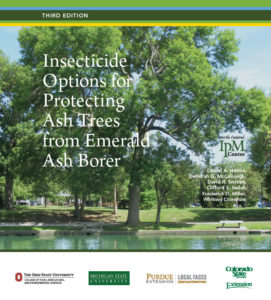 The North Central Integrated Pest Management Center has released the third edition of its widely distributed guide, “Insecticide Options for Protecting Ash Trees from Emerald Ash Borer.” This updated document addresses frequently asked questions and shares new information about insecticide options that are not covered in the guide’s previous edition from 2014. To review the most current recommendations and study results regarding insecticide use for EAB, download the report