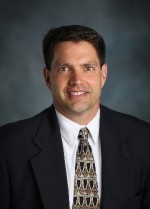
 “I have an opportunity to be a voice in the conversation.” As a new member of the Council on Forestry, Jordan Skiff, Fond du Lac public works director and Urban Forestry Council chair, will be an advocate for urban and community forestry, sharing its challenges and proclaiming its benefits. Skiff fills the urban forestry seat vacated by Dr. R. Bruce Allison in December 2016. Continue reading “Urban forestry finds a voice on the Council on Forestry”
Taking action
A new year for making Wisconsin Active Together
Walk, Ride, and Roll Our Way to Thriving Communities!
 Wisconsin Active Together starts 2019 by recognizing fourteen new communities from across the state for their efforts to promote active lifestyles and for their pledge to do more–because in addition to celebrating accomplishments, communities can make resolutions to foster health too! Where we live impacts our wellness and the newly named Wisconsin Active Together Communities, now reaching 1.4 million Wisconsinites across the state, know that even small changes in the landscape and in promoting physical activity can add up to creating lasting changes for everyone’s benefit. And your community can now also apply to be recognized in 2019 for its commitment to advancing strategies for safe places to walk, bike, and be active while getting connected to resources, training, and a peer network of experts. Continue reading “A new year for making Wisconsin Active Together”
A tool to integrate public health considerations in the development of parks and trails
The National Park Service, Department of Health and Human Services and the Center for Disease Control came together to create the “Parks, Trails, and Health Workbook,” a quick guide and outline for incorporating public health considerations in the development of a park or trail. Utilizing the health impacts of these natural areas is a different and critically important way to promote parks and trails. Applying health benefits provides a personal connection and increased relevance to community members and encourages them to act and get outdoors. Continue reading “A tool to integrate public health considerations in the development of parks and trails”
Public comment period for EAB silviculture guidelines revision closes October 9
By Bill McNee, forest health specialist, Oshkosh. Bill.McNee@wisconsin.gov; 920-360-0942
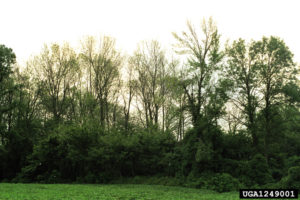
Ash trees dying from an EAB infestation. Photo: Troy Kimoto, Bugwood.org
The Wisconsin DNR is seeking public comments on a proposed revision to silviculture guidelines for emerald ash borer (EAB). Stand-level EAB silviculture guidelines were originally released in 2007, with periodic reviews and updates. A DNR technical team and stakeholder advisory committee prepared the current version using multiple sources of information, including recent research findings, identification and locations of new EAB infestations, economic considerations, and experience gained from implementing previous versions of the guidelines.
The draft document and information about the public comment process can be found at https://dnr.wi.gov/news/input/Guidance.html#open through Tuesday, October 9, 2018. All comments must be submitted by that date.
Foster student success with trees in your neighborhood
September is back to school month. How do you get those kids to settle down and focus after three months off? The answer is as simple as walking right outside your front door! Exposure to nature has shown various impacts on students, from improved academic performance and focus, to reduced Attention Deficit Hyperactivity Disorder (ADHD) symptoms. Research has shown exposure to nature during school hours is positively associated with academic performance, including standardized test scores, graduation rates, and plans to attend a four-year college. Continue reading “Foster student success with trees in your neighborhood”
Look for gypsy moth egg masses
By Bill McNee, DNR Forest Health Specialist, Oshkosh. bill.mcnee@wisconsin.gov; 920-360-0942
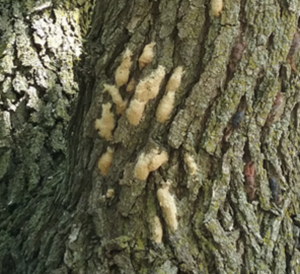
Gypsy moth egg masses. Photo: Bill McNee
Fall is an excellent time to look for and dispose of gypsy moth egg masses produced by adult moths this summer. Gypsy moth egg masses are felt-like, tan-colored patches about the size of a nickel or quarter that gypsy moth females deposit in protected places. Surveying for egg masses helps property owners predict how high populations of the insect will be during the subsequent spring and summer. Since egg masses usually don’t hatch until April, information gained from fall/winter surveys can be used to mitigate gypsy moth damage before the following season. Continue reading “Look for gypsy moth egg masses”
Bay-Lake RPC announces the award of 18 tree planting grants
Four Wisconsin regional planning commissions (RPC), Bay-Lake RPC, East Central Wisconsin RPC, Northwest Wisconsin RPC, and Southeastern Wisconsin RPC, and the Wisconsin Department of Natural Resources (DNR) have jointly awarded a total $122,200 to communities under their 2018 Wisconsin RPCs and DNR Great Lakes Basin Tree Planting Grant Program. The DNR marketed the grant opportunity, provided process guidance and assistance ranking the grants. Eighteen Wisconsin communities will receive funds for projects to reduce runoff and mitigate the impacts of Emerald Ash Borer (EAB). Continue reading “Bay-Lake RPC announces the award of 18 tree planting grants”
Getting active in Wisconsin’s urban forest
By Rob Fontella, fontella@wisc.edu, healthTIDE UW-Madison Public Health
As the weather gets warmer, Wisconsinites are getting out there and enjoying their community and the natural areas the state has to offer. Recently a new effort was launched to encourage communities in Wisconsin to become part of a campaign recognizing the community’s efforts to promote active lifestyles. Continue reading “Getting active in Wisconsin’s urban forest”
Insights from the Wisconsin Urban Landowner Survey inform tree care outreach
By: Katy Thostenson, DNR social science analyst (Madison), kathryn.thostenson@wisconsin.gov, 608-535-7049
 Homeowners in Wisconsin feel the top 5 most important benefits provided by the trees in their yard are:
1) Beauty
2) Shade and cooling
3) Improved air quality
4) Privacy, and
5) Making their neighborhood a better place to live
This list of homeowners’ perceived benefits from their trees is just one valuable insight gathered from the 2017 Wisconsin Urban Landowner Survey. More than 1,700 landowners responded to the survey from Green Bay, Madison, Milwaukee and Wausau, providing insights about their attitudes around tree care, their concerns about tree risks, and their tree care behaviors such as pruning and planting. Continue reading “Insights from the Wisconsin Urban Landowner Survey inform tree care outreach”
Urban Forestry Consultant Directory – Annual update request
For many years the Urban and Community Forestry Program has maintained the Urban Forestry Consultants Directory, a document containing contact information and services provided by consultants who have made themselves known to DNR. Each May, we ask those listed to review their information and submit any necessary updates. We also welcome new submittals at this time, and throughout the year! Continue reading “Urban Forestry Consultant Directory – Annual update request”